

Choose the Right Black and Grey Epoxy Floor Look
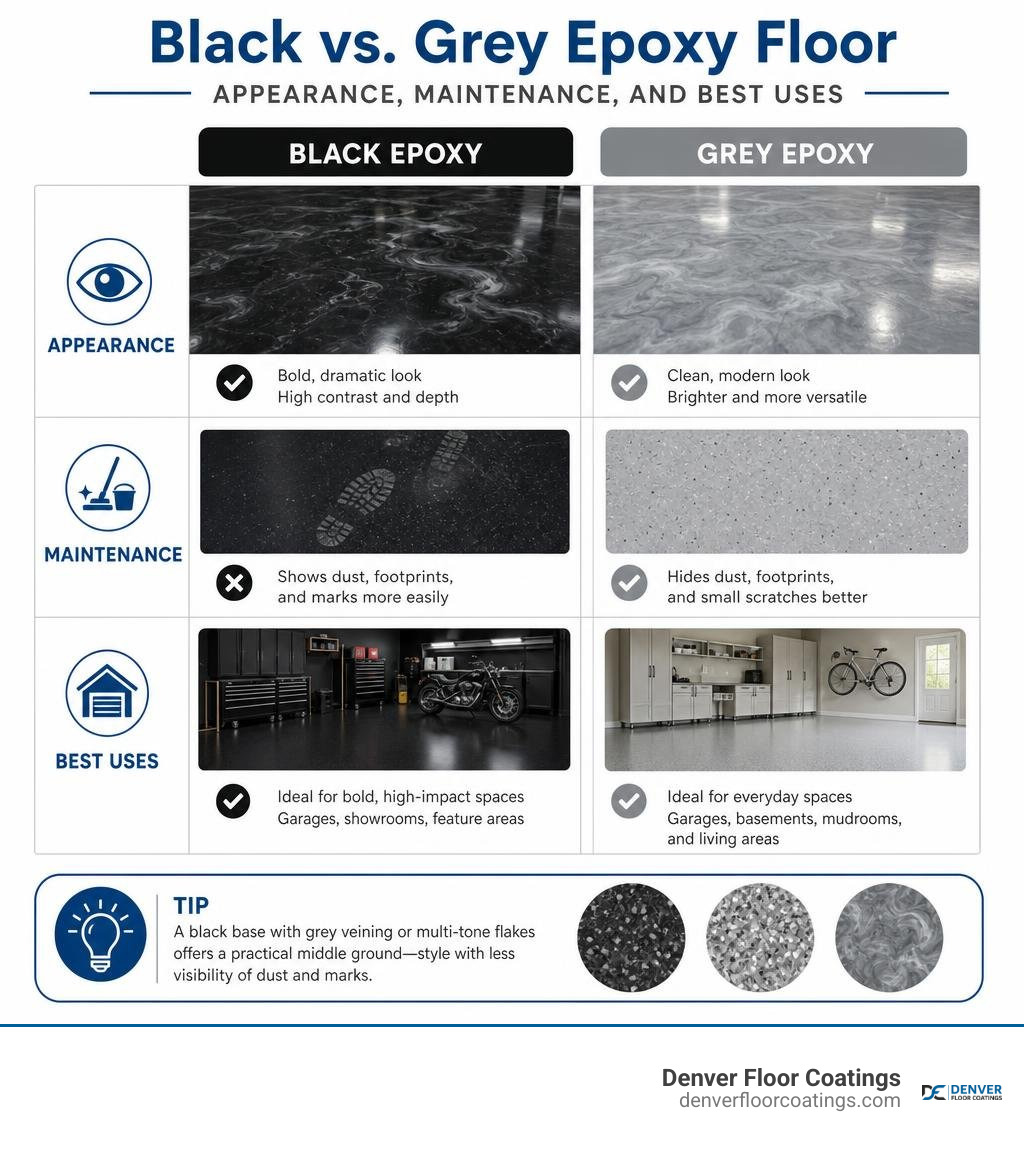
A black and grey epoxy floor offers a sophisticated, contemporary aesthetic that can elevate the visual appeal and functional performance of residential garages, retail spaces, basements, and commercial facilities. Pairing these two complementary neutral tones delivers far greater visual depth, dimensionality, and design versatility than a standard single-color installation. Choosing a predominantly grey palette generally yields a brighter room interior with higher light reflectivity, which tends to conceal dry soil, airborne dust, outdoor debris, and everyday scuff marks. Conversely, selecting a deep black finish establishes dramatic visual contrast, architectural sophistication, and a showroom-level focal point, though high-gloss dark tones typically demand more frequent routine sweeping to maintain their pristine appearance.
Achieving a balanced presentation often involves blending both tones into an integrated flooring concept. Homeowners and property managers frequently select deep charcoal or rich black bases highlighted by subtle platinum veining, or they opt for dense multi-colored flake systems incorporating various shades of slate, silver, onyx, and white. Regardless of the exact decorative scheme selected, aesthetic appeal represents only one dimension of a high-performance floor. Long-term performance depends heavily on the condition of the underlying concrete substrate. The slab must be structurally sound, dry, thoroughly cleaned of contaminants, and mechanically profiled to create an open surface profile that facilitates an enduring mechanical bond.
Denver Floor Coatings specializes in high-performance epoxy and polyaspartic coating systems, including decorative flake finishes, rather than stained concrete services. Founded by Mike Wislinsky, whose background in engineering and precision operations informs every project, our team applies rigorous technical discipline to every installation. Concrete floor repair is only a small component of the company’s floor-coating preparation work, but restoring surface integrity prior to coating ensures that decorative marble and broadcast systems perform reliably over years of daily vehicle and foot traffic.
Understanding how different resin systems function can help property owners determine the ideal balance of visual style and practical durability. Modern options range from multi-layered Epoxy Flooring systems designed for robust impact resistance to fluid, three-dimensional Metallic Epoxy Coatings that recreate natural mineral formations. For dedicated parking and workshop areas, specialized Epoxy Garage Flooring formulations provide targeted protection against thermal cycling, chemical exposure, and hot vehicle tires.
Comparing Aesthetics: Designing a Black and Grey Epoxy Floor
When planning a customized resin floor coating, color choice serves as both an aesthetic centerpiece and a practical design factor that influences room brightness, spatial perception, and everyday maintenance. Solid jet black flooring produces an unmistakable sense of luxury and depth, evoking the sleek visual impact of a high-end automotive showroom. However, darker high-gloss surfaces inherently absorb ambient light and tend to highlight dry plaster dust, pet hair, salt tracks, and surface scuffs much faster than lighter alternatives. Consequently, solid dark floors are generally best suited for curated display rooms, interior living areas, or environments where regular maintenance routines are maintained.
Lighter grey spectrums—such as silver, mist, graphite, and anthracite—provide substantial light reflectivity that can significantly brighten dimly lit residential garages, basements, and commercial workspaces. These lighter tones disperse overhead illumination evenly across the room, which can reduce lighting energy requirements and enhance visibility around machinery or workbenches. Furthermore, medium grey shades offer practical camouflage against everyday tracking, allowing concrete dust, street gravel, and routine dirt to blend into the background between scheduled cleanings.
Combining black and grey into a unified design allows property owners to capture the striking visual drama of deep tones while preserving the forgiving maintenance characteristics of lighter neutrals. By introducing metallic pigments, fluid marble swirls, or broadcast blends, the floor acquires dynamic motion and visual texture. Property owners seeking a deeper understanding of how metallic suspensions interact under lighting can explore the complete guide to metallic epoxy coatings.
Modern Marble Veining in a Black and Grey Epoxy Floor
Resin marbling techniques utilize high-solid pigmented base coats paired with contrasting accent ribbons to emulate the organic beauty of genuine stone slabs. By working with advanced materials such as EP Design – 2K Epoxy Resin Flooring for Pouring and Spreading – SATIN GREY & DEEP BLACK | EPODEX , technicians pour a self-leveling base layer across the prepared slab and skillfully manipulate contrasting secondary pigments using specialized dispersion rollers, notched squeegees, and deliberate air streams.
This artistic application generates an organic visual flow with soft feathering, subtle pearlescent highlights, and bold river veining. Because the fluid resins self-level prior to crosslinking, the resulting surface is completely seamless and glass-smooth. This visual style is particularly popular in modern basements, commercial retail boutiques, executive boardrooms, and residential entertainment spaces where an elegant, seamless stone aesthetic is desired without the maintenance requirements of natural porous marble.
Broadcast Flake Blends for a Black and Grey Epoxy Floor
For active garage workshops, high-traffic commercial corridors, and utility spaces where slip resistance and effortless maintenance are paramount, multi-tone vinyl flake broadcast systems are frequently the preferred solution. In this method, formulated vinyl chips are broadcast across a pigmented base coat until the resin is saturated to complete rejection.
A thoughtfully curated blend featuring jet black, charcoal grey, medium slate, and bright white chips creates visual rhythm, disperses point reflections, and conceals minor surface irregularities in the underlying slab. Much like heavy-duty quartz filled epoxy floors, textured broadcast systems introduce tactile traction that helps reduce slip hazards in wet conditions, rainy seasons, or winter snowmelt environments.
Performance and Durability Differences Between Dark and Light Tones

While pigment formulation does not inherently weaken resin polymers, color choice substantially impacts the perceived longevity and surface wear of the installation over time. High-gloss solid black coatings will naturally exhibit microscopic scratches, swirl marks, and abrasive wear from tracked-in street grit more conspicuously than textured or lighter surfaces. Industrial-grade formulations engineered with a Shore D hardness rating around 82 and high heat deflection ratings provide strong resistance to hot tire pickup—a failure mechanism where warm vehicle tires soften low-grade coatings and lift them from the concrete as the rubber cools and contracts.
Chemical resistance remains consistent across professional pigment selections. Formulations installed by Denver Floor Coatings are engineered to withstand exposure to automotive fluids, road salts, motor oil, brake fluid, deicing compounds, and diluted acids when cleaned within reasonable operational windows. Detailed performance metrics and chemical immersion testing data can be reviewed in our comprehensive epoxy floor chemical resistance guide.
| Feature | Solid Jet Black | Anthracite Grey | Multi-Tone Flake Blend |
|---|---|---|---|
| Light Reflection | Low (absorbs ambient light) | Moderate to High | High (diffuses light evenly) |
| Dust & Dirt Camouflage | Low (requires regular sweeping) | Moderate | Excellent (hides debris effectively) |
| Scratch Visibility | Noticeable on high-gloss finishes | Moderate | Very Low (concealed by visual texture) |
| Hot Tire Resistance | High (with industrial 2K base) | High (with industrial 2K base) | Superior (multi-coat polyaspartic system) |
| Ideal Application | Showrooms, luxury basements | Workshops, light commercial bays | Residential garages, industrial facilities |
1-Part Epoxy Paint vs 2-Part Resin Formulations
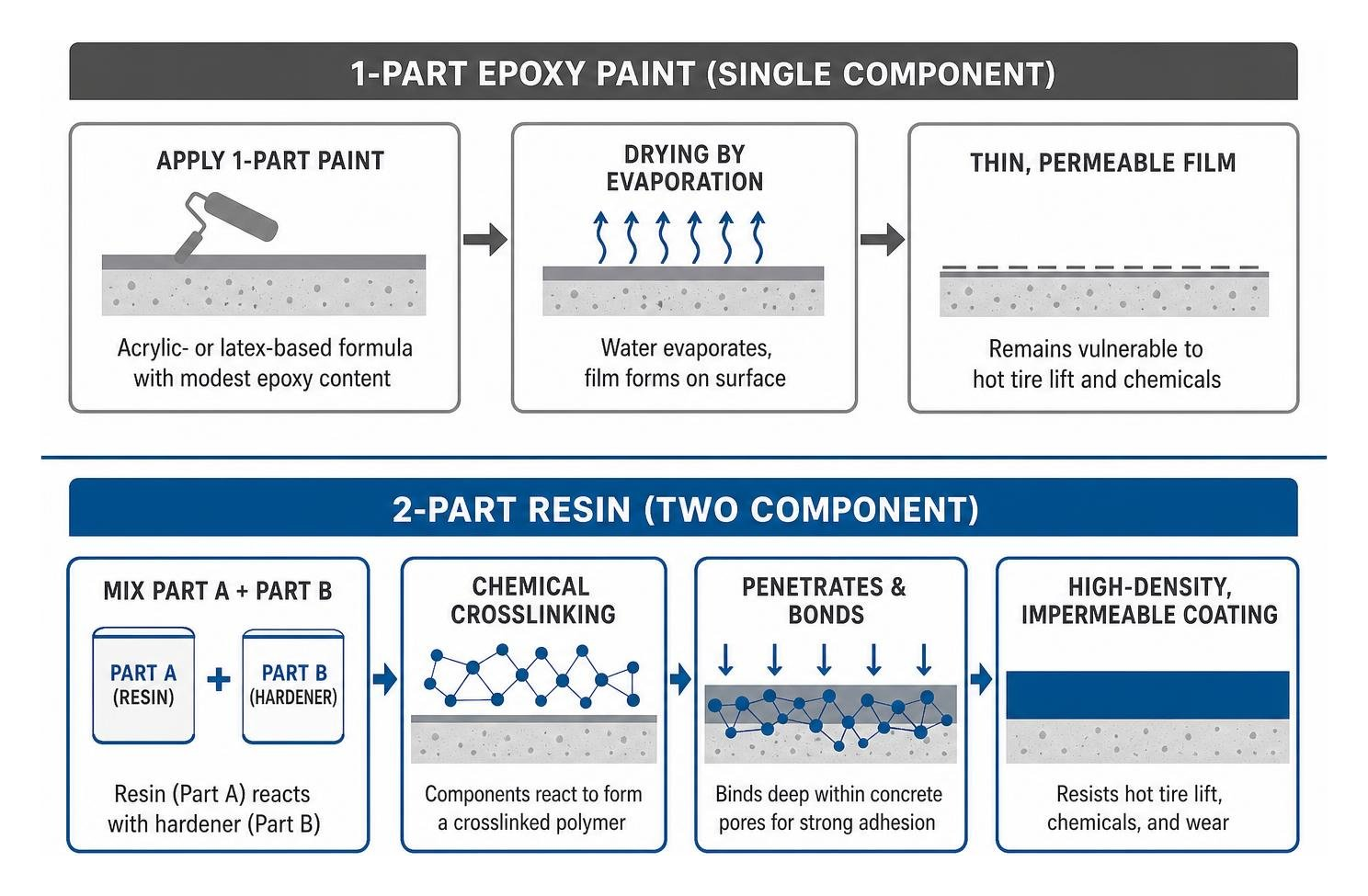
Retail consumer products sold under the general label of epoxy paint are primarily single-component latex or acrylic formulations modified with minor resin additives. These water-borne products dry solely through atmospheric water evaporation, producing a delicate, thin topical film that often lacks the density required to withstand hot vehicle tires, abrasive grit, or aggressive garage chemicals.
In contrast, professional two-component (2K) industrial systems rely on balanced chemical crosslinking between a bisphenol epoxy resin (Part A) and a cycloaliphatic amine hardener (Part B). When combined, these components undergo an exothermic polymerization reaction, curing into a dense, non-porous thermoset matrix that locks into the open pore structure of mechanically prepared concrete.
Substrate Preparation and Material Calculations

A protective coating system can only perform as well as the concrete preparation beneath it. Applying high-performance polymer resins over smooth, power-troweled, contaminated, or damp concrete often leads to premature delamination and blistering. Denver Floor Coatings mechanically prepares concrete substrates using heavy planetary diamond grinding equipment equipped with integrated HEPA dust extraction systems. This mechanical grinding process removes old sealers, levels minor high spots, clears away latent surface contaminants, and creates a Concrete Surface Profile (CSP) of 2 to 3, which is ideal for maximum mechanical adhesion.
Accurate surface calculations and precise mil-thickness planning are required before material mixing begins. Professional coating systems are engineered to achieve specific dry film builds to ensure durability and chemical resistance. Standard packaging benchmarks, such as the Grey Garage Floor Epoxy Coating 2 Pack Kit | 3 Gallon — Bond Craftor , illustrate typical baseline coverage rates of roughly 175 to 200 square feet per gallon at an 8-mil wet film thickness. Denver Floor Coatings tailors every coat thickness to the specific structural demands of the room. To review the chronological steps of professional application, examine our overview of the epoxy floor installation process.
Coverage Rates, Working Time, and Curing Timelines
Two-component industrial resins demand rigorous volumetric measuring and disciplined timing. Once the resin base and hardener are combined, the exothermic reaction initiates immediately. Allowing catalyzed material to sit inside a large mixing pail concentrates heat, rapidly reducing the workable pot life to 20 or 30 minutes. Technicians systematically pour the mixed resin onto the prepared slab in ribbons, spreading the material outward to dissipate heat and secure a comfortable 40- to 60-minute open working time.
Ambient temperature, concrete slab temperature, and relative humidity directly govern polymerization and recoat windows. Technicians closely monitor environmental dew points to ensure that subsequent coats bond properly without intercoat adhesion failure. For detailed recoat windows, curing curves, and thermal considerations, explore our epoxy flooring dry time guide.
Essential Safety, Moisture Protection, and Application Pitfalls
Installing resin floor systems successfully requires strict environmental management, precise chemical handling, and comprehensive protective protocols:
- Substrate Moisture Testing and Vapor Control: Concrete slabs can hold sub-surface moisture that migrates upward as vapor pressure. When moisture vapor pressure exceeds the adhesion limit of a coating, blistering and delamination can occur. Denver Floor Coatings performs moisture testing prior to application and installs specialized epoxy moisture vapor barriers when high vapor emission rates are detected.
- Temperature and Dew Point Thresholds: Optimal installation occurs between 65°F and 75°F with relative humidity below 80%. Applying coatings to cold substrates below 55°F can significantly retard the cure rate, leaving the resin tacky and vulnerable to surface defects.
- Preventing Amine Blush: When uncured amine hardeners react with atmospheric carbon dioxide and moisture under humid or cool conditions, a waxy, cloudy film called amine blush can form. This film dulls gloss and prevents proper adhesion of subsequent clear coats if not addressed properly.
- Rigorous Multi-Stage Mixing: Mixing resin and hardener requires mechanical paddle stirring at controlled speeds. Utilizing a double-pot transfer process—where material is mixed, poured into a secondary clean vessel, and mixed again—ensures that unmixed resin clinging to container walls is thoroughly blended before spreading.
- Professional PPE and Site Safety: Installation crews utilize nitrile chemical-resistant gloves, eye protection, and organic vapor respirators during the application and topcoat stages to maintain safe, professional working environments.
Once a multi-coat system completes its chemical cure, maintenance is straightforward and cost-effective. For step-by-step cleaning protocols and chemical recommendations, consult our practical guide on how to clean epoxy coated garage floors.
Frequently Asked Questions About Black and Grey Epoxy Flooring
Can black or grey epoxy be installed directly over existing tile or old paint?
Coating directly over existing paints, sealers, or glazed ceramic tile is not recommended without comprehensive mechanical profiling. Existing paints often lack the bond strength necessary to support heavy vehicular traffic and can pull away from the slab, carrying the new resin coating with them. Glazed tiles have non-porous vitreous surfaces that prevent mechanical resin penetration. In situations where failing coatings or adhesives are present, diamond grinding is utilized to clear away compromised materials down to bare concrete. When older coatings need removal, our comprehensive resource on how to remove epoxy from concrete outlines the industrial mechanical methods required to establish a clean profile.
Why does a solid black epoxy floor show dust and scratches more than grey?
Solid high-gloss black surfaces act like mirrors, specularly reflecting directional lighting across the room. Microscopic dust particles, pet hair, and fine surface scratches disrupt this smooth specular reflection, casting tiny shadows that stand out against the dark background. Medium grey finishes, multi-colored flake blends, and satin topcoats diffuse light evenly across the floor. These multi-toned and textured finishes serve as resilient, low maintenance flooring options that effectively hide routine daily wear, dust, and light debris.
When can vehicles park on a newly cured epoxy garage floor?
Light foot traffic is typically permissible within 24 hours of topcoat application, but parking motor vehicles requires a longer waiting period. Although an epoxy or polyaspartic coating may feel dry and tack-free to the touch within a day, polymer crosslinking continues internally over several days. Introducing hot tires prematurely can transfer plasticizers and concentrated thermal loads into an incompletely cured matrix. To protect the integrity of your finish, review the cure stages in our guide on when can you finally park your car on your new epoxy floor.
Conclusion
Whether you select an elegant deep black marble motif or a durable, light-diffusing multi-tone grey flake system, the ultimate performance and visual appeal of your floor depend on meticulous surface preparation, industrial chemical formulation, and skilled application. Denver Floor Coatings specializes in high-performance epoxy and polyaspartic coating systems, including decorative flake finishes, rather than stained concrete services. Concrete floor repair is only a small component of the company’s floor-coating preparation work, ensuring that every crack, spall, and joint is professionally addressed so your finish maintains structural integrity through years of heavy daily use.
Our team is committed to delivering durable, showroom-grade surfaces for residential garage floors, basements, and commercial properties throughout the Denver metro area, Front Range, and surrounding mountain communities. If you are ready to enhance your property with a custom black and grey floor coating tailored precisely to your functional needs, contact us at Denver Floor Coatings today to schedule an on-site consultation and receive a comprehensive, obligation-free project estimate.