

Why Blue Epoxy Flooring Makes a Garage Stand Out
Blue epoxy flooring can turn a standard concrete garage into a bright, polished environment while helping shield the underlying concrete slab from daily wear. For residential properties across the Denver metropolitan area, selecting a blue floor coating offers an appealing balance of functional resilience and distinctive style. Homeowners generally begin by evaluating three primary design directions: a uniform solid blue finish for a clean profile, a decorative flake system for subtle texture and traction, or a dynamic metallic blue application that creates dramatic visual depth.
A professionally engineered coating system is installed in carefully measured layers. The process begins with mechanical surface preparation, continues with an industrial-grade base coat, incorporates decorative color or vinyl chips, and finishes with a resilient clear topcoat. This multi-stage process creates a seamless, non-porous surface that is significantly easier to sweep and mop than bare concrete. It also provides reliable protection against regular vehicle traffic, tracked-in moisture, road grime, and common automotive chemical spills.
Blue provides remarkable versatility across residential and light commercial settings. A rich navy or midnight blue offers a grounded, classic aesthetic that complements modern cabinetry and workbench setups. In contrast, brighter tones such as cobalt, royal blue, or azure reflect overhead lighting effectively, helping illuminate darker garage spaces. Multi-color blends that combine blue with slate, white, and gray flakes remain especially practical for busy households because the variegated pattern naturally conceals everyday dust and minor marks between cleanings.
At Denver Floor Coatings, concrete floor repair is only a small component of the company’s floor-coating preparation work. According to industry guidance from the American Concrete Institute, thorough surface profiling and moisture evaluation are critical prerequisites for reliable coating adhesion. Mechanical diamond grinding, rigorous slab cleaning, and careful product formulation ensure that the applied resin establishes a secure physical bond with the concrete substrate.
I am Mike Wislinsky, Founder and President of Denver Floor Coatings, bringing more than two decades of engineering and operational leadership experience to every project. My focus centers on consistent process control, high material quality, and dependable craftsmanship. Whether you are interested in a classic solid hue, custom metallic marble epoxy flooring, a distinctive epoxy galaxy floor, or full-coverage concrete floor flakes, our team works closely with you to deliver a tailored finish suited to your home.
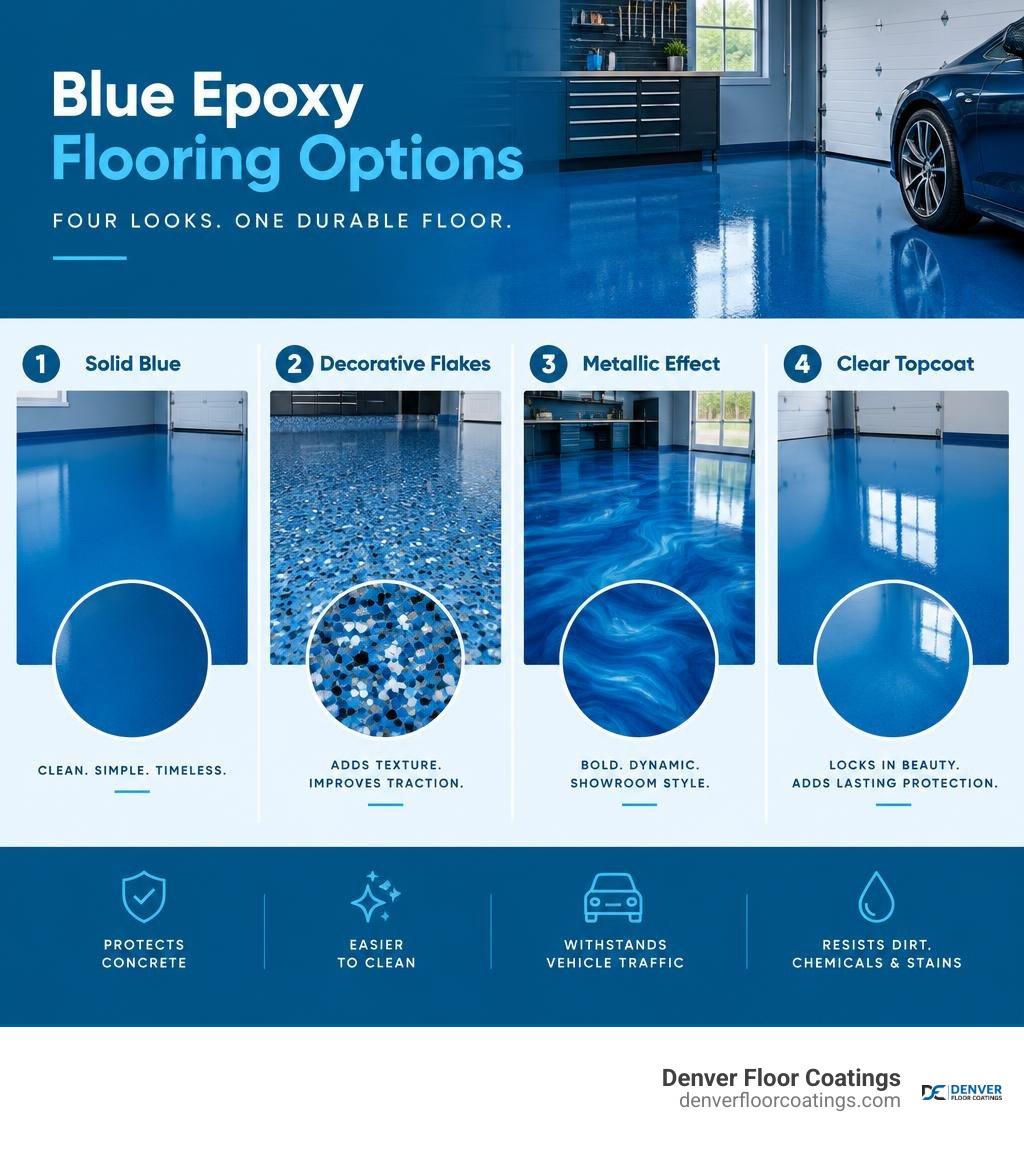
Types and Styles of Blue Epoxy Flooring
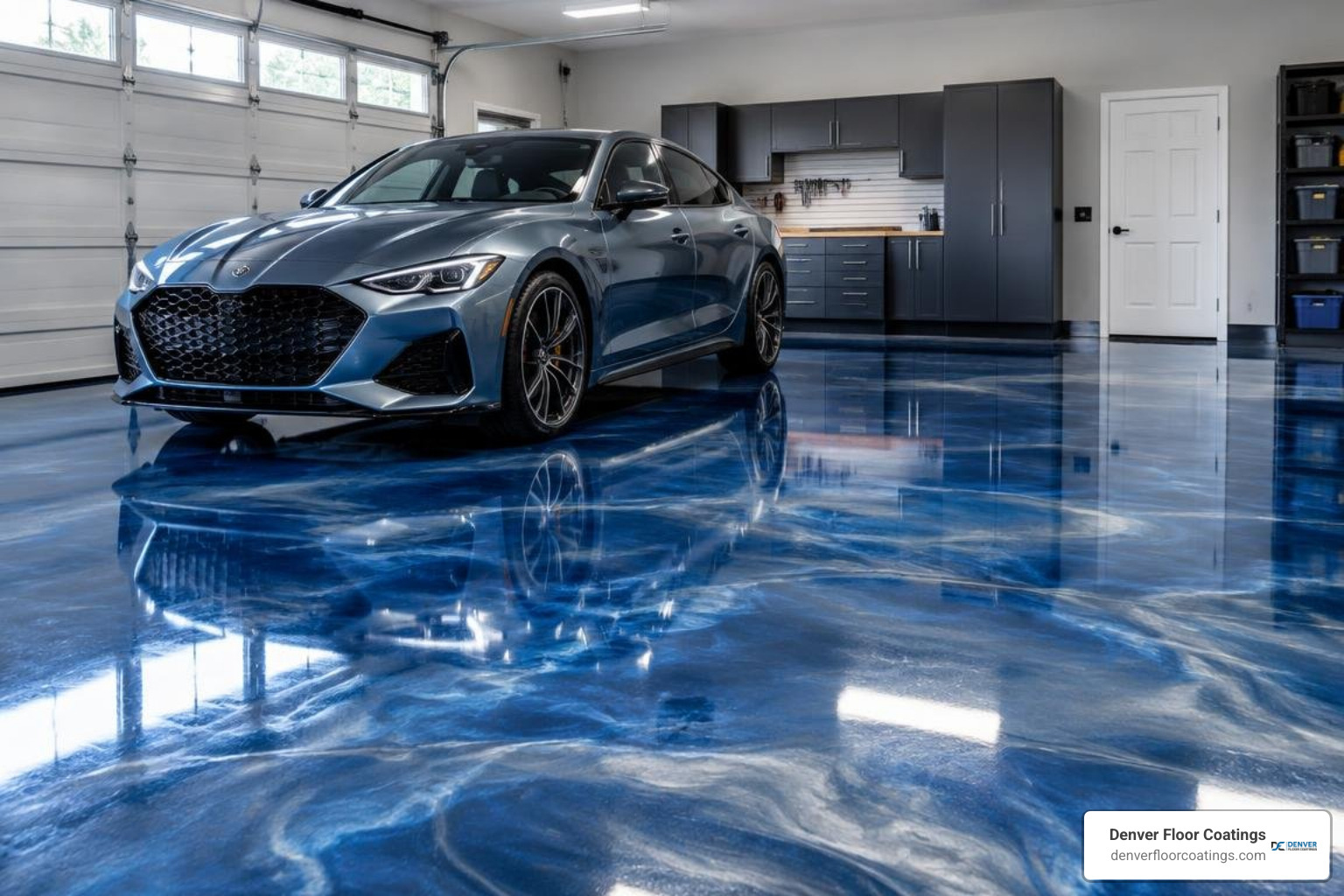
Selecting the right blue coating system involves matching physical performance requirements with your aesthetic vision. High-build polymer systems provide a non-porous protective barrier that isolates porous concrete from environmental exposure while delivering custom visual styles. Understanding the performance characteristics of solid, flake, and metallic systems allows property owners to select the ideal option for their specific daily usage. Homeowners can explore our detailed technical overview where our epoxy floors are explained to understand how polymer matrices bond to prepared concrete.
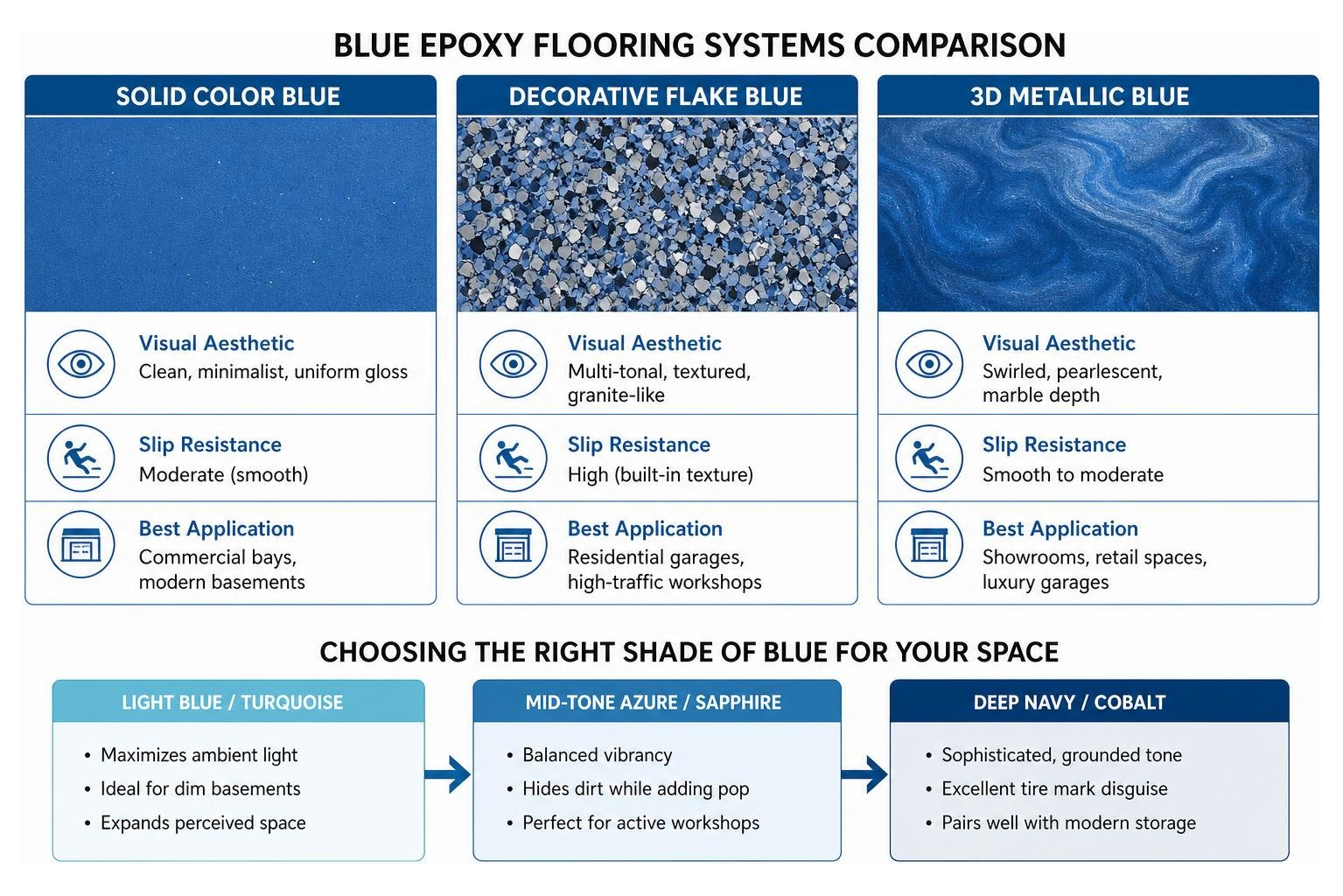
| Flooring System | Visual Aesthetic | Slip Resistance | Best Application |
|---|---|---|---|
| Solid Color Blue | Clean, minimalist, uniform gloss | Moderate (smooth surface) | Interior basements, utility rooms, commercial spaces |
| Decorative Flake | Multi-tonal, textured, granite-like appearance | High (orange-peel texture) | Residential garages, active workshops, storage areas |
| 3D Metallic Blue | Swirled, pearlescent, multi-dimensional depth | Smooth to moderate | Showrooms, luxury garages, entertainment basements |
Solid Color and Decorative Flake Blue Epoxy Flooring Systems
Solid color blue systems create a clean, minimalist profile that maximizes ambient light reflection. These floors provide a uniform gloss surface that works well in hobby rooms, clean utility spaces, and organized workshops. Because a solid glossy surface shows fine dust more readily, regular dust mopping helps maintain its showroom shine.
For active residential garages throughout the Denver area, decorative flake systems are consistently the most popular selection. During installation, technicians broadcast colored vinyl chips into the wet base coat to full rejection at a rate of approximately 0.25 pounds per square foot. Popular color blends incorporate harmonized tones of dark blue, medium cobalt, neutral gray, and bright white. This mosaic composition provides dual benefits: it creates a light surface texture that helps improve traction underfoot, and its multi-tone appearance naturally disguises dust, vehicle tire tracks, and minor debris between scheduled cleanings.
3D Metallic and Marble Blue Epoxy Flooring Effects
For property owners who want a bold, upscale aesthetic, metallic floor systems offer an eye-catching finish. Installers blend pearlescent metallic pigments directly into a clear resin matrix. As the resin flows and settles, the metallic particles align in varied orientations, producing flowing ribbons, three-dimensional ripples, and natural depth reminiscent of polished stone or deep water.
Technicians frequently combine dark slate or black base coats with vibrant azure and sapphire highlights using wet-on-wet dispersion methods. You can learn more by reading our complete guide to metallic epoxy coatings, which details how lighting angles and application techniques influence the final visual movement of pearlescent floors.
Choosing the Right Shade of Blue for Your Space
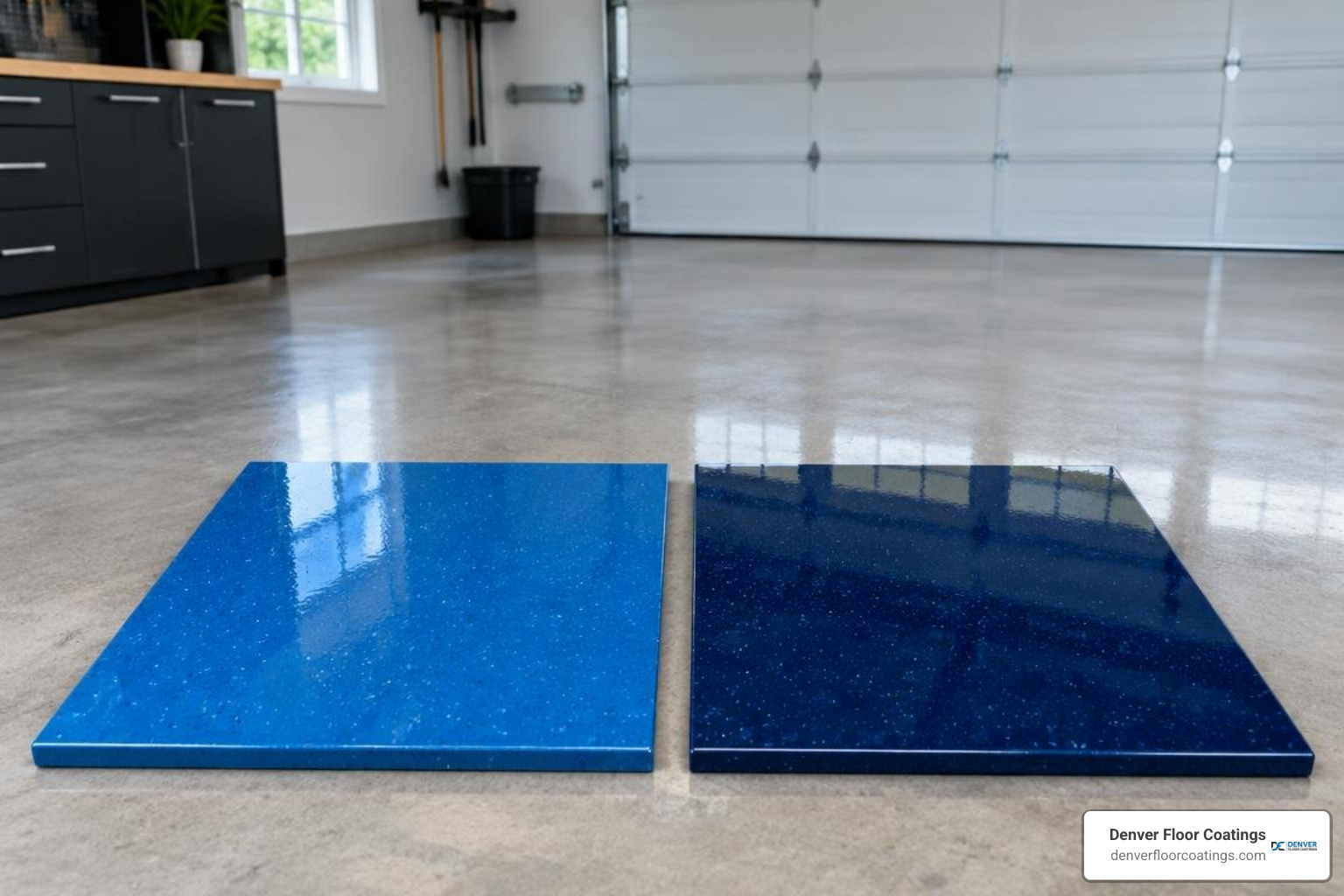
Color selection significantly affects how open, bright, and welcoming a room feels. Natural lighting levels, ceiling height, existing wall colors, and cabinet finishes should all inform your choice of blue pigment or flake mixture.
Residential Garages and Finished Basements
Lighting conditions in residential basements and garages vary widely across different home styles. Garages with modest window coverage or basements with lower ceiling clearances often benefit from lighter tones, such as sky blue, soft azure, or pacific teal. These lighter hues reflect overhead LED fixtures, creating a brighter, more open atmosphere.
In garages with generous daylight or upgraded task lighting, deeper shades like royal blue, denim, or dark navy provide a striking, sophisticated appearance. Deep blue creates a rich backdrop that pairs cleanly with black or stainless-steel storage cabinets and bright vehicle finishes. For homeowners evaluating how dark floors perform compared to neutral gray tones, our guide comparing black vs grey epoxy floors offers practical insights regarding lighting management and daily maintenance.
Commercial, Retail, and High-Traffic Facilities
In commercial spaces, warehouses, and maintenance facilities, blue resin systems provide clear visual organization alongside durability. Vibrant safety blue shades are commonly designated for walkways, pedestrian safety corridors, and equipment parking boundaries to support facility safety planning.
For retail environments, automotive dealerships, and customer service centers, blue resin floors establish a polished, professional brand image. The seamless, non-porous surface withstands heavy pedestrian traffic while remaining straightforward for custodial staff to maintain. Our custom epoxy flooring for business installations are engineered to withstand demanding operational conditions while elevating the overall look of the property.
Key Benefits of Industrial-Grade Blue Epoxy Systems
Untreated concrete is naturally porous, which leaves it susceptible to moisture absorption, deicing chemical damage, oil penetration, and surface dusting over time. Installing an industrial-grade blue resin system creates a resilient, seamless barrier that seals the slab and simplifies ongoing maintenance.
Durability Under Heavy Daily Use and UV Stability
Denver Floor Coatings utilizes industrial-grade polymer chemistry engineered to withstand vehicle weight, rolling storage units, dropped hand tools, and daily foot traffic. While concrete slabs can slowly deteriorate under continuous abrasion, a dense resin overlay distributes point loads and protects the substrate from physical gouging.
Exposure to sunlight through open garage doors or large windows can cause standard epoxy resins to gradually amber or chalk over time. To maintain true blue color fidelity, our installations incorporate an advanced clear polyaspartic topcoat. This aliphatic protective layer provides exceptional ultraviolet stability and chemical resistance, helping prevent premature yellowing. Exploring our article on epoxy floor UV resistance provides helpful details on how protective topcoats preserve floor coloration through years of seasonal sun exposure.
Streamlined Cleaning and Low-VOC Formulations
Seamless resin floors eliminate open joints, grout lines, and rough concrete pores where fine dirt, moisture, and debris typically gather. Routine cleaning is simple: a dry microfiber dust mop removes everyday grit, and occasional damp mopping with warm water and a neutral cleaner restores the gloss.
Automotive fluids such as engine oil, transmission fluid, and antifreeze remain on top of the non-porous surface rather than soaking into the concrete. Most common garage spills can be wiped away promptly with a paper towel or a mild isopropyl alcohol solution without staining the finish.
Our formulations are solvent-free and low-VOC, supporting a cleaner installation process with minimal odor. This ensures a comfortable experience for homeowners during and immediately following the application process.
Professional Installation Process and Substrate Preparation
A long-lasting blue floor coating requires strict adherence to multi-step installation protocols and careful substrate preparation.
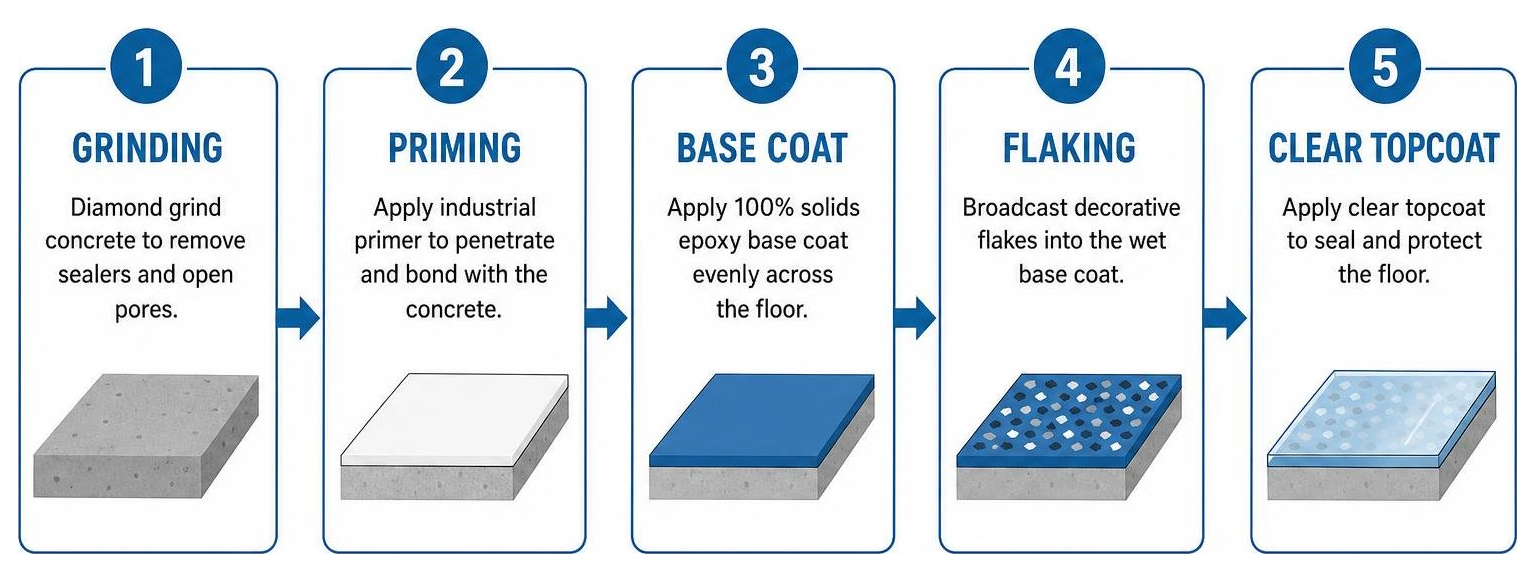
Installation begins with mechanical surface preparation. Technicians use heavy diamond grinders connected to industrial HEPA dust extractors to profile the entire slab. This mechanical profiling removes existing curing compounds, opens the tight capillary network of the concrete, and creates a CSP 2 to CSP 3 profile suitable for mechanical bonding. Concrete floor repair is only a small component of the company’s floor-coating preparation work; ensuring proper slab porosity and mechanical profiling remain the central priorities.
Primer and Base Coat Application
Following mechanical grinding, the slab is vacuumed clean and evaluated for moisture vapor emission levels. An industrial concrete primer is applied to penetrate deep into the concrete capillaries, creating a tenacious root system that minimizes the risk of future delamination. Depending on ambient temperatures and slab conditions, the primer cures over an 8 to 12 hour window.
Next, a high-solids pigmented epoxy base coat is precisely mixed and spread across the floor using calibrated squeegees and rollers. For decorative solid and metallic applications, technicians manipulate the pigments during this stage to achieve uniform coverage or flowing pearlescent visual effects.
Flake Broadcast and Protective Topcoat Curing
For decorative flake installations, vinyl color chips are broadcast into the wet base coat until the entire floor reaches full refusal. After the base layer cures, technicians carefully scrape away excess, unbonded flakes to create a uniform surface profile with balanced underfoot texture.
Finally, a high-solids clear polyaspartic topcoat is applied evenly across the floor. This clear coat encapsulates the color layer, providing protection against chemical spills, moisture, and road salts. The system is generally ready for light pedestrian foot traffic within 24 to 36 hours, while full mechanical and chemical resistance develops over the subsequent 7 days. For further details on protection against automotive chemicals and household fluids, review our epoxy floor chemical resistance guide.
Frequently Asked Questions About Blue Epoxy Flooring
Can blue epoxy flooring be installed over concrete with surface cracks?
Yes, non-structural hairline cracks, surface pits, and small spalls can be addressed prior to coating application. Installers rout, clean, and fill these imperfections using high-strength polymer patching compounds during initial diamond grinding. However, concrete floor repair is only a small component of the company’s floor-coating preparation work. Thorough diamond grinding and moisture testing remain the primary factors that allow the base coat to bond securely and perform reliably over time.
How long does a blue epoxy floor take to cure before use?
Curing times depend on local ambient temperatures, slab temperature, and relative humidity. Under typical room temperatures around 70 degrees Fahrenheit, the clear topcoat is generally ready to support light foot traffic within 24 to 36 hours. Heavy toolboxes, rolling workbenches, and vehicles should remain off the floor for approximately 7 days to give the polymer matrix adequate time to reach full molecular cross-linking.
How does a professional coating system prevent hot-tire pickup?
Hot-tire pickup occurs when warm rubber tires soften low-grade coatings, causing the material to pull away from the slab as the tires cool. Denver Floor Coatings prevents this issue through mechanical diamond grinding that establishes a deep physical anchor profile, combined with industrial-grade epoxy base resins and heat-resistant polyaspartic topcoats engineered to resist plasticizer migration from hot tires.
Is a blue epoxy floor slippery when wet?
A high-gloss solid or metallic finish can be slick when wet, similar to polished stone or tile. For areas exposed to snow, rain, or automotive runoff, decorative flake systems provide natural texture that helps improve traction. Installers can also incorporate fine aluminum oxide anti-slip media into the clear topcoat to increase slip resistance while preserving the floor’s blue color and visual clarity.
How do you maintain the shine of a blue epoxy floor?
Routine maintenance involves regular sweeping or dust mopping to remove loose dirt and abrasives. For deeper cleaning, mop the surface with warm water and a small amount of neutral, residue-free floor cleaner. Avoid harsh acid-based cleaners, bleach, or stiff wire brushes, which can dull the protective clear coat over time.
Elevate Your Garage with Professional Floor Coatings
A professionally installed blue floor coating provides lasting protection for your concrete slab against seasonal freeze-thaw cycles, road salts, and daily vehicle use, all while creating an attractive, easy-to-clean environment. Whether you envision a deep sapphire metallic finish, a clean solid royal blue, or a textured multi-tone blue flake system, Denver Floor Coatings delivers industrial-grade results tailored to your home.
Our team focuses on careful mechanical surface preparation, proven multi-layer resin chemistry, and dedicated customer care from consultation through final walk-through. If you are ready to upgrade your garage, workshop, or basement concrete, schedule your durable garage floor upgrade with Denver Floor Coatings today to request a complimentary on-site estimate.