

Why Professional Concrete Crack Filler is Essential for Structural Longevity
Selecting a professional-grade concrete crack filler is a critical decision for any property owner looking to preserve the structural integrity and aesthetic value of their flooring. While concrete is often perceived as a nearly indestructible material, it is, in reality, a porous and dynamic substrate that reacts continuously to environmental stressors, shifting soil, and thermal fluctuations. In the Denver metro area, where temperature swings can be dramatic and unpredictable, the choice of a repair material is not merely about aesthetics; it is about engineering a solution that can withstand the unique pressures of the Front Range. A high-quality filler is designed to seal, repair, and reinforce cracks before they evolve into more significant structural failures that could potentially compromise the entire slab.
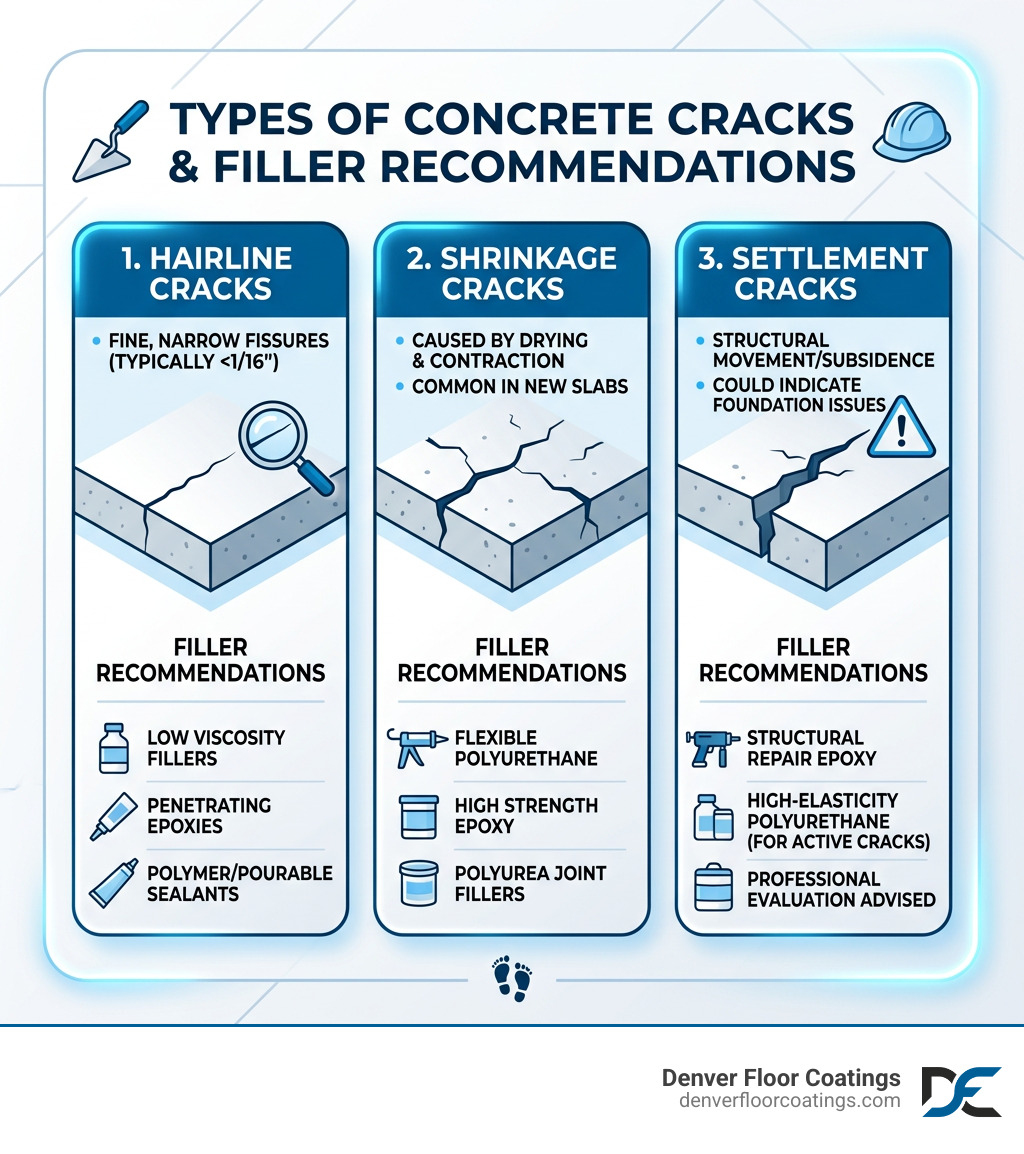
At Denver Floor Coatings, we understand that every crack tells a complex story about the slab’s history and the environment surrounding it. Whether you are observing hairline fissures on a residential patio or significant gaps in a commercial warehouse floor, the application of the correct chemistry is essential for a successful outcome. We typically categorize professional fillers into several specialized types, including polyurethane, epoxy, and polyurea, each offering distinct advantages in terms of flexibility, bond strength, and cure time. Polyurethane is often favored for its high flexibility in active cracks, while epoxy provides a rigid, high-strength bond for structural repairs. Polyurea, a staple in our professional installations, offers a medium-to-high flexibility with an exceptionally fast cure time, making it ideal for high-traffic environments where downtime must be minimized.
I’m Mike Wislinsky, founder of Denver Floor Coatings. With over 20 years of experience in engineering and operations, I have seen firsthand how an improper approach to floor maintenance can lead to recurring issues and unnecessary expenses. My background allows our team to look beyond the surface and address the underlying causes of concrete degradation. We focus on providing solutions that are intended to offer long-term durability rather than temporary patches. In the following sections, I will detail the professional methodologies we use to ensure that your concrete surfaces remain protected against the elements and the rigors of daily use. Our approach is rooted in technical precision, ensuring that every repair is matched to the specific needs of the substrate and the local climate.
Understanding the Role of Concrete Crack Filler in Floor Maintenance
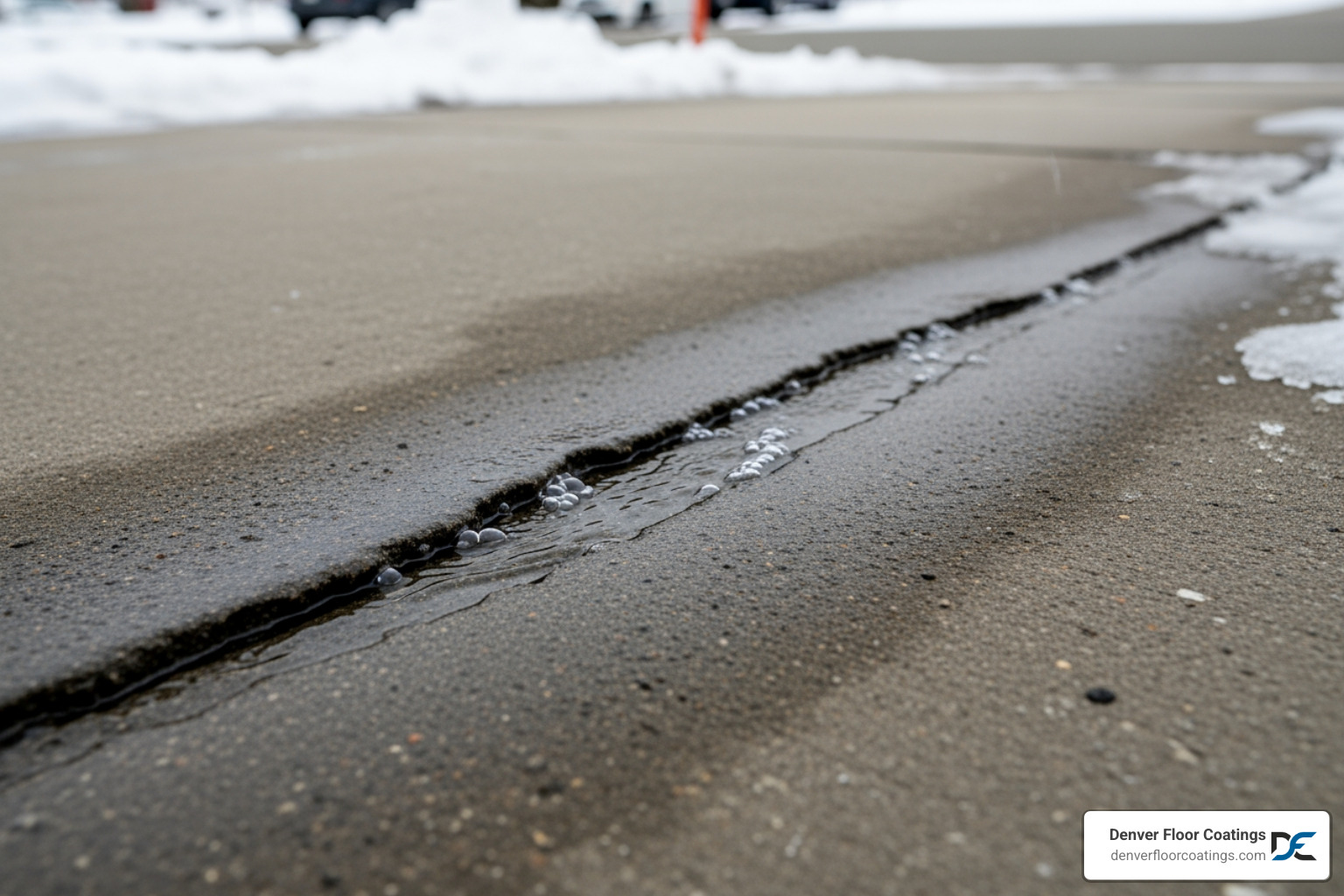
Maintaining a concrete floor in the Front Range requires a proactive and nuanced strategy. From the expansive soils of Fort Collins down to the rocky terrain of Castle Rock, our local geology and climate are particularly demanding on masonry and concrete structures. It is a common misconception that small fissures are purely cosmetic; in reality, a crack is often a symptom of deeper environmental pressures. When moisture enters an unsealed crack, it initiates a cascade of potential issues that can compromise the entire slab. In our Colorado winters, water that has penetrated these gaps undergoes a freeze-thaw cycle, expanding as it turns to ice and exerting significant hydrostatic pressure. This pressure can force the crack to widen and deepen, leading to a cycle of degradation that is difficult to reverse without professional intervention.
Beyond the immediate threat of ice, soil instability is a major factor in the Denver area. Many homes and commercial buildings are constructed on bentonite clay, which expands and contracts based on moisture levels. This movement can lead to “active” cracks, where sections of the slab move independently. Filling these gaps with a professionally selected material is essential for moisture mitigation, as it prevents water from reaching the subgrade. When water reaches the soil beneath the slab, it can cause erosion or “heaving,” further destabilizing the floor. In industrial settings, the edges of unfilled cracks are prone to “spalling,” where the concrete breaks away under the weight of heavy machinery or forklift traffic, creating safety hazards and increasing the risk of equipment damage. This mechanical breakdown can eventually lead to the failure of the entire floor system if not addressed with the appropriate filler technology.
Furthermore, open cracks allow for the ingress of air and moisture that can reach the internal reinforcement bars, or rebar. As rebar is exposed to these elements, it can begin to rust and expand. This internal expansion creates outward pressure, causing the concrete to “pop” or spall from the inside out, a process that can significantly weaken the structural capacity of the floor. At Denver Floor Coatings, we prioritize safety and environmental compliance in every project. For older floors, we are mindful of previous coatings and the potential for lead dust. The EPA provides critical guidelines on lead dust safety that inform our surface preparation protocols. We also strictly adhere to the chemical handling requirements outlined in documents such as the SAKRETE Concrete Crack Filler Safety Data Sheet to ensure a safe environment for both our technicians and our clients. Our commitment to safety is as rigorous as our commitment to technical excellence.
Comparing the Best Types of Concrete Crack Filler for Your Space
Selecting the appropriate concrete crack filler requires a deep understanding of material science and the specific conditions of the site. The chemistry of the filler must be carefully matched to the “personality” of the crack to ensure a successful repair. We evaluate whether a crack is stable, meaning it has stopped moving, or active, meaning it continues to shift with seasonal changes. The choice between epoxy, polyurethane, and polyurea is dictated by the required bond strength, elongation properties, and the expected traffic load. Epoxy-based fillers are often considered the standard for structural repairs due to their extremely high bond strength, which can exceed the strength of the concrete itself. However, because epoxy is a rigid material with low elongation, it is generally reserved for cracks that are no longer moving. If a rigid epoxy is applied to a slab that is still settling, the stress will often cause a new crack to form immediately adjacent to the repair.
In commercial environments such as warehouses in Aurora or distribution centers in Thornton, epoxy is frequently utilized to support heavy loads. Its high compressive strength ensures that it will not compress or deform when subjected to the weight of heavy machinery. For clients looking to restore or upgrade their floors, the process often begins with the removal of old, failing materials. Understanding how to remove epoxy from concrete is a specialized skill that our team employs to prepare the surface for a new, high-performance system. While epoxy is excellent for certain applications, many residential and commercial spaces benefit more from the flexibility of polyurethane or polyurea, which can accommodate the natural movement of the slab without losing their seal.
Polyurethane and polyurea fillers are engineered to provide “give,” allowing the material to expand and contract in harmony with the concrete. This is particularly important in Colorado, where temperature swings can cause significant thermal expansion. Polyurea is a preferred choice in the professional coating industry because it offers incredible elongation properties and a very rapid cure time. While some standard fillers may require 24 hours or more to reach full strength, certain polyurea formulations can be traffic-ready in less than an hour. This efficiency is vital for commercial facilities that cannot afford extended downtime. For those who have already invested in a high-quality floor, knowing how to fix minor damage on your epoxy floor without breaking a sweat often involves the use of these advanced, fast-acting chemistries that integrate seamlessly with existing coatings. Our team ensures that the selected material is compatible with both the substrate and any existing finishes.
Professional Preparation and Application Techniques
At Denver Floor Coatings, we maintain that the longevity of a repair is almost entirely dependent on the quality of the preparation. Even the most advanced concrete crack filler will likely fail if it is applied to a surface that has not been properly cleaned and profiled. Our professional methodology begins with mechanical cleaning and diamond grinding. We do not rely on simple manual cleaning; instead, we use specialized equipment to “chase” the crack, creating a clean “U” or “V” shaped profile. This process removes laitance—the weak, brittle top layer of the concrete—and exposes the sound aggregate beneath. By increasing the surface area and creating a clean profile, we ensure that the filler can form a robust mechanical and chemical bond with the substrate. This step is non-negotiable for achieving a repair that is intended to last.
Once the crack has been mechanically opened, dust extraction becomes the priority. Any remaining dust or debris can act as a bond-breaker, leading to premature delamination. We utilize industrial-grade vacuum systems equipped with HEPA filtration to ensure that every speck of dust is removed from the void. This is often followed by a solvent wipe using denatured alcohol or acetone to remove any trace oils or contaminants. This level of detail is a hallmark of our epoxy floor repair for minor damage services, as we understand that even microscopic contaminants can compromise the integrity of the repair. Proper cleaning is the foundation upon which all successful floor coatings are built, and our technicians are trained to identify even the smallest impediments to a perfect bond.
Managing the depth of the crack is another critical technical consideration. For deep fissures, it is often inappropriate to fill the entire void with the repair polymer. Many fillers are designed to function within a specific width-to-depth ratio to allow for proper expansion and contraction. In these instances, we insert a foam backer rod into the crack to establish a consistent depth. This ensures that the filler only bonds to the sidewalls of the crack, which is essential for maintaining the material’s ability to stretch. Finally, during the application phase, we typically overfill the crack slightly to account for any minor shrinkage during the curing process. Once the material has reached the appropriate hardness, we use floor scrapers or diamond cup wheels to grind the filler flush with the surrounding slab. This creates a perfectly level surface that is virtually invisible once a professional topcoat is applied, providing a seamless transition that is both functional and aesthetically pleasing. This meticulous process ensures that the repair does not just fill a gap, but restores the continuity of the floor.
When to Move Beyond Fillers to High-Performance Coatings
While a high-quality concrete crack filler is an excellent tool for addressing localized issues, it does not provide comprehensive protection for the entire slab. In regions like Boulder, Longmont, and Lakewood, concrete floors are constantly exposed to harsh chemicals, road salts, and magnesium chloride tracked in during the winter months. These substances can penetrate the porous surface of the concrete, leading to widespread degradation over time. In many cases, a simple patch is only a temporary measure against a larger environmental threat. This is why Denver Floor Coatings specializes in high-performance coating systems that encapsulate the entire floor, providing a durable, chemical-resistant, and UV-stable barrier that far exceeds the capabilities of a standalone filler. Our systems are designed to provide a holistic shield for your concrete investment.
Our polyaspartic and epoxy flake systems are designed to transform aging, cracked concrete into industrial-grade surfaces. These systems do not just hide the cracks; they reinforce the entire floor by creating a monolithic layer that distributes weight and resists impact. One of the primary advantages of working with Denver Floor Coatings is our efficient installation process. We recognize that our clients’ time is valuable, and our professional teams are often able to complete the preparation, repair, and coating of a standard garage in a single day. This rapid turnaround is made possible by our use of advanced polyaspartic chemistries, which cure much faster than traditional materials while offering superior resistance to hot-tire pickup and chemical staining. This efficiency does not come at the expense of quality, as our materials are selected for their superior performance characteristics.
In addition to durability, our coating systems significantly enhance the safety and hygiene of a space. The flake finishes we provide offer a non-slip texture that is particularly beneficial in Colorado’s wet and snowy conditions. For our commercial clients in Arvada, Westminster, and beyond, these seamless surfaces meet rigorous standards for cleanliness and safety, making them ideal for medical facilities, food processing plants, and high-traffic retail environments. If you are looking for a solution that moves beyond simple maintenance and toward a permanent enhancement of your property, our residential coating service and commercial coating services offer the highest level of protection available in the industry today. We provide a comprehensive assessment to determine if a full coating system is the most appropriate path forward for your specific facility.
Frequently Asked Questions about Concrete Crack Repair
One of the most common questions we receive at Denver Floor Coatings concerns the timeframe for returning a floor to service after a repair. The cure time for a concrete crack filler can vary significantly based on the specific product used and the ambient environmental conditions. While some standard polymers may require a full 24 hours to support vehicle traffic, the advanced hybrid polyurethanes and polyureas we utilize are often traffic-ready in as little as 60 to 90 minutes. It is important to note that cooler temperatures, which are common in the Denver area, can extend these cure times. Our team carefully monitors site conditions, including slab temperature and humidity, to ensure that the material has reached the necessary hardness before the floor is put back into use. This scientific approach prevents premature failure due to early loading.
Another frequent inquiry involves the use of fillers on vertical surfaces, such as foundation walls or curbs. Most of the high-performance fillers used for flooring are “self-leveling,” meaning they have a low viscosity designed to flow deep into horizontal cracks. If these products are applied to a vertical wall, they will simply run down the surface before they can cure. For vertical repairs, we utilize “non-sag” or thixotropic paste fillers that are engineered to stay in place while curing. This distinction is crucial for ensuring a successful repair on different planes of a structure. We always select the material that is specifically engineered for the orientation of the crack, ensuring that the repair remains where it is needed most. This attention to detail is what separates a professional application from a generic repair.
Clients also often ask why cracks sometimes reappear after they have been filled. In our experience, this is rarely a failure of the material itself and is more often a result of improper preparation or an incorrect diagnosis of the crack’s movement. If a crack is “active” and continues to move due to soil issues or thermal expansion, a rigid filler will eventually fail as the concrete pulls away from it. Furthermore, if the crack was not cleaned to professional standards, the filler may have bonded to surface dust rather than the concrete substrate. At Denver Floor Coatings, we conduct a thorough assessment to identify these potential issues before we begin, ensuring that the repair is designed to be as long-lasting as possible. We also look for underlying issues such as moisture vapor transmission, which can affect the bond of any repair material if not properly addressed through specialized primers or moisture barriers.
Conclusion: Securing Your Investment with Denver Floor Coatings
A crack in your concrete is more than just a visual blemish; it is a signal that your floor requires professional attention to prevent further deterioration. Whether you are dealing with minor surface fissures or significant structural gaps, the key to a successful outcome lies in the selection of the right materials and the application of rigorous preparation techniques. In the unique climate of the Colorado Front Range, where the elements are particularly harsh, a proactive approach to floor maintenance is essential for protecting your investment. By choosing a professional partner like Denver Floor Coatings, you ensure that your repairs are handled with the engineering expertise and attention to detail that your property deserves. We focus on delivering results that are intended to provide lasting value and structural stability.
We are committed to providing the highest quality concrete restoration and coating services in the region. Our goal is to move beyond temporary fixes and provide our clients with durable, beautiful floors that can withstand the test of time and the rigors of the Colorado environment. Don’t let a small crack evolve into a major structural concern. If you are ready to transition from simple patching to a comprehensive floor protection system that enhances both the value and functionality of your space, we invite you to take the next step. Contact Denver Floor Coatings today for a professional estimate. We proudly serve the entire Denver metro area and the Front Range, from Fort Collins to Castle Rock, and we look forward to helping you achieve a floor that is as resilient as it is attractive. Our team is ready to provide the technical guidance and professional service necessary to transform your concrete surfaces.