

Why Anti Slip Epoxy Is the Smartest Way to Protect Your Floor — and Your Family
Anti slip epoxy is a specialized floor coating that mixes hard-wearing resin with a textured aggregate to create a surface that grips your feet — even when wet, oily, or dusty.
Here’s what you need to know at a glance:
| Question | Quick Answer |
|---|---|
| What is it? | A two-part epoxy coating with built-in grit or aggregate for traction |
| Who needs it? | Homeowners, garages, commercial kitchens, warehouses, and more |
| How does it work? | Aggregate particles create a textured surface that increases grip |
| Is it durable? | Yes — resistant to chemicals, abrasion, and heavy traffic |
| How long to cure? | Light foot traffic in as little as 8–10 hours; vehicles at 48–72 hours |
| Indoor or outdoor? | Primarily indoor; some formulas work in sheltered outdoor areas |
Slip-and-fall accidents are common causes of workplace injuries — and they happen just as easily in a home garage as in a factory. A smooth epoxy floor looks great, but when wet from rain tracked in off a Denver driveway, or slick from motor oil, it can become a hazard. Anti slip epoxy solves this without sacrificing the clean, polished look you want.
Whether you’re finishing a garage, protecting a commercial kitchen, or upgrading a warehouse floor, the right slip-resistant coating can reduce the risk of falls — while also adding chemical resistance, durability, and a professional finish.
I’m Mike Wislinsky, Founder of Denver Floor Coatings, and with over 20 years of engineering and operations experience — including hands-on work with high-performance floor systems — I’ve seen how the right anti slip epoxy can transform both the safety and the appearance of a space. In this guide, I’ll walk you through everything you need to make a confident, informed decision.
When considering high-performance epoxy floors, safety and durability should always go hand-in-hand. For homeowners looking to upgrade their epoxy garage flooring or facility managers planning a comprehensive warehouse floor coating project, selecting a system with the appropriate level of traction is a critical decision.
What is Anti Slip Epoxy and How Does It Work?
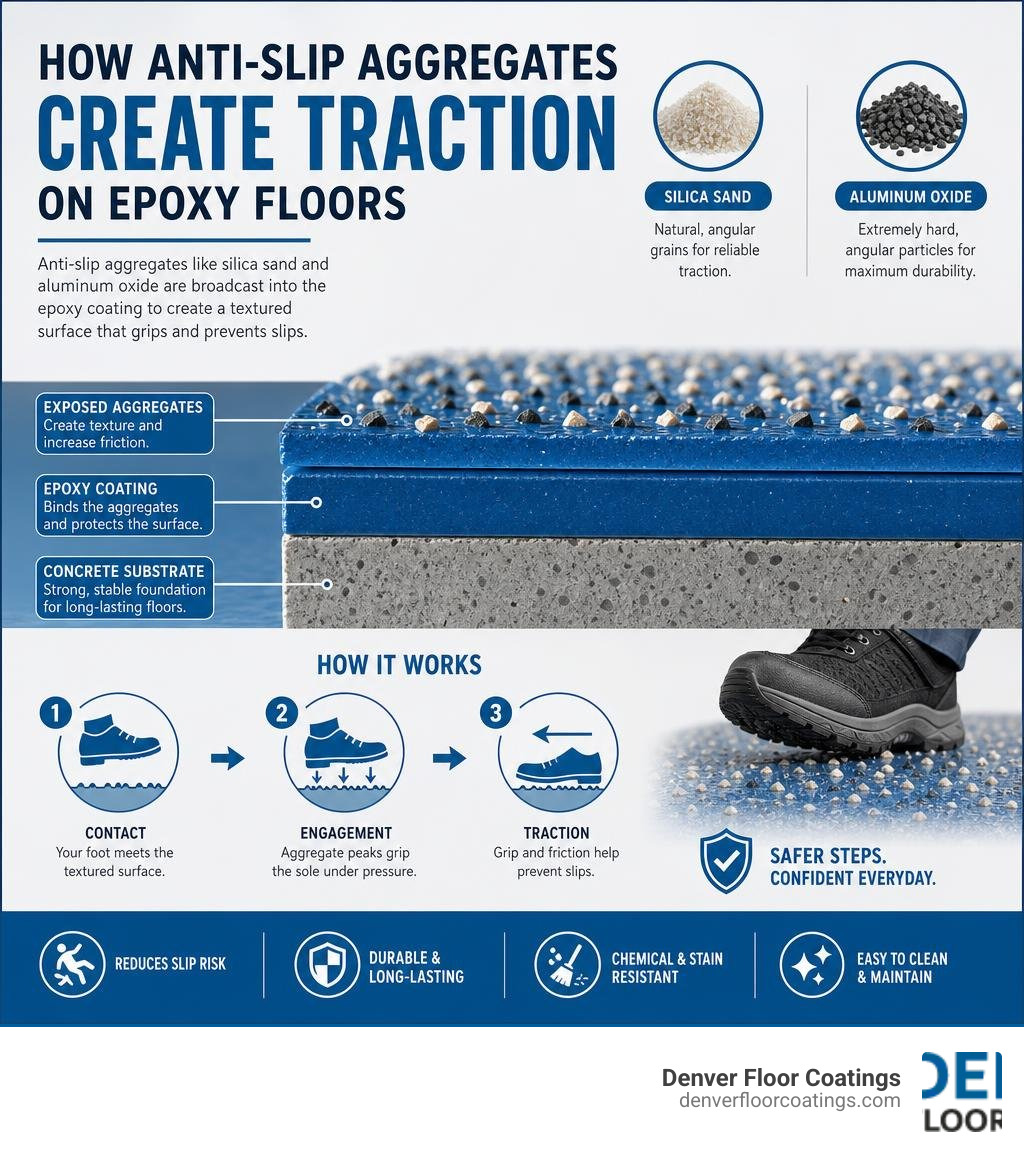
At its core, anti slip epoxy is a high-performance floor system designed to prevent slips and falls. While standard epoxy cures to a smooth finish, slip-resistant versions incorporate specialized aggregates to create mechanical traction.
A high-quality epoxy system consists of a liquid polymer resin and a hardener. When mixed, they undergo a chemical reaction that bonds them together, transforming the liquid into a rigid, durable plastic coating that adheres directly to prepared concrete.
To achieve slip resistance, an aggregate is suspended within this resin matrix or broadcasted over the surface during application. This aggregate breaks up the flat plane of the floor, creating microscopic ridges and valleys that provide physical grip for footwear and tires. For a detailed breakdown of how different slip-resistant floors compare, check out The Complete Guide to Non-Slip Flooring.
Understanding the Science of Slip Resistance
The effectiveness of any textured floor coating comes down to mechanical grip and liquid displacement.
When a person walks across a smooth, wet floor, a micro-thin layer of water can get trapped between the shoe sole and the surface, causing hydroplaning. By introducing a defined surface profile using aggregates, we create channels where liquids can be displaced. When stepped on, the liquid is pushed into the low points of the texture, allowing the shoe sole to make direct contact with the raised aggregate particles. This physical contact provides the mechanical grip required to keep you upright.
Anti Slip Epoxy vs. Standard Smooth Coatings
Standard smooth coatings are highly sought after for their seamless look and high light-reflectivity. However, they are inherently slick when contaminated with water, grease, or dust.
When comparing the two, anti slip epoxy offers several distinct structural advantages:
- Enhanced Traction: The foremost benefit is safety, providing reliable footing even in high-risk zones.
- Increased Film Thickness: Anti-slip systems are often applied as high-build coatings to properly lock in the texture, resulting in a thicker, more impact-resistant barrier over your concrete.
- Superior Wear Resistance: Because the aggregate material (such as quartz or aluminum oxide) is physically harder than the epoxy resin itself, it takes the brunt of physical wear from foot and vehicle traffic, protecting the underlying polymer layer from premature degradation.
If you are trying to decide which system is best for your home, you can read more about the Best Non-Slip Garage Floor Epoxy to find the ideal balance of beauty and safety.
Selecting the Right Texture: Fine, Medium, and Coarse Profiles
Not all slip-resistant floors are created equal. The size, shape, and distribution of the aggregate determine the final surface profile. Choosing the right texture requires balancing the safety needs of the environment with the ease of cleaning.
| Profile | Typical Aggregate Size | Best Environments | Cleanability |
|---|---|---|---|
| Fine | 80 to 120 mesh | Residential garages, light commercial offices, retail areas | Very Easy (Mop & bucket) |
| Medium | 40 to 60 mesh | Commercial kitchens, light manufacturing, packaging zones | Moderate (Stiff brush & mop) |
| Coarse | 16 to 30 mesh | Heavy industrial, wet processing, loading docks, ramps | Requires power washing / scrubbing |
Aggregate physical properties also play a major role in performance. While silica sand is common, materials like aluminum oxide offer superior hardness, and quartz provides an aesthetic, rounded profile. To see how quartz affects safety, read Navigating Quartz: Are Your Floor Tiles a Slip Hazard?.
Fine Profiles for Barefoot and Light Traffic
Fine profiles are designed for areas where people walk in socks, light shoes, or barefoot, and where heavy liquid spills are rare, using very fine aggregates that provide a subtle, sandpaper-like texture.
The primary advantage of a fine profile is that it maintains a clean, modern look while offering a comfortable walking surface. It is exceptionally easy to clean with a standard microfiber mop, making it a popular choice for home interiors and light commercial lobbies. To understand the application and design options for these lighter profiles, see our Anti-Slip Epoxy Flooring Ultimate Guide.
Medium and Coarse Profiles for Demanding Environments
In commercial and industrial environments, fine textures are rarely enough. Areas prone to heavy grease, constant water exposure, or heavy machinery require medium to coarse profiles. These profiles utilize larger aggregate granules to ensure traction is maintained even when the floor is covered in thick fluids.
While coarse profiles are highly effective at preventing slip-and-fall injuries under harsh conditions, they do require specialized cleaning techniques. Standard mops will catch and tear on the heavy texture, meaning these floors must be cleaned using stiff-bristled deck brushes, floor scrubbers, or pressure washers. To explore heavy-duty, high-traction options, read our guide on Non-Slip Industrial Flooring.
Key Industries and Environments Benefiting from Slip-Resistant Floors

Many industries face strict regulatory requirements regarding floor safety. Any facility where liquids are handled, processed, or spilled is a prime candidate for a textured floor system.
Commercial and Industrial Applications
Commercial facilities must prioritize floor safety to protect employees and comply with regulations. Environments that benefit most include:
- Commercial Kitchens: Exposure to cooking oils, fats, and water makes these floors hazardous. A medium-to-coarse aggregate system is required to cut through grease.
- Warehouses and Distribution Centers: These spaces must withstand forklift traffic while keeping pedestrian walkways safe. Textured walkways can be integrated directly into the layout.
- Automotive Showrooms and Service Bays: Oil, brake fluid, and water tracked in from vehicles require a chemical-resistant, high-traction surface.
- Food Processing Facilities: Meeting USDA and FDA guidelines requires a seamless, non-porous floor that can withstand aggressive cleaning chemicals and thermal washdowns without losing slip resistance.
For an in-depth look at your options in these spaces, explore our guide on Safety Flooring Options.
Residential Garages and High-Traffic Home Spaces
While commercial safety is often driven by regulations, residential floor safety is about protecting your family. The garage is the most heavily used entryway in many Colorado homes, and it is exposed to some of the harshest conditions.
During our snowy winter months in areas like Parker, Aurora, or Littleton, vehicles track in road salt, melting ice, and slush. This mixture pools on the garage floor, creating a highly slippery surface. Additionally, minor fluid leaks from vehicles can make smooth concrete slick.
Applying an anti slip epoxy system ensures that your garage floor remains safe to walk on, whether you are carrying groceries, working on a hobby, or parking your car. To learn more about residential options, read about Non-Slip Epoxy Flooring.
Technical Specifications, Safety Standards, and Performance Ratings
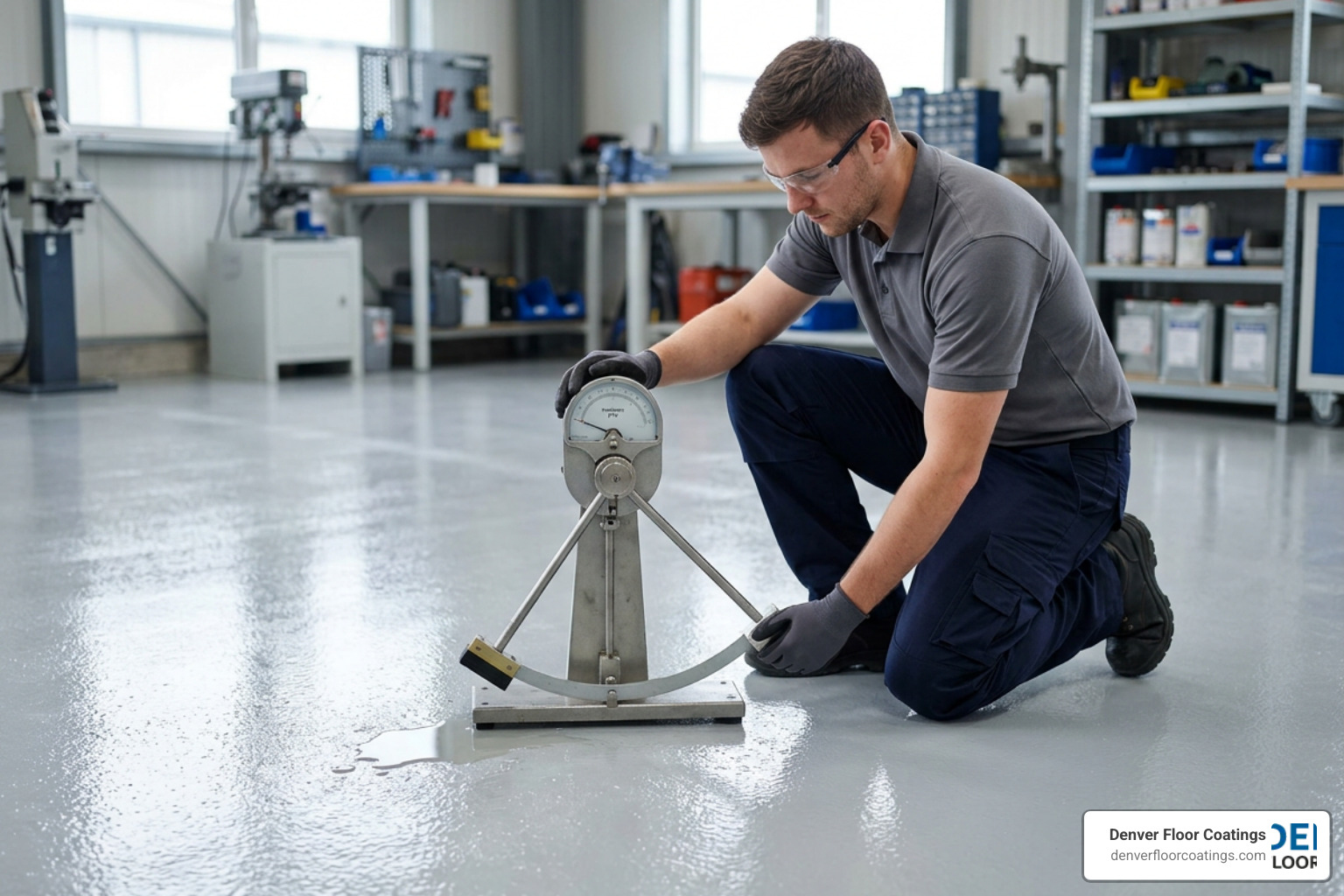
When selecting a slip-resistant floor, it is important to look at objective engineering standards rather than relying solely on visual inspection. Professional-grade coatings are tested extensively to ensure they meet national and international safety regulations.
Understanding PTV and COF Ratings
Two primary metrics are used to measure the slip resistance of a floor:
- Coefficient of Friction (COF): This measures the ratio of the force of friction between two bodies and the force pressing them together. The Occupational Safety and Health Administration (OSHA) recommends a minimum static COF of 0.5 for walking surfaces, while the American National Standards Institute (ANSI) specifies a minimum dynamic coefficient of friction (DCOF) of 0.42 for wet walkways.
- Pendulum Test Value (PTV): Widely used in international standards, the pendulum test mimics the action of a slipping heel. A PTV of 36 or higher indicates a low slip potential, which is the gold standard for public and commercial spaces.
High-performance anti-slip systems, such as Suregrip EP XFH | Polycote, are engineered to consistently exceed these standards, even under wet conditions.
Durability and Chemical Resistance of Anti Slip Epoxy
A floor coating must do more than just provide traction; it must also withstand physical and chemical abuse. Industrial-grade epoxy systems offer outstanding performance across several key areas:
- Abrasion Resistance: High-solids epoxy resists wear from heavy foot traffic and rubber-wheeled vehicles, ensuring the texture does not wear smooth over time.
- Chemical Resistance: These coatings are designed to resist damage from common industrial chemicals, motor oils, gasoline, brake fluids, and harsh cleaning solvents.
- Hot Tire Pickup Resistance: Low-quality retail floor paints often soften and peel when hot vehicle tires park on them. Professional-grade epoxies form a cross-linked chemical bond with the concrete that prevents this failure mode entirely.
The Professional Installation Process: Preparation, Application, and Curing
To ensure a slip-resistant floor performs as intended and remains bonded to the concrete for years to come, a precise, multi-step professional installation process must be followed. At Denver Floor Coatings, we adhere to strict industry standards to ensure every installation is executed with precision.
Substrate Preparation and Priming
The most critical phase of any floor coating project is preparation; without proper surface prep, even the highest-quality epoxy will eventually peel or delaminate.
First, the concrete is mechanically prepared using diamond grinders or shot-blasting equipment. This removes the weak top layer of concrete (laitance), uncovers hidden cracks, and opens up the pores of the slab to achieve a concrete surface profile (CSP) of 3 to 4, which feels similar to medium-grit sandpaper.
Once ground and vacuumed to remove dust, cracks, spalls, or joints are repaired using a high-strength polymer filler. Next, a dedicated primer is applied. The primer penetrates deep into the open concrete pores, creating a powerful mechanical bond and sealing the slab to prevent outgassing bubbles from ruining the topcoats.
Mixing, Application, and Curing Timelines
Once the primer has cured, the main epoxy body coat is applied. This is where the slip-resistant aggregate is introduced. There are two primary professional methods for applying the aggregate:
- The Broadcast Method: The epoxy resin is rolled out smoothly, and the aggregate is immediately thrown (broadcasted) into the wet resin until the floor is completely saturated. Once cured, the excess loose aggregate is swept away, and a lock-coat (topcoat) is applied to seal the texture.
- The Slurry/Pre-Mixed Method: The aggregate is mixed directly into the liquid epoxy components before application. The mixture is then spread using a squeegee and back-rolled to ensure even distribution.
Because professional-grade epoxy has a limited “pot life” (typically 20 to 30 minutes once mixed), our installation teams must work quickly and precisely.
After application, the curing timeline begins. Under standard conditions (around 70°F):
- Tack-Free: 3 to 4 hours.
- Light Foot Traffic: 8 to 12 hours.
- Heavy Foot/Vehicle Traffic: 48 to 72 hours.
- Full Chemical Cure: 7 days.
Coverage Rates, Cost Considerations, and Environmental Limitations
Understanding material coverage rates is essential for achieving the correct film thickness and texture density.
A standard, high-build industrial coating like 502 HD Anti Slip Coating | Rawlins typically covers approximately 133 square feet per gallon kit when applied at a heavy-duty thickness of 12 mils. Lighter, water-based color coats may cover around 250 square feet per gallon, while clear topcoats often cover up to 300 square feet per gallon.
While anti slip epoxy is an exceptional choice for indoor concrete, it does have environmental limitations. Standard epoxy resins are sensitive to ultraviolet (UV) radiation from direct sunlight. If exposed to constant sunlight, the epoxy can yellow, become brittle, and eventually chalk or delaminate.
For this reason, Denver Floor Coatings restricts our coating installations strictly to interior concrete surfaces, such as home garages, warehouses, commercial kitchens, and showrooms. We do not coat exterior patios, driveways, or walkways exposed to direct sunlight, as these environments compromise the longevity and performance of the system.
Frequently Asked Questions About Slip-Resistant Coatings
Can anti-slip epoxy be used on outdoor concrete surfaces?
As a rule, standard epoxy is not recommended for outdoor concrete surfaces that are exposed to direct sunlight and weather. The UV rays will cause the epoxy to degrade, yellow, and lose its physical strength over time. For outdoor spaces, other specialized UV-stable coatings (such as polyaspartic or polyurethane-based systems) are much better suited. However, epoxy is excellent for indoor spaces and sheltered areas that do not receive direct sunlight.
How do you clean and maintain a textured epoxy floor?
Cleaning a textured floor is simple if you use the right tools. For daily maintenance, sweep the floor with a soft-bristled broom to remove loose dirt and dust. For deeper cleaning, use a pH-neutral floor cleaner diluted in warm water. Avoid using harsh, highly acidic, or alcohol-based cleaners, as these can dull the finish over time.
Apply the cleaning solution, let it dwell for a few minutes to loosen dirt, scrub gently with a soft-to-medium bristle deck brush, and wet-vacuum or squeegee the dirty water away.
What is the typical lifespan of a professional anti-slip floor coating?
The lifespan of a slip-resistant floor depends on the volume of traffic it receives and how well it is maintained. In a typical residential garage setting, a professionally installed, high-solids coating can often last for many years without showing significant wear. In heavy industrial environments with constant forklift traffic and chemical exposure, the floor may require a fresh topcoat every 5 to 10 years to maintain its peak slip resistance and appearance.
Conclusion
Investing in anti slip epoxy is one of the most effective ways to protect your property, your family, and your employees from the physical and financial consequences of slip-and-fall accidents. By combining the incredible durability and chemical resistance of industrial-grade epoxy with a customized, high-traction texture, you get a floor that performs beautifully under the toughest conditions.
At Denver Floor Coatings, we specialize in transforming plain, porous concrete into safe, durable, and highly functional spaces. Whether you want to upgrade your home garage to withstand Colorado’s snowy seasons or need an OSHA-compliant, hygienic floor for a commercial facility, we have the experience and high-performance systems to get the job done right.
Ready to make your concrete floors safer, cleaner, and more durable? Get a free estimate from Denver Floor Coatings today, and let our team of professionals design the perfect slip-resistant solution for your space.