

Why Concrete Floor Flakes Create a Showroom-Quality Surface
Concrete floor flakes are colored vinyl chips broadcast into an epoxy or polyaspartic base coat, then sealed under clear protective topcoats. The result is a durable, multi-dimensional, textured floor that can disguise minor slab imperfections, provide enhanced foot traction, and give a residential garage, workshop, or commercial facility a refined, stone-like aesthetic.
A high-performance flake system is fundamentally distinct from simple topical sealers or surface paints. It represents a multi-layered coating assembly engineered to form a robust mechanical and chemical bond with a properly prepared concrete substrate. When installed correctly, this system acts as a protective shield against everyday mechanical wear, fluid spills, deicing salts, and heavy vehicular traffic. Achieving a uniform, high-density finish typically requires broadcasting approximately 0.25 pounds of flakes per square foot, ensuring the basecoat is fully saturated to rejection.
While concrete is renowned for its compressive strength, untreated slabs remain inherently porous and susceptible to staining, spalling, efflorescence, and surface dusting over time. In regions like Colorado, rapid temperature fluctuations, freeze-thaw cycles, tracked-in road chemicals, and vehicle moisture accelerate surface wear. Applying a multi-layer flake broadcast system seals the porous matrix, transforming bare gray slabs into clean, light-reflective spaces that resist abrasive wear and simplify routine maintenance.
Denver Floor Coatings specializes in high-performance epoxy and polyaspartic coating systems, including decorative flake finishes, rather than stained concrete services. Concrete floor repair is only a small component of the company’s floor-coating preparation work, focused strictly on filling minor divots and stabilizing dormant hairline cracks to provide a flat, sound foundation for the resin layers.
I am Mike Wislinsky, founder and president of Denver Floor Coatings. With more than 20 years of engineering and operations leadership experience, I bring a process-driven methodology to selecting the best floor coating for concrete structures. When property owners evaluate modern coatings for garage floor applications, understanding resin mechanics, aggregate sizing, and topcoat chemistry ensures an investment that delivers a resilient, cleanable garage epoxy finish.
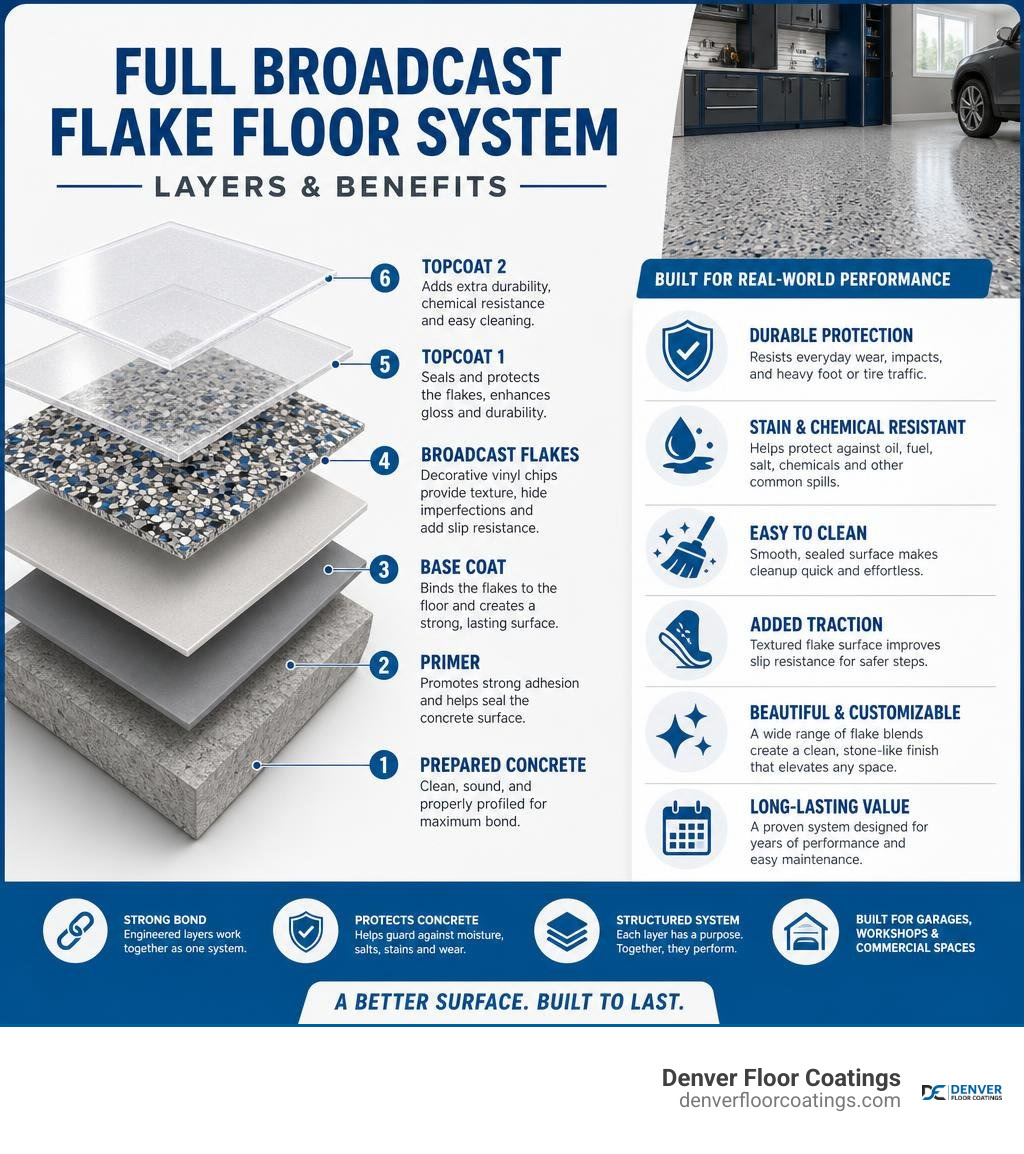
Understanding Concrete Floor Flakes and Multi-Layer Coating Systems

Transforming an untreated concrete slab into a resilient, decorative surface requires deliberate chemical formulation and mechanical engineering. At Denver Floor Coatings, we engineer high-performance concrete coatings that combine specialized vinyl polymer chips with deep-penetrating basecoats and heavy-duty clear topcoats. This multi-layered composite behaves as a unified system that buffers physical impacts while sealing the concrete from fluid ingress.
Unlike traditional single-layer coatings that rest solely on the concrete surface, a professional multi-layer system creates an intimate mechanical bond within the slab’s open capillary network. The basecoat serves as a moisture-mitigating primer, penetrating the porous surface matrix to minimize the risk of delamination from vapor pressure. While the base resin remains receptive, colored vinyl flakes are broadcast across the wet film, embedding themselves thoroughly into the matrix before being encapsulated under clear polyaspartic resins.
Materials and Sizing Options for Concrete Floor Flakes
Decorative flakes are manufactured from specialized acrylic and vinyl resins blended with colorfast pigments. This composition gives the chips inherent flexibility, high tensile resilience, and chemical resistance. Because the pigment is distributed evenly through the entire chip thickness rather than printed topically, the flakes maintain their vibrant appearance even under continuous abrasive contact. Flakes are available in several standardized dimensions to produce varying visual aesthetics:
- Micro Flakes (1/16-inch): Yield a tight, uniform texture that closely mimics natural granite, quarried slate, or fine architectural terrazzo, making them well-suited for interior commercial spaces and refined basements.
- Standard Chips (1/4-inch): The industry standard for residential garages and light industrial shops, delivering balanced visual depth, excellent aggregate hiding capabilities, and reliable slip resistance.
- Large Chips (1/2-inch to 1-inch): Create a bold, marbled appearance with prominent color blocking, frequently specified for expansive commercial showrooms and retail layouts.
Custom color blends can be configured by combining complementary primary, secondary, and accent colors. This allows property owners to complement specific architectural features, exterior siding, tool storage systems, or vehicle finishes.
Broadcast Densities and Layer Integration
The density of the flake broadcast directly governs the final profile, impact resistance, and visual uniformity of the floor coating system.
| Feature | Partial Broadcast System | Full Rejection Flake System |
|---|---|---|
| Flake Density | Light to medium dispersion; basecoat remains visible | 100% full coverage; basecoat is completely hidden |
| Material Usage | ~0.05 to 0.10 lbs per sq. ft. | ~0.25 lbs per sq. ft. |
| Substrate Concealment | Minimal hiding of surface patches or variations | Excellent masking of minor pits, divots, and repairs |
| Impact Layer Thickness | Thin resin profile | Thick, multi-layered chip matrix |
| Slip Resistance | Variable depending on broadcast pattern | Uniform, consistent light orange-peel texture |
Denver Floor Coatings exclusively installs full broadcast systems. Broadcasting decorative vinyl chips to absolute rejection—saturating every square inch of wet resin until no more flakes can adhere—creates an interlocking aggregate layer. This dense flake matrix adds tangible build thickness, protects the underlying basecoat from direct mechanical shearing, and camouflages minor slab irregularities.
Performance Advantages of Flake Floor Systems

Every year, global construction utilizes roughly 30 billion metric tons of concrete. While concrete performs remarkably well under static compressive loads, its porous microscopic structure makes it vulnerable to chemical degradation, surface dusting, and moisture-induced spalling. Installing an elastomeric, multi-layer flake floor creates an impenetrable barrier that isolates the concrete from harsh environmental conditions, hot-tire pickup, thermal shocks, and mechanical abrasion.
Automotive fluids can degrade unsealed concrete over time. As outlined in an epoxy floor chemical resistance guide, resinous floor systems are engineered to withstand prolonged contact with synthetic motor oils, transmission fluids, brake fluids, coolants, battery acids, and deicing chemicals such as magnesium chloride. Because the cured polyaspartic surface is non-porous, fluid spills remain suspended on top of the coating where they can be wiped up without staining the concrete.
Safety, Texture, and Slip Resistance
Smooth concrete and basic gloss coatings can create slippery conditions when exposed to winter snowmelt, tracked-in rainwater, or spilled liquids. A full-broadcast vinyl flake system mitigates this hazard by introducing a natural, multi-faceted orange-peel texture beneath the protective topcoat.
The overlapping vinyl chips establish micro-contours across the floor that enhance foot grip without creating sharp, difficult-to-clean ridges. Our anti-slip epoxy flooring configurations can be tailored to meet OSHA and ADA recommendations for pedestrian traction, offering enhanced safety in residential garages, customer-facing retail spaces, and commercial maintenance facilities alike.
Long-Term Durability and UV Stability
Standard aromatic epoxy chemistries are vulnerable to photodegradation when subjected to ultraviolet radiation, frequently exhibiting an amber discoloration or surface chalking when exposed to natural daylight. To safeguard long-term visual clarity, Denver Floor Coatings utilizes premium aliphatic polyaspartic technology for the topcoat layers.
Aliphatic polyaspartics feature stable molecular bonds that do not break down under direct UV light, ensuring that the clear protective layer remains optically clear and color-stable near open garage doors, windows, and exterior entryways. Furthermore, polyaspartic topcoats deliver superior cross-link density, offering exceptional defense against scratch marks, gouges from heavy rolling toolboxes, floor jacks, and high-frequency vehicle traffic.
The Professional Installation Process
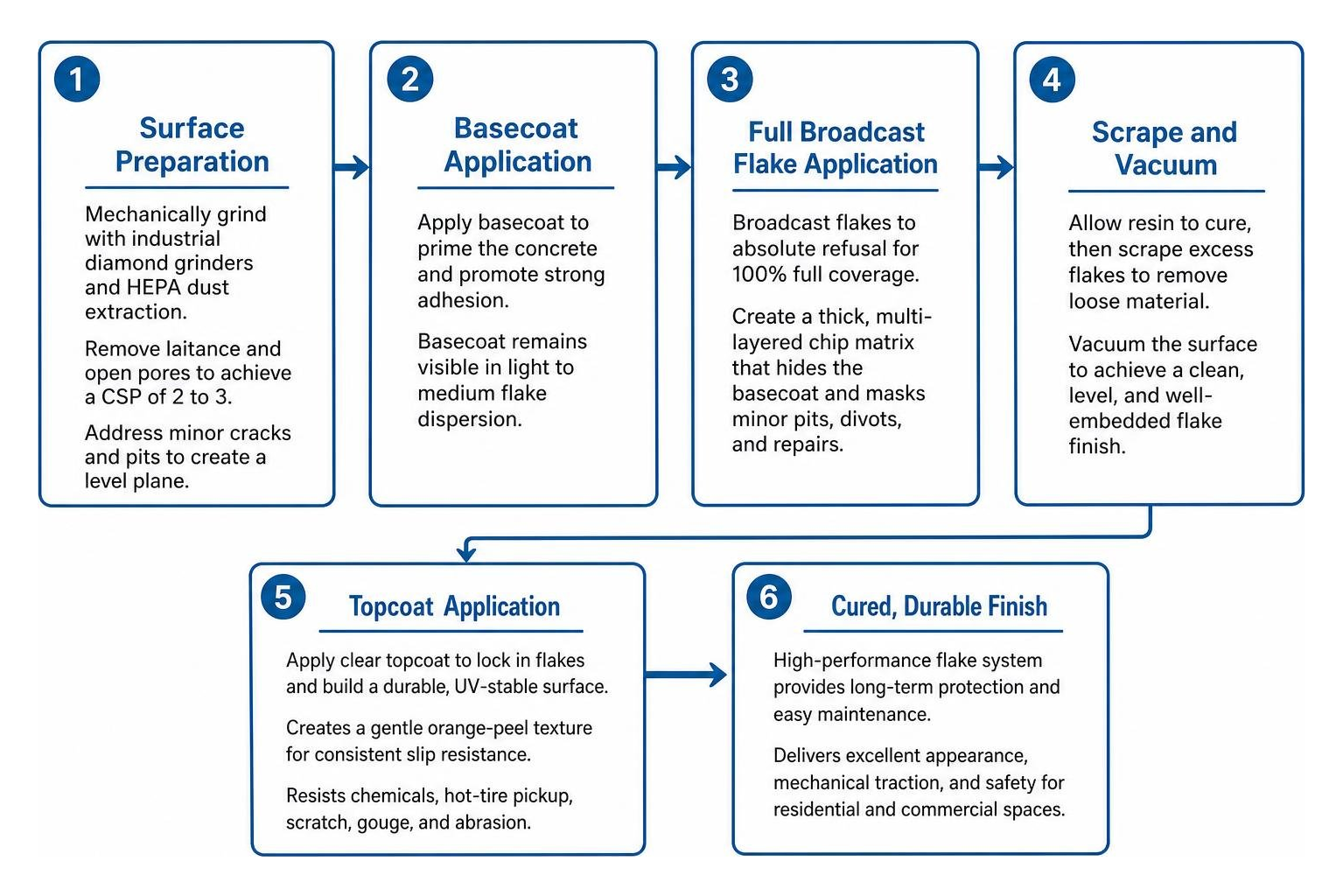
The long-term adhesion of any resinous floor system depends directly on the quality of mechanical substrate preparation. Denver Floor Coatings prepares every concrete slab using industrial planetary diamond grinders connected to integrated HEPA dust-extraction units. Diamond grinding eliminates weak surface laitance, opens concrete pores, and produces an optimal concrete surface profile (CSP) of 2 to 3, which creates the physical anchor profile necessary for maximum resin bonding.
During surface profiling, our crew inspects the floor for surface anomalies. Concrete floor repair is only a small component of the company’s floor-coating preparation work, focusing on addressing minor chips, pits, and hairline surface cracks to establish an even plane prior to resin application. Forensic investigations, such as forensic research on concrete flaking and surface degradation (Jacoby, 2021), highlight how poor surface strength, improper air entrainment, and moisture distress can weaken top concrete strata; precision diamond grinding removes these compromised micro-layers to expose sound, solid concrete.
Basecoat Application and Moisture Mitigation
Following mechanical grinding and thorough dust removal, our technicians roll out a high-solids, deep-penetrating basecoat. This resin flows into the open pores of the profiled concrete, creating high-strength mechanical anchors while sealing off subterranean moisture capillaries. Maintaining precise control over ambient temperature, slab moisture, and resin open time is vital to our systematic epoxy floor installation process, ensuring the aggregate broadcast occurs during optimal resin tackiness.
Broadcasting Concrete Floor Flakes for Full Surface Coverage
Once the basecoat is evenly rolled out, our technicians broadcast decorative vinyl chips by casting them high into the air, allowing them to distribute uniformly across the wet resin. The material is applied at approximately 0.25 pounds per square foot until the entire floor is saturated to refusal, leaving no uncovered base resin.
After the basecoat reaches initial cure, excess unbound flakes are vacuumed and reclaimed. Technicians then scrape the entire floor with flat steel blades in multi-directional passes. This scraping step shears down vertical chip edges, flattening the aggregate to ensure a smooth, comfortable walking texture while preserving the distinctive stone-fleck aesthetic.
High-Wear Clear Topcoat Application
The final stage involves sealing the broadcast matrix through our specialized polyaspartic floor coating services. Polyaspartic topcoats wet out the vinyl flakes completely, curing into an optically clear, non-porous protective wear layer.
Because polyaspartic resins feature rapid curing kinetics, they significantly reduce downtime compared to traditional multi-day epoxy schedules. Slabs coated with this system can generally accommodate light pedestrian traffic within 24 hours, with vehicle parking typically resuming within 48 to 72 hours, depending on ambient environmental conditions.
Frequently Asked Questions About Flake Flooring
How much flake material is required for full broadcast coverage?
For a full-rejection broadcast, Denver Floor Coatings utilizes approximately 0.25 pounds of flakes per square foot. For a standard two-car garage spanning roughly 400 to 500 square feet, the application requires between 100 and 125 pounds of colored vinyl chips. Broadcasting to complete refusal ensures the basecoat is fully blanketed by overlapping chips, preventing thin spots and yielding a resilient, multi-layered wear surface.
How long may a professional multi-layer flake floor last?
A professional multi-layer flake system is engineered for exceptional durability, though its functional lifespan depends on substrate condition, traffic volume, environmental exposure, and regular maintenance routines. When installed over a mechanically profiled concrete slab with an industrial moisture-mitigating primer and sealed under a high-solids aliphatic polyaspartic topcoat, a professionally installed flake floor may provide 15 to 20 or more years of dependable service before requiring topcoat rejuvenation.
How do you clean and maintain a broadcast flake coating?
Routine maintenance is straightforward because the seamless polyaspartic topcoat prevents dirt, road grime, and automotive chemicals from penetrating the surface. Following best practices for how to clean epoxy coated garage floors involves simple care measures:
- Dry Debris Removal: Sweep or leaf-blow loose dirt, gravel, and dust regularly to prevent grit from acting as an abrasive under foot or vehicle traffic.
- Damp Mopping: Wash the floor periodically using warm water and a neutral pH cleaner. Avoid highly concentrated citrus degreasers, bleach, or acidic cleaners that may dull clear topcoats over time.
- Rinse Management: Utilize a soft foam squeegee to push rinse water toward the garage threshold or floor drain, leaving the surface dry and spot-free.
- Fluid Spills: Wipe up aggressive automotive fluids, such as brake fluid or concentrated battery acid, promptly to protect the protective top layer over the long term.
Transform Your Floor with Denver Floor Coatings
A professionally installed concrete flake floor turns a dusty, stained concrete slab into a clean, durable, and visually appealing asset. Whether enhancing a residential garage in the Denver metro area, outfitting a custom workshop along the Front Range, or protecting a high-traffic commercial facility, our advanced coating systems deliver dependable surface protection tailored to Colorado’s demanding climate.
Denver Floor Coatings specializes in high-performance epoxy and polyaspartic coating systems, including decorative flake finishes, rather than stained concrete services. Our engineering-focused approach ensures thorough diamond-grind preparation, premium resin formulation, and meticulous aggregate distribution on every project.
Ready to upgrade your concrete with a clean, showroom-quality surface? Contact Denver Floor Coatings to design your custom garage floor and request your free, comprehensive installation estimate today.
References
Jacoby M. “The Case of the Flaking Floor and Other Tales of Concrete Forensics..” ACS central science, 2021. PMCID PMC8227599.