

How Acid Resistant Epoxy Protects Industrial Floors
Acid resistant epoxy is a specialized protective polymer barrier engineered to prevent corrosive chemicals, acidic compounds, and harsh industrial reagents from degrading structural concrete substrates and embedded reinforcing steel. Standard commercial epoxy systems serve exceptionally well for general warehousing, foot traffic, and light abrasion resistance, yet they routinely break down when exposed to aggressive industrial chemicals such as sulfuric, hydrochloric, or phosphoric acids. By contrast, advanced chemical-resistant formulations, particularly novolac epoxies, feature highly dense cross-linking that helps resist molecular penetration and chemical degradation over extended operational periods.
Selecting an optimal flooring configuration requires evaluating multiple environmental variables, including the specific chemical agents present, their operational concentrations, ambient and substrate service temperatures, and the typical dwell time before facility personnel can initiate cleanup procedures. Chemical containment basins, wastewater treatment infrastructure, battery charging rooms, and advanced processing facilities present uniquely demanding environments where standard floor finishes deteriorate rapidly. In these demanding operational settings, meticulous mechanical surface preparation and adherence to thorough curing protocols are just as critical to long-term performance as the selection of the resin system itself.
I am Mike Wislinsky, founder of Denver Floor Coatings. Drawing upon my professional background in engineering, operations management, and high-performance polymer floor systems, I focus on guiding facility directors and commercial property owners through the practical technical considerations necessary to protect mission-critical concrete infrastructure with specialized acid resistant epoxy systems.
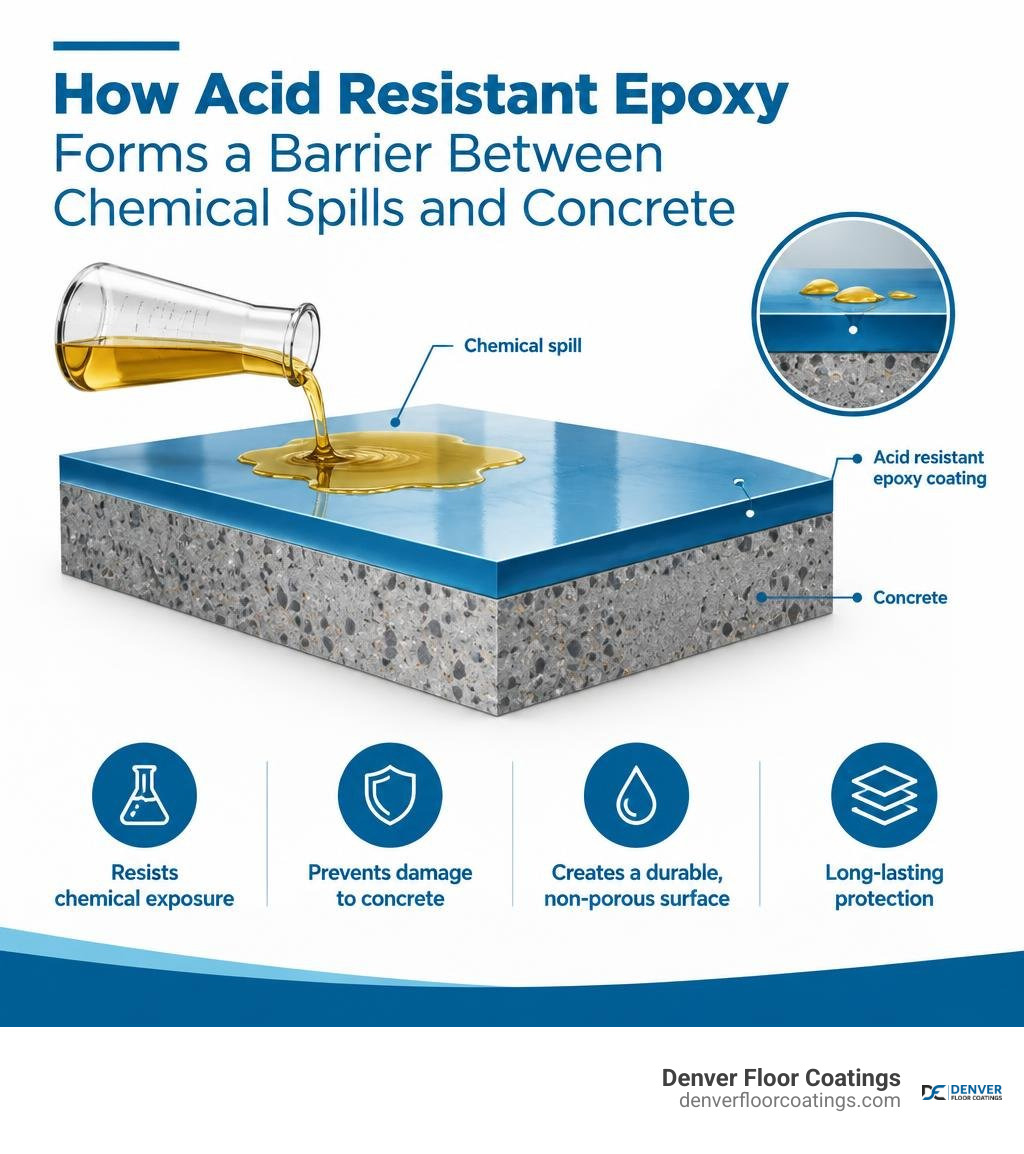
To determine the best protective barrier for a given facility, operations managers often evaluate how high solids epoxy formulations perform under heavy mechanical loads, consider aesthetic alternatives such as metallic epoxy coatings for customer-facing commercial spaces, and review broader categories of industrial resin flooring designed for demanding chemical environments.
Understanding Acid Resistant Epoxy Chemistry and Capabilities
Untreated structural concrete is inherently porous and alkaline, which makes it particularly susceptible to chemical degradation whenever it contacts acidic or reactive industrial fluids. Reviewing the basic chemical nature of acids demonstrates why standard paints and thin-mil sealers deteriorate quickly in these environments. Acidic solutions react with the free calcium hydroxide and alkaline matrix in cured concrete, dissolving the cement paste, loosening aggregate bonds, and creating deep surface pitting, micro-cracking, and structural deterioration.
Specialized acid resistant formulations rely primarily on 100% solids novolac resins cross-linked with modified cycloaliphatic amine curing agents. An analysis of modern epoxy material formulations illustrates how novolac systems and Bisphenol-F chemistry achieve significantly denser polymer cross-linking than standard Bisphenol-A resins. Furthermore, zero-VOC, 100% solids formulations minimize shrinkage stresses during the curing phase while supporting strict indoor air quality requirements across commercial and industrial facilities throughout Colorado.
Molecular Cross-Linking and Polymer Structure
The ability of a protective coating to resist chemical permeation depends directly on its underlying molecular architecture. Standard Bisphenol-A epoxies contain relatively open molecular chains with spaced functional reaction sites, which can allow small, corrosive acidic ions to slowly diffuse through the coating matrix and reach the underlying concrete substrate over time. In contrast, novolac epoxy resins incorporate multiple phenol rings and reactive epoxide functional groups per molecule, generating an exceptionally tight, three-dimensional polymer network as the resin cures.
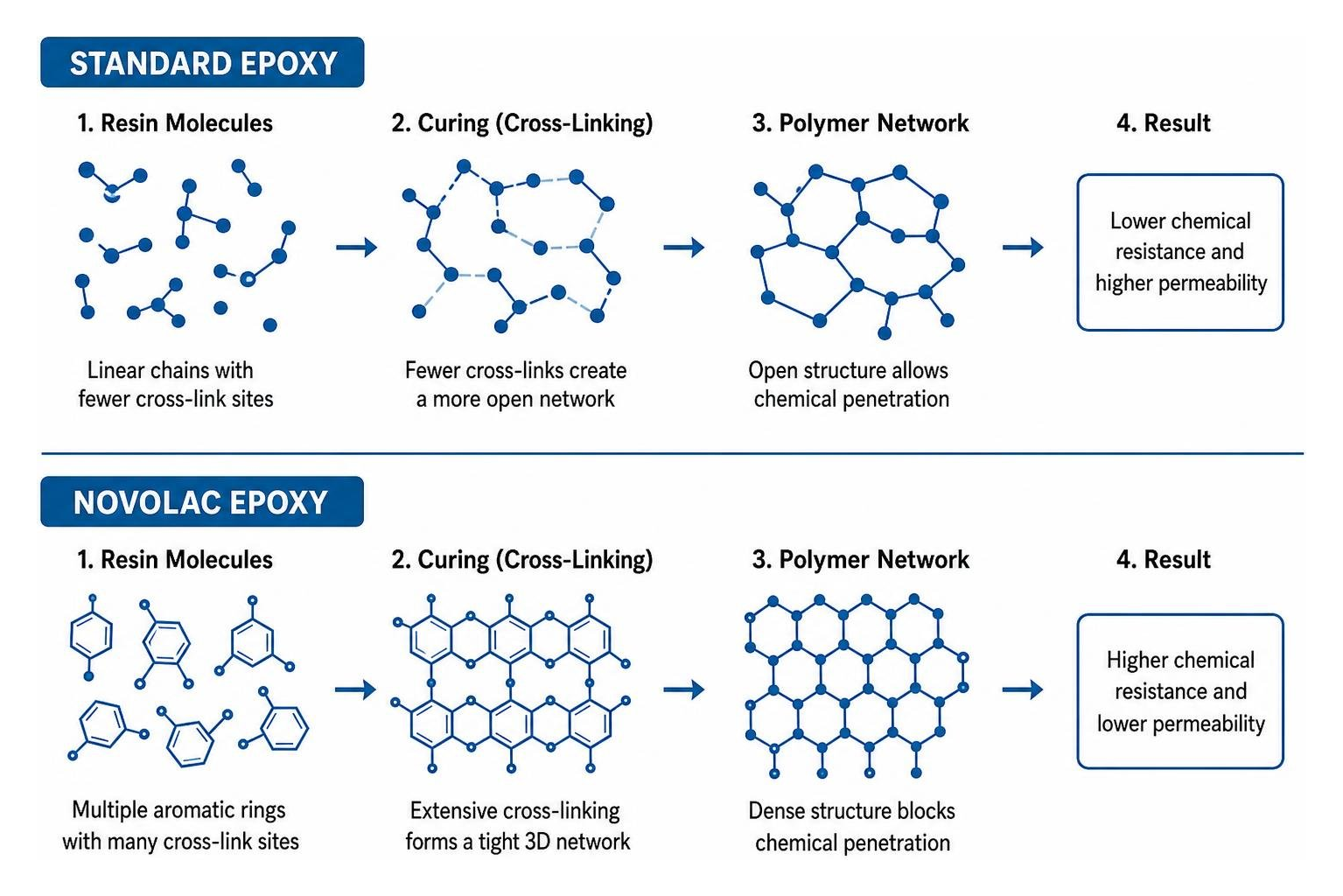
Examining a technical high-solids epoxy comparison highlights how maximizing molecular cross-linking density while eliminating solvent evaporation helps prevent microscopic pinholes and voids from forming during cure. This dense, non-porous polymer matrix establishes a resilient barrier that helps prevent hostile ions, acidic moisture, and corrosive salts from reaching the underlying structural concrete slab.
Chemical Resistance Profiles and Thermal Thresholds
High-grade novolac epoxy systems provide reliable defense against a broad spectrum of aggressive, concentrated industrial chemicals. These high-performance barrier systems are formulated to resist intermittent splashing, pooling, and prolonged contact with challenging chemicals, including:
- Sulfuric acid up to 98% concentration
- Hydrochloric acid up to 37% concentration
- Nitric, phosphoric, and acetic acid solutions at high operational concentrations
- Sodium hydroxide and caustic alkaline cleaning solutions up to 50% concentration
- A wide variety of aggressive organic solvents, fuels, cutting fluids, and hydrocarbons
Thermal performance is another essential parameter in industrial environments where production equipment, boiler overflows, or high-temperature sanitization procedures generate localized heat. While conventional epoxies may soften at moderate service temperatures, high-performance novolac formulations generally maintain mechanical and chemical stability under elevated dry-heat conditions up to 180°F to 325°F, depending on formulation and exposure duration. Facility managers seeking further technical context on thermal thresholds can learn whether epoxy can withstand heat in demanding commercial environments, or consult our detailed epoxy floor chemical resistance guide for exact chemical concentration and temperature compatibility matrices.
Primary Industrial Applications and Containment Solutions
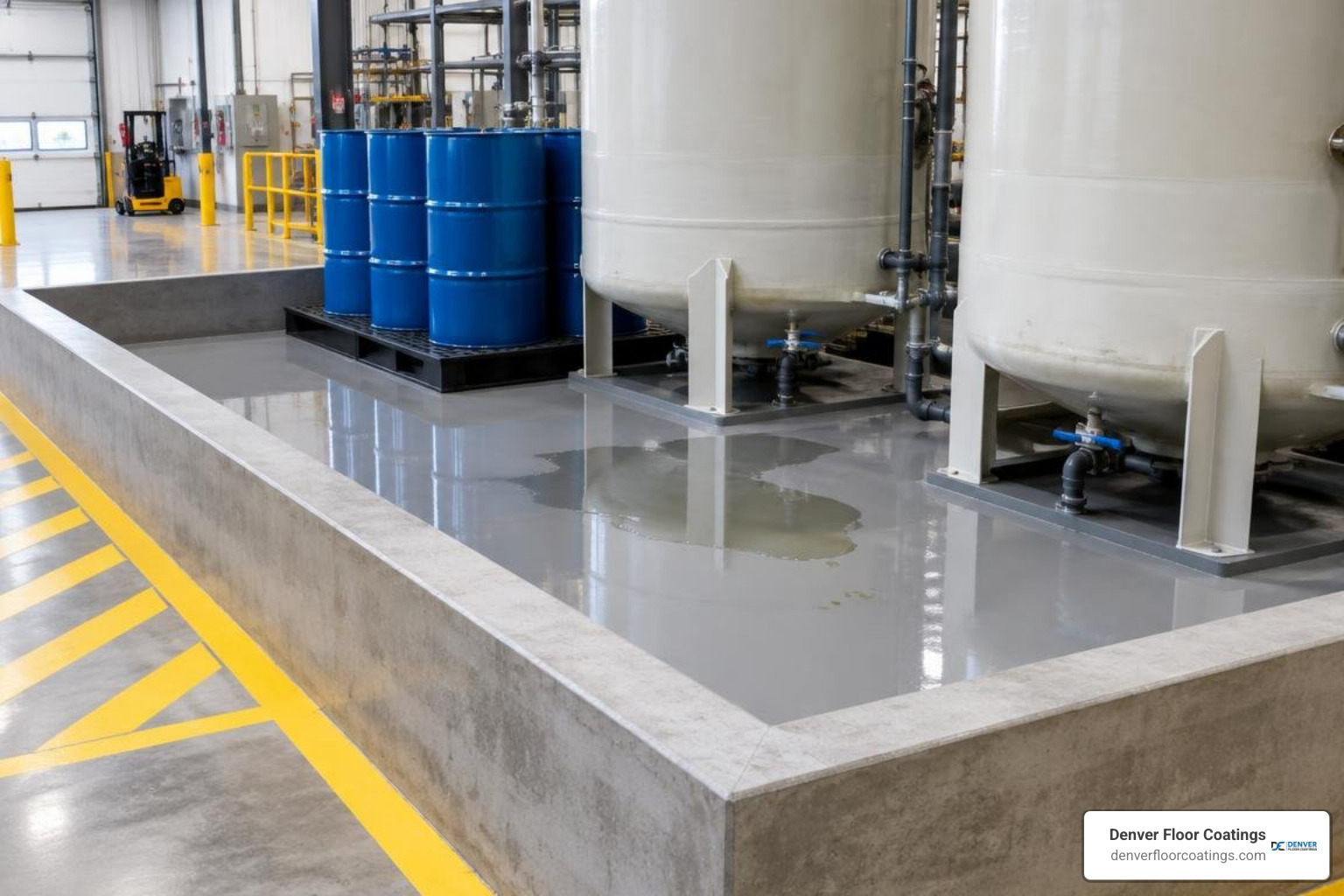
Modern manufacturing, chemical processing, and energy facilities rely on continuous, seamless protective barriers to preserve concrete infrastructure, protect personnel, and maintain compliance with environmental regulations. Applying proven chemical-resistant floor coatings prevents corrosive runoff and hazardous leaks from entering subsurface soils, local groundwater, or load-bearing concrete structural elements.
Battery Storage, Manufacturing, and Secondary Containment
Forklift battery charging areas, electrical utility sub-stations, and secondary containment structures are regularly exposed to sulfuric acid drips, venting fumes, and accidental fluid discharges. Without a monolithic novolac protective barrier, recurring acid contact can degrade bare concrete floors and unlined curbs in relatively short order. Installing acid-resistant epoxy mortars and lining systems creates seamless, non-porous containment basins that safely retain corrosive spills until plant personnel can enact neutralizing and recovery protocols, supporting compliance with OSHA workplace guidelines and EPA environmental regulations.
Wastewater Treatment and Heavy Processing Facilities
Wastewater treatment plants, paper mills, chemical compounding rooms, and food processing facilities present rigorous operating environments where acids, caustic cleaners, and mechanical stresses interact continuously. Biogenic sulfide corrosion in sewer collection manholes, pump wet wells, and anaerobic digesters creates localized sulfuric acid that can rapidly degrade unprotected concrete walls and sumps. Installing engineered industrial epoxy floor coatings isolates concrete structures, sump pits, trenches, and perimeter curbing against chemical attack, corrosive gaseous environments, and frequent high-pressure washdown cycles.
System Types and Product Formulations
Specifying an appropriate protective polymer system requires balancing chemical exposure risks, expected mechanical impact, rolling wheel traffic, and operational temperature swings.
| System Type | Acid Resistance Level | Typical Dry Film Thickness (DFT) | Compressive Strength (ASTM D695) | Ideal Applications |
|---|---|---|---|---|
| Standard Bisphenol-A Epoxy | Low to Moderate (dilute acids only) | 10 to 16 mils | ~8,000 to 9,000 psi | Light assembly, general warehousing, dust control |
| High-Build Epoxy | Moderate (medium acid concentrations) | 16 to 20 mils | ~9,500 to 10,500 psi | Food processing, packaging lines, wash bays |
| 100% Solids Novolac Epoxy | Extreme (resists 98% sulfuric, 37% HCl) | 16 to 30 mils | 11,000+ psi | Secondary containment, chemical storage, battery rooms |
| Heavy-Duty Epoxy Mortar | Extreme (high impact & concentrated acid) | 4 mm to 20 mm | 11,000 to 16,000 psi | Heavy manufacturing, steel-wheel traffic zones, pump pads |
Systems meeting ASTM D695 compressive strength criteria above 11,000 psi paired with a surface hardness rating of 85 to 86 Shore D deliver the physical durability needed to support heavy industrial forklifts, machinery vibration, and localized chemical splashing.
High-Build vs. Mortar Acid Resistant Epoxy Formulations
Neat novolac coatings applied at 16 to 20 mils DFT perform well on vertical containment walls, pump plinths, and light-traffic dikes. However, industrial facilities subjected to heavy physical impacts, pallet dragging, or hard-wheeled vehicle traffic benefit significantly from heavy-duty epoxy mortar systems. Trowel-applied epoxy mortars combine chemical-resistant liquid resins with graded quartz and silica aggregates at precise binder-to-aggregate ratios. This build creates a robust, impact-absorbing topping that disperses point loads, resists vibration fatigue, and prevents mechanical cracking.
Multi-Coat Systems and Performance Seal Coats
Long-term chemical protection relies on a carefully sequenced multi-coat system. Applying multiple distinct layers at controlled wet film thicknesses helps ensure an impermeable, pinhole-free barrier across the entire floor. Specifying high-grade high-performance concrete coatings provides dependable inter-coat adhesion, excellent substrate wet-out, and a seamless, non-porous surface that keeps hostile chemical fluids isolated from structural slabs.
Surface Preparation, Application, and Curing Guidelines

The long-term bond of an acid resistant coating depends directly on the mechanical anchor profile established during preparation. Concrete floor repair is only a small component of our overall floor-coating preparation work; our primary focus centers on rigorous mechanical surface profiling. Substrates must be mechanically prepared using enclosed shot blasting or diamond grinding to achieve an International Concrete Repair Institute (ICRI) Concrete Surface Profile (CSP) of 3 to 5, exposing clean, sound aggregate and open concrete pores for optimal resin penetration.
Installing Acid Resistant Epoxy Coatings on Industrial Concrete
Achieving full barrier properties requires strict adherence to technical installation protocols:
- Environmental Verification: Confirm that substrate and ambient air temperatures are at least 50°F (10°C) and consistently maintain a margin of at least 5°F above the current dew point to prevent moisture condensation during placement.
- Precise Component Proportioning: Strictly adhere to the manufacturer-specified mix ratio by volume, using dedicated measuring vessels to ensure correct stoichiometric balance.
- Controlled Low-Speed Mixing: Blend resin and hardener components for three full minutes using a low-speed mechanical mixer with an engineered paddle, keeping the mixing head submerged to avoid introducing air bubbles into the liquid resin.
- Pot Life and Working Time Management: Monitor reaction temperatures and pot life closely, ribboning mixed materials across the slab immediately to prevent rapid exothermic heat buildup in the mixing vessel.
- Even Gauge Application: Spread material uniformly using calibrated notched squeegees, followed immediately by multi-directional back-rolling with high-density, lint-free rollers to establish a uniform, continuous wet film.
Curing Schedules and Chemical Resistance Timelines
Allowing proper cure time is essential before exposing newly coated floors to industrial fluids. At standard ambient conditions of 75°F (24°C), curing follows a predictable schedule:
- Tack-Free Time: 2 to 4 hours
- Light Foot Traffic: 10 to 12 hours
- Full Mechanical Cure: 48 hours for rolling machinery and structural equipment loading
- Full Chemical Resistance: 5 to 7 days for maximum three-dimensional polymer cross-linking
Exposing an acid resistant epoxy coating to concentrated chemical spills before it completes its 5 to 7-day curing window can permanently weaken the polymer network, leading to localized staining, softening, or premature chemical penetration.
Material Limitations, UV Stability, and Preventative Maintenance
While acid resistant novolac epoxies provide exceptional barrier protection against aggressive chemicals, understanding their operational constraints ensures realistic performance expectations and proper specification.
UV Degradation and Outdoor Constraints
Due to their high concentration of aromatic polymer structures, novolac epoxies are naturally sensitive to direct ultraviolet light. Prolonged solar UV exposure initiates cosmetic ambering, color shifting, and progressive surface chalking. A review of epoxy floor UV resistance illustrates why novolac systems are engineered primarily for interior industrial facilities, indoor containment areas, and covered processing environments rather than open exterior slabs subjected to continuous direct sunlight.
Inspection Protocols and Preventative Care
Consistent maintenance practices help maintain protective integrity and prolong service life under demanding chemical conditions:
- Immediate Spill Neutralization: Even though high-grade novolac epoxies resist concentrated acids, promptly neutralizing and rinsing standing pools of chemical fluids prevents unnecessary thermal stress and aesthetic surface discoloration.
- Routine Alkaline Washdowns: Clean floor surfaces regularly using mild alkaline or pH-neutral industrial detergents to remove chemical films, process oils, and abrasive grit.
- Commissioning Spark Testing: Conduct high-voltage holiday spark testing across critical tank linings, sumps, and secondary containment dikes during commissioning to verify complete absence of microscopic pinholes.
- Timely Spot Maintenance: Perform routine visual inspections and address minor mechanical gouges or localized impact damage promptly to prevent chemical migration behind the protective barrier.
Frequently Asked Questions about Acid Resistant Epoxy
How long does acid resistant epoxy take to achieve full chemical resistance?
Most 100% solids novolac epoxies attain mechanical handling strength within 24 to 48 hours. However, developing full cross-linking density and maximum chemical resistance typically requires 5 to 7 days at 75°F. In cooler ambient temperatures, complete chemical resistance may require additional time before the surface is exposed to aggressive liquids.
Can standard epoxy floors be converted for acid containment?
Standard Bisphenol-A epoxies do not possess the molecular structure required for concentrated acid exposure. While applying an acid resistant novolac topcoat over sound epoxy can improve splash resistance, secondary containment areas holding aggressive acids should use a fully integrated novolac system, including a dedicated primer and high-build base, to prevent delamination along interface boundaries.
What specific chemicals can novolac epoxy withstand?
Novolac formulations reliably resist high concentrations of mineral acids like 98% sulfuric acid, 37% hydrochloric acid, and concentrated phosphoric acid, as well as strong alkalis like 50% sodium hydroxide. Exposure to certain concentrated oxidizing agents or specialized organic acids requires consulting verified chemical compatibility charts to determine safe exposure windows.
Conclusion
Selecting and installing an engineered acid resistant epoxy floor system safeguards structural concrete assets, supports environmental compliance, and minimizes unplanned facility downtime. Whether your operational goals involve outfitting a high-throughput battery room, protecting a chemical processing facility, or sealing heavy manufacturing floors against corrosive industrial compounds, dependable protection depends on industrial-grade chemistry and thorough mechanical surface profiling.
Denver Floor Coatings delivers specialized commercial floor coating solutions and expert commercial concrete coating services tailored specifically to the operational requirements of Colorado commercial and industrial properties. Our experienced installation team provides heavy-duty, chemically resilient floor systems designed to withstand demanding industrial use.
Protect your facility from costly chemical deterioration and concrete damage by contacting our flooring specialists today to schedule an expert on-site evaluation and receive a detailed estimate for your commercial project.