

Find Concrete Floor Repair Near Me for a Garage Coating Project
Concrete floor repair entails identifying slab damage, removing weak or contaminated material, filling cracks and pits, addressing spalling and moisture concerns, and profiling the surface so a coating can bond properly. For a garage coating project, the goal is not merely to patch visible flaws. It is to create clean, stable concrete that can support a resilient epoxy or polyaspartic coating system over an extended service life.
When exploring concrete floor repair near me, Denver Floor Coatings evaluates the slab thoroughly before applying any protective floor coating. We address cracks, pits, spalling, oil contamination, and moisture issues using mechanical diamond grinding to properly prepare the surface. A quality coating system needs clean, stable concrete to achieve dependable adhesion.
For most garage floors, repair is only one part of the job. In fact, concrete floor repair is only a small component of the company’s floor-coating preparation work, designed to establish a solid, unified base for an industrial-grade finish. At Denver Floor Coatings, that process focuses on preparing the concrete for advanced epoxy and polyaspartic coating systems, including multi-layered decorative flake floors that give garages a clean, durable, finished appearance.
Small cracks, salt pitting, micro-fissures, and embedded oil residues are indicators that a concrete slab requires comprehensive mechanical remediation rather than superficial spot treatments. Proper preparation removes weakened concrete layers, opens the porous structure of the slab to facilitate mechanical interlocking, and resolves underlying structural imperfections before they can compromise a new topcoat.
I am Mike Wislinsky, Founder and President of Denver Floor Coatings. With experience in engineering, operations, and concrete floor coating work, I help Denver-area property owners understand why concrete floor repair near me serves as the critical initial step toward establishing a well-protected, high-performance garage floor.
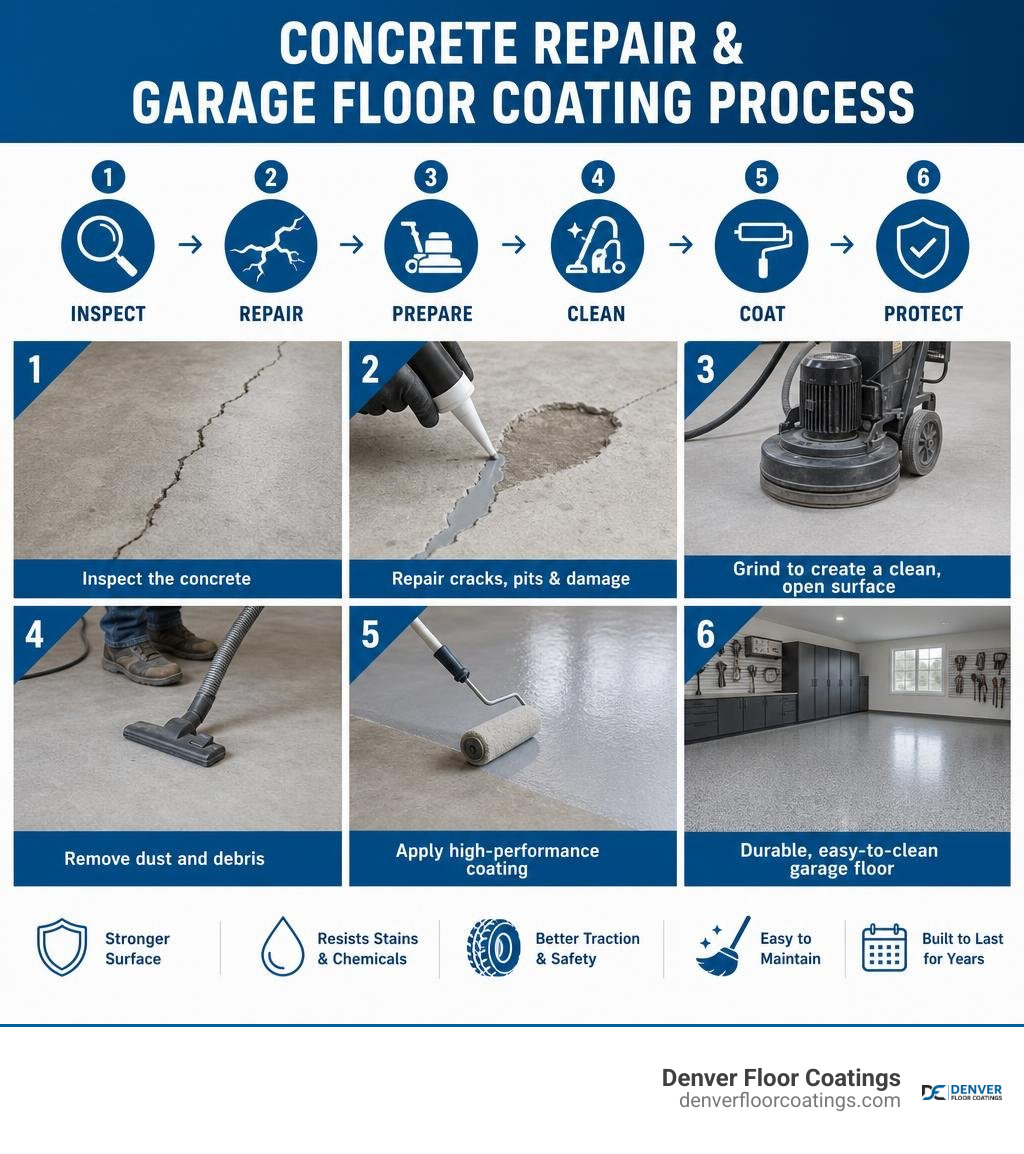
5 Critical Steps for Concrete Repair and Long-Lasting Coating Preparation
When an interior concrete slab begins showing signs of wear, simply covering surface blemishes is rarely sufficient to protect the underlying floor over the long term. Across our service territory—from Denver, Aurora, and Lakewood up through Boulder, Longmont, and Fort Collins—concrete slabs routinely experience harsh freeze-thaw cycles, tracked-in winter deicing salts, and automotive fluids. When left unaddressed, minor surface fractures can gradually expand and compromise the structural integrity of the substrate.
To build a dependable bond for our multi-layer protective finishes, we treat surface repair as an essential phase of our multi-step installation framework. Knowing how to repair concrete without hassle means looking past cosmetic touch-ups and methodically stabilizing the concrete slab before introducing any coating layers.
| Feature / Step | Superficial Spot Treatment | Complete Repair & Multi-Layer Coating System |
|---|---|---|
| Surface Profile | Smooth, unopened pores with limited adhesion potential | Mechanically profiled (ICRI CSP 2–3) via planetary diamond grinding |
| Crack Restoration | Rigid cementitious fillers susceptible to vibration cracking | Flexible, rapid-curing structural polyurea stitching |
| Contaminant Removal | Surface wiping leaving deep chemical oils intact | Heavy mechanical grinding extracting embedded hydrocarbons |
| Moisture Management | Traps sub-slab vapor, risking adhesion release | Vapor-mitigating base coats engineered for hydrostatic tolerance |
| Finish & Aesthetics | Uneven, mismatched grey patches | Seamless, uniform decorative flake finish |
Mechanical Diamond Grinding and Surface Profiling
Standard surface washing or superficial treatments cannot adequately prepare an interior concrete slab for an industrial-grade coating system. Denver Floor Coatings utilizes heavy planetary diamond grinders connected directly to integrated HEPA dust extraction units to eliminate compromised concrete, old sealers, and stubborn chemical stains across the entire floor area.

This mechanical grinding process cuts into the concrete surface to create a distinct Concrete Surface Profile (CSP) matching International Concrete Repair Institute (ICRI) standards. By abrading the upper laitance layer, we open the concrete’s microscopic capillary pores. This open profile allows our base coats to penetrate deeply into the slab, creating a strong mechanical anchor rather than relying on weak surface-level adhesion.
Polyurea Crack Stitching and Spall Patching
Hairline cracks, surface spalling, and pitting from winter deicing chemicals weaken concrete over time. Rather than relying on brittle hydraulic cement, we utilize rapid-curing, commercial-grade polyurea repair compounds. Choosing the right material is vital, as outlined in our beginners guide to choosing the best concrete crack repair material.
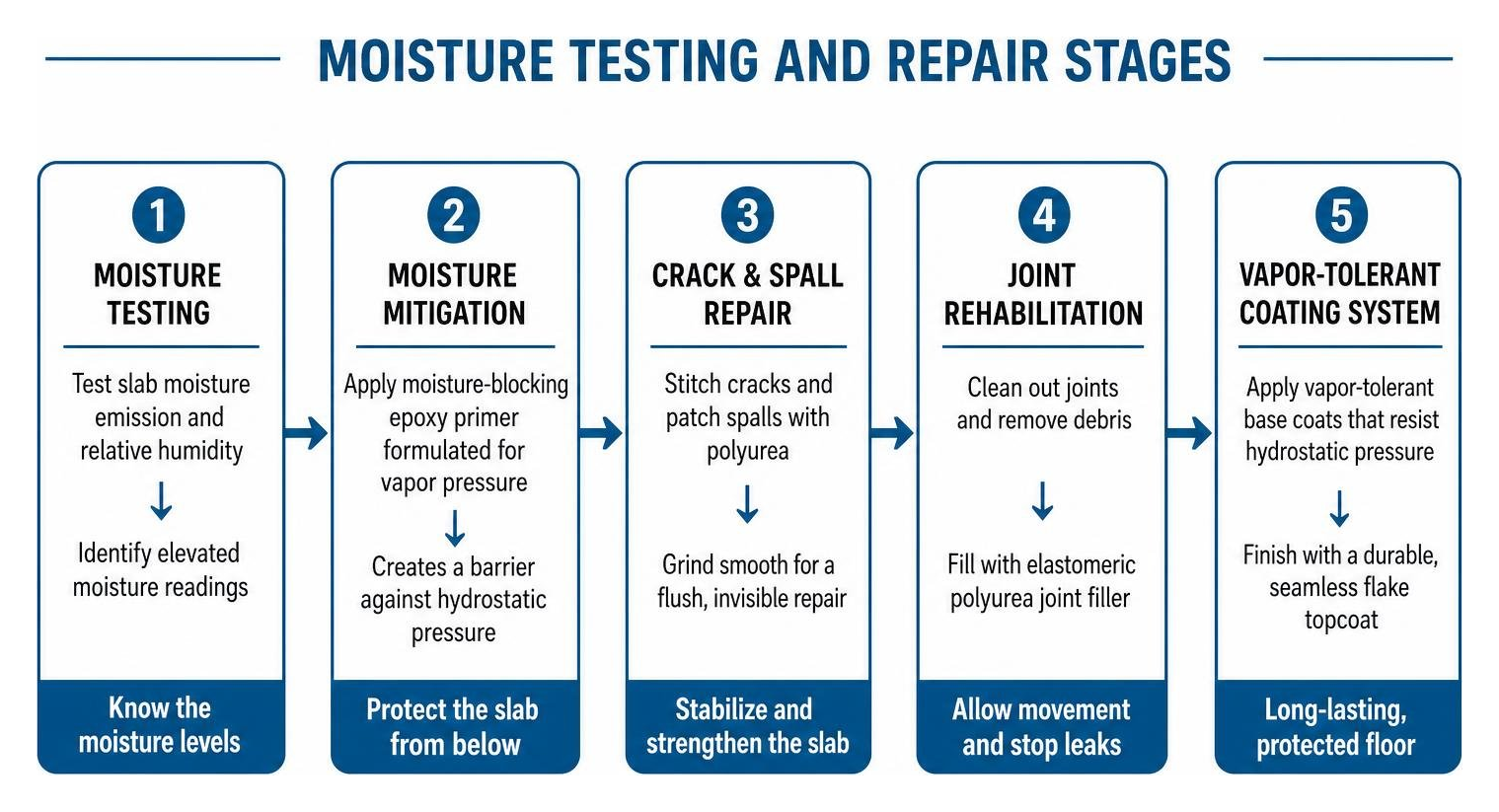
Polyurea repair materials penetrate deeply into tiny fissures, bonding fractured sidewalls together while retaining the necessary elongation to accommodate normal slab expansion and contraction. Once the repair compound cures, our technicians grind these patched areas flush with the surrounding floor so that the repaired sections integrate cleanly beneath your new flake finish.
Expansion Joint Rehabilitation
Control joints and expansion cuts are designed to manage concrete movement during Colorado’s significant seasonal temperature swings. Over time, however, joint shoulders often break down under vehicle traffic, allowing dirt, debris, and moisture to accumulate within the void.
Proper joint rehabilitation involves routing out damaged edges, thoroughly vacuuming debris, and filling the void with an elastomeric polyurea joint filler. Addressing these vulnerable lines is critical; you can learn more about how we stop the split a step by step garage floor crack repair approach keeps control joints functioning smoothly without allowing water infiltration beneath the slab.
Moisture Vapor Mitigation and Substrate Testing
Moisture vapor transmission is a primary contributor to coating delamination. Water within the ground migrates upward through porous concrete slabs via hydrostatic pressure, which can exert upward force on unbonded resin systems.
Before mixing or applying any coating materials, Denver Floor Coatings evaluates the slab’s moisture emission levels and relative humidity. When elevated moisture readings are detected, we apply specialized, moisture-blocking epoxy primer formulations engineered to withstand vapor pressure, helping to safeguard the bond line from beneath.
Why Concrete Floor Repair Near Me Is Only the First Step in Floor Protection
Spot repairs alone leave the surrounding bare concrete exposed to new chemical spills, tire abrasion, and moisture absorption. Repairing cracks simply stabilizes the substrate; it does not protect the surface against ongoing environmental and mechanical wear.
Real protection comes from pairing meticulous substrate preparation with a resilient, non-porous coating system. As we explain in the concrete comeback a step by step guide to fixing dull worn floors, restoring damaged concrete is merely the foundation for building a bright, easy-to-clean floor designed for everyday reliability.
Choosing High-Performance Floor Coating Solutions Over Basic Repairs
Addressing damaged areas without applying a protective barrier leaves concrete vulnerable to continuous degradation from thermal shifts, automotive fluids, and abrasive debris. At Denver Floor Coatings, we specialize in high-performance epoxy and polyaspartic coating systems, including decorative flake finishes, rather than stained concrete services. This specialized focus ensures that every installation receives commercial-grade materials designed for resilience, cleanability, and long-term surface stability.

Our multi-layered flake systems create a dense, non-porous shield over your repaired concrete that resists hot-tire pickup, chemical spills, motor oils, and road salts.
Polyaspartic vs. Epoxy Flake Systems for Garages
Garage floors represent a significant portion of our daily installations across communities like Arvada, Highlands Ranch, Littleton, and Castle Rock. Colorado property owners require a floor that can handle melting snow, seasonal grit, dropped hand tools, and hot vehicle tires without flaking or peeling.
Our residential garage floor systems typically pair a moisture-tolerant, high-solids base coat with a full broadcast of decorative vinyl flakes, topped by a heavy-duty polyaspartic clear coat. Polyaspartic topcoats cure rapidly—often allowing us to complete an entire installation in an efficient timeframe—and provide notable UV stability near open garage doors while offering dependable resistance against scratches and everyday abrasions.
Seamless Commercial Concrete Floor Protection
Commercial and industrial facilities face demanding operational conditions daily. Moving equipment, heavy pallet jacks, vehicular traffic, and strict cleanliness guidelines require seamless surfaces that are easy to sanitize and maintain over time.
Our commercial coating installations serve warehouses, manufacturing facilities, automotive showrooms, and service bays throughout Front Range industrial centers from Commerce City to Loveland. We install heavy-duty systems that meet slip-resistance standards and maintain structural durability under consistent mechanical and foot traffic.
High-Performance Concrete Floor Coating Solutions and Installation
At Denver Floor Coatings, concrete floor repair is only a small component of the company’s floor-coating preparation work. Our primary focus is delivering resilient, multi-layered epoxy and polyaspartic coating systems that provide long-lasting surface protection and aesthetic value.
We invest in commercial-grade surface profiling equipment, integrated HEPA dust management systems, and proven repair polymers to establish a pristine substrate before installing industrial-grade coatings engineered to withstand heavy use and thermal variation.
Our Standards for High-Performance Floor Coating Installation
To ensure your floor stands up to everyday use across Colorado’s demanding seasons, our installation framework adheres to meticulous quality standards:
- Mechanical diamond grinding profiles the slab effectively without relying on chemical washes or acid treatments.
- Fast-curing commercial polyurea compounds fill cracks, spalls, and expansion joints to create an even substrate prior to coating application.
- Heavy-duty HEPA dust extractors contain airborne concrete dust throughout the grinding process to keep your property clean.
- Industrial-grade base coats and clear polyaspartic topcoats deliver high solids content, UV stability, and chemical resistance.
- Proven installations showcase the premium concrete floor coatings Denver property owners rely on for garage and commercial upgrades.
Comprehensive Estimates for Concrete Floor Coating Upgrades
Denver Floor Coatings provides clear, detailed project proposals that cover every stage of the installation. Our estimates outline comprehensive surface preparation, crack and spall patching, joint rebuilding, and high-performance coating materials with complete transparency.
Investing in thorough substrate prep alongside an industrial-grade polyaspartic flake system helps protect your concrete from future wear. If you are ready to upgrade your garage or facility, start by requesting an estimate from our experienced team.
Frequently Asked Questions About Concrete Floor Repair and Coatings
Should cracks be repaired before installing epoxy or polyaspartic coatings?
Yes. Applying a floor coating over open cracks often leads to reflective cracking, where substrate fractures telegraph upward through the new topcoat. Denver Floor Coatings routes, cleans, and injects cracks with fast-curing polyurea compounds, grinding the surface flush with the surrounding concrete prior to applying base coats.
How long does the concrete repair and floor coating process take?
Most residential garage transformations are completed within one to two days depending on the initial condition of the slab and the scope of repairs required. Because advanced polyaspartic coatings cure efficiently, floors are typically ready for light foot traffic within hours, with vehicle parking generally accommodated within 24 to 48 hours following final application.
Why is professional polyurea repair superior to basic patching compounds?
Basic patching compounds typically rely on rigid latex or hydraulic cement formulas that cannot accommodate seasonal concrete expansion and contraction. At Denver Floor Coatings, our polyurea repair compounds penetrate deeply into cracks and flex with thermal shifts, ensuring a solid, stable base before we mechanically grind the area smooth and apply protective coatings.
Conclusion
Finding the right solution for damaged concrete involves looking beyond temporary cosmetic fixes. Concrete floor repair is only a small component of the company’s floor-coating preparation work, designed to establish a stable, seamless substrate for long-term surface protection. At Denver Floor Coatings, we combine heavy-duty diamond grinding, flexible polyurea repairs, and high-performance polyaspartic and epoxy flake systems to deliver clean, showroom-quality spaces across the greater Denver metro area and Front Range.
Ready to transform your garage or commercial facility with a durable, easy-to-clean floor? Contact Denver Floor Coatings today to schedule your consultation and receive a comprehensive, no-obligation estimate!