

How Epoxy Floor Paint Flakes Transform a Garage Floor
Epoxy floor paint flakes are specialized, colored polymer chips broadcast into a wet resinous basecoat during application. Once sealed beneath a high-durability clear topcoat, these decorative flakes create a continuous, multi-dimensional surface that offers enhanced visual appeal and subtle surface texture for improved traction. In residential garages, commercial workshops, and light industrial facilities, selecting the right flake blend, broadcast density, and underlying resin system forms the foundation of a reliable floor finish.
At Denver Floor Coatings, we engineer multi-layer epoxy and polyaspartic systems built specifically for challenging local conditions. The aesthetic appeal of the flakes is supported by rigorous mechanical surface preparation, professional-grade base resins, and clear protective coats designed to resist abrasion, chemical exposure, and seasonal temperature swings. For property owners evaluating coatings for garage floor projects, understanding the interaction between each layer ensures informed decision-making.
I am Mike Wislinsky, founder of Denver Floor Coatings. Since 2017, I have directed our company’s installations of decorative flake finishes, drawing on more than two decades of engineering and operations experience. Selecting the best floor coating for concrete involves evaluating mechanical bonding, moisture management, and chemical resilience rather than surface aesthetics alone.
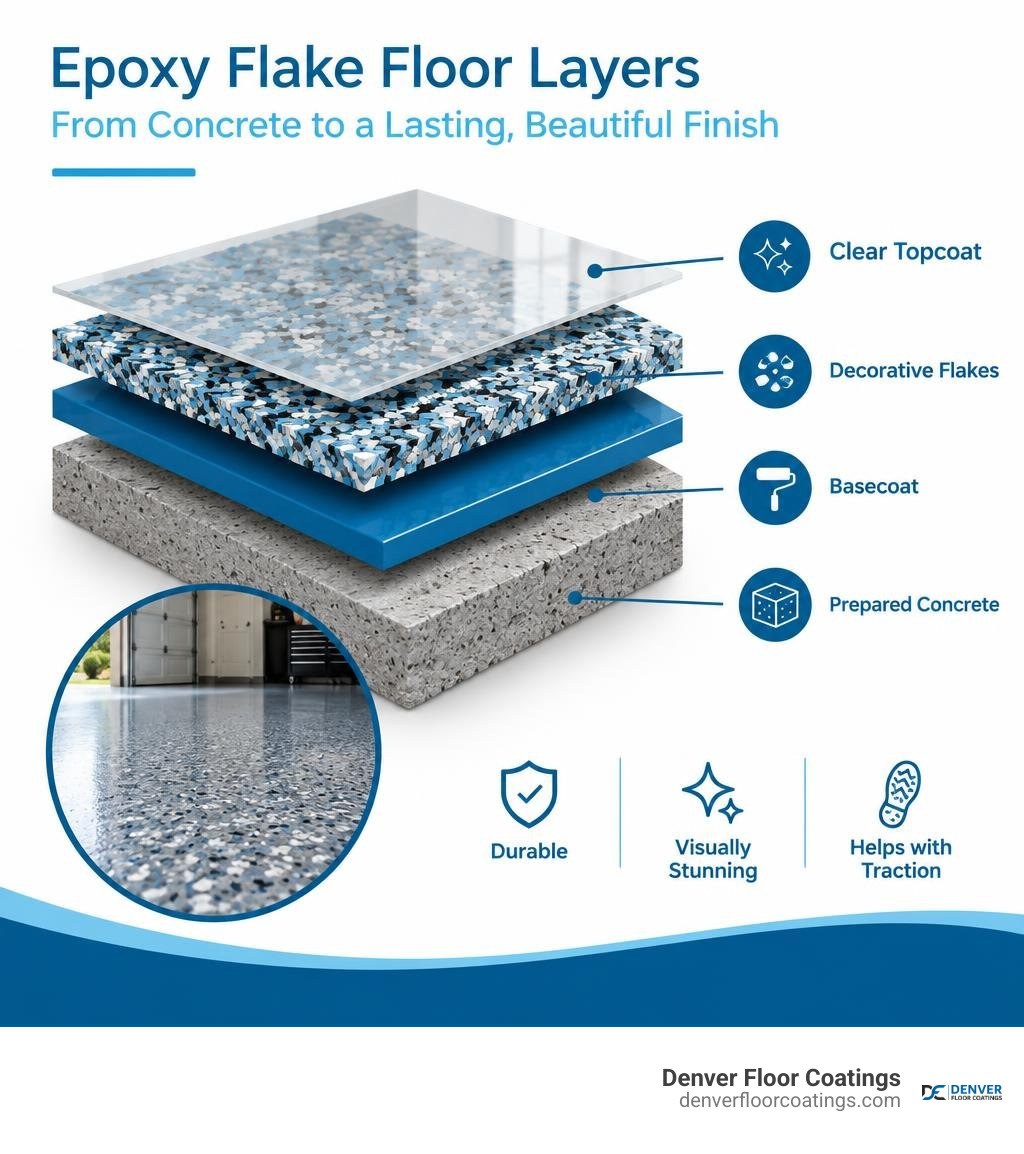
Understanding the purpose and composition of these materials allows property owners to choose combinations of base resin, chip density, and protective topcoats that suit their specific functional requirements.
What Are Epoxy Floor Paint Flakes and Why Use Them?
Epoxy floor paint flakes, frequently described as vinyl chips or decorative color chips, are custom-formulated polymer blends engineered specifically to embed into wet resin basecoats. When installed by our team, these decorative chips perform structural and mechanical roles alongside their visual function. By creating a dense, overlapping composite layer across the floor, the flakes establish a resilient protective shield that shields bare concrete slabs from continuous vehicular and foot traffic.
A clear understanding of how these multi-component surfaces operate begins with having epoxy floors explained from the substrate upward. The combination of an industrial resin foundation, dense vinyl flakes, and a high-solids protective topcoat produces a cohesive surface that resists moisture intrusion, hot-tire pickup, road salts, and typical automotive fluids.
Composition and Decorative Benefits
High-grade decorative flakes are manufactured from a blend of polyvinyl acetate (PVA) and vinyl resins combined with colorfast pigments. This manufacturing process produces chips that offer uniform thickness, flexibility, and resistance to UV-induced fading. Because the chips maintain flexibility, they absorb localized surface stresses without cracking or separating from the base resin.
In a manner similar to quartz filled epoxy floors, flake broadcast systems add physical mass to the overall coating profile. The settled flakes create a variegated pattern that breaks up directional light reflection. This visual dispersion effectively camouflages small substrate unevenness, minor imperfections, and fine surface irregularities inherent in poured concrete slabs, yielding a clean, uniform finish across large spans.
Key Performance Advantages of Epoxy Floor Paint Flakes
Incorporating decorative flakes into a resinous coating assembly delivers measurable operational benefits for residential garages, commercial utility rooms, and high-traffic service areas:
- Improved Slip Resistance: The embedded flakes form a gentle orange-peel profile across the floor, enhancing mechanical grip underfoot under typical dry and wet conditions.
- Color Stability: When encapsulated beneath a clear aliphatic polyaspartic finish, the underlying color pigments remain protected against indirect UV exposure near overhead garage doors and exterior entryways.
- Chemical and Stain Resilience: The continuous polymer shield prevents penetration from petroleum products, glycol fluids, deicing salts, and common cleaning agents.
- Impact Dissipation: The multi-layered build helps absorb and distribute point-load impacts from dropped hand tools or equipment, reducing the potential for slab chipping.
- Substrate Protection: By sealing the concrete, the system reduces moisture vapor dusting and keeps external contaminants from penetrating porous concrete.
These combined characteristics show why high-performance flake floor coatings turn plain concrete into a showroom surface that maintains structural integrity and appearance over extended service periods.

Flake Sizing, Color Blends, and Coverage Rates
Choosing the proper flake size and broadcast density requires balancing visual preferences with the performance requirements of the room. Decorative polymer flakes are manufactured in standard size gradations, ranging from 1/16 inch up to 1 inch. The 1/4-inch dimension represents the most widely requested size for residential garages due to its balanced granite-like appearance. Finer 1/8-inch flakes create a compact, terrazzo-style aesthetic that is frequently specified for contemporary commercial spaces and modern architectural settings.
Calculating Coverage: Light, Heavy, and Full Broadcast Rates
The volume of flakes broadcast into the wet basecoat determines the surface texture, physical thickness, and long-term durability of the coating assembly. Application rates generally fall into three primary categories:
| Broadcast Level | Square Footage per Pound | Flake Requirement (400 sq. ft. Garage) | Surface Characteristics |
|---|---|---|---|
| Light Scatter | 50 to 200 SF/LB | 2 to 8 lbs | Basecoat color remains dominant; light visual accent |
| Heavy Distribution | 25 to 50 SF/LB | 8 to 16 lbs | Flakes cover 50% to 75% of surface; distinct speckle pattern |
| Full Broadcast (Rejection) | 5 to 7 SF/LB (approx. 0.25 lb/sq. ft.) | 100 lbs | Complete basecoat concealment; maximum durability and uniform texture |
At Denver Floor Coatings, we emphasize full broadcast systems applied to rejection. By distributing approximately 0.25 pounds of flakes per square foot until the wet base resin cannot hold additional material, we create a solid layer of polymer chips. This full coverage provides maximum barrier protection, optimal surface thickness, and consistent traction across the entire floor.
Aesthetic Styling: Solid Tones, Granite Blends, and Custom Hues
Flake formulations can be blended into nearly unlimited color combinations to harmonize with surrounding walls, cabinetry, and structural elements. Popular colorways include granite and river-stone collections that combine charcoal, medium gray, slate, and off-white chips. Earth-toned blends integrate beige, saddle tan, deep brown, and cream to complement warm architectural accents.
When evaluating tone selections, reviewing our black vs grey epoxy floors a quick start guide can help clarify how natural and artificial lighting interact with darker versus lighter floor foundations. For deeper technical context regarding resin polymer chemistry, the reference overview on Epoxy provides detailed information on thermosetting resin reactions.

Step-by-Step Professional Application and Broadcast Process
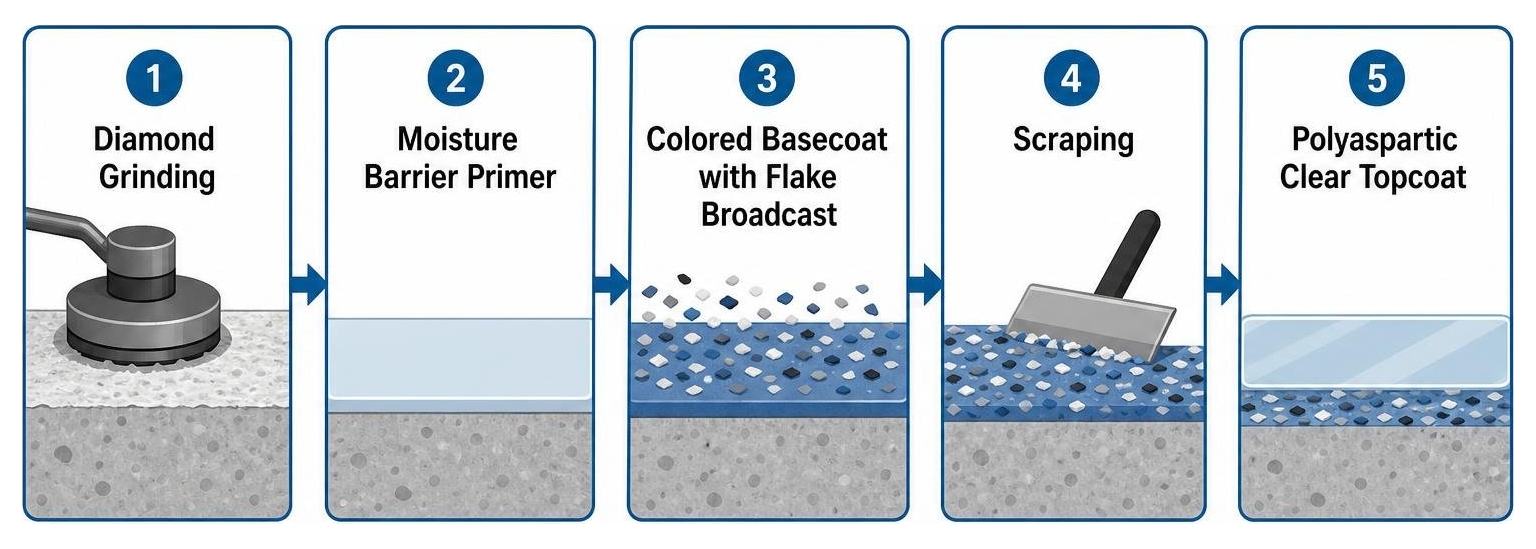
Installing a long-lasting flake floor demands strict adherence to sequential installation steps. Each stage, from mechanical concrete preparation to clear topcoat sealing, must be executed within precise timing windows to achieve proper chemical and mechanical bonding.
Concrete Preparation, Profiling, and Primer Coat
Adhesion depends on proper mechanical preparation of the underlying concrete slab:
- Diamond Grinding: We grind the entire concrete surface using heavy planetary grinding machinery equipped with diamond tooling. This mechanical profiling removes weak laitance, eliminates existing surface residues, and opens the concrete pores to achieve a CSP 2 to CSP 3 profile.
- Debris Extraction and Surface Cleaning: The floor is thoroughly vacuumed using multi-stage HEPA filtration units to remove fine dust. When targeted degreasing is needed on isolated spots, high-purity 91% isopropyl alcohol is used to clean the area without leaving oily residues behind.
- Targeted Substrate Patching: Concrete floor repair is only a small component of the company’s floor-coating preparation work, focused on filling static hairline cracks, small spalls, and surface pitting with fast-curing structural epoxy or polyurea patching compounds to create a flat substrate.
- Basecoat Application: An industrial moisture-mitigating primer and pigmented epoxy or polyurea basecoat are rolled evenly across the profiled concrete, establishing the receiving bed as outlined in our epoxy floor installation process.
Broadcasting Epoxy Floor Paint Flakes and Applying Clear Topcoats
Once the tinted basecoat is rolled to the specified mil thickness, the decorative flakes are distributed immediately while the resin remains receptive:
- Aerated High-Angle Broadcast: Technicians wearing spiked footwear walk over the wet resin without disturbing the basecoat, casting handfuls of flakes upward in high, arching trajectories. This aerated distribution allows the chips to settle randomly without clumping.
- Broadcast to Full Rejection: Flakes are applied continuously across the floor until the basecoat is fully saturated and excess dry chips sit across the entire surface.
- Curing and Flake Recovery: Once the basecoat has cured sufficiently, excess unbonded flakes are swept and reclaimed using clean collection tools.
- Directional Mechanical Scraping: A rigid steel floor scraper is passed over the cured surface in perpendicular directions. This scraping action shears off sharp, standing flake edges, knocking them flat to ensure a consistent, comfortable texture underfoot.
- HEPA Vacuum Cleansing: A final thorough vacuuming removes micro-debris, ensuring no loose particles remain before topcoating.
- Clear Topcoat Encapsulation: A premium clear polyaspartic topcoat is applied over the flattened flakes. The polyaspartic material encapsulates the chips, providing rapid curing, high chemical resistance, and strong UV protection, matching the performance highlighted in our epoxy garage floor coatings durable stylish solutions.
Durability, Maintenance, and Critical Mistakes to Avoid
A full-broadcast flake system protected by a commercial polyaspartic topcoat creates a resilient surface designed for demanding residential and commercial environments. Because the multi-layered assembly seals the concrete completely, dirt, automotive fluids, and everyday debris remain on the non-porous surface, simplifying long-term care.
Long-Term Longevity and Simple Maintenance Protocols
Under typical residential garage conditions with standard vehicle traffic and regular maintenance, a professionally installed multi-layer flake system can deliver 15 to 20 years or more of dependable service. While routine wear patterns depend on maintenance habits, environmental factors, and traffic intensity, proper care preserves both clarity and traction over time.
| Maintenance Task | Recommended Frequency | Recommended Method |
|---|---|---|
| Dry Debris Removal | Weekly or as needed | Soft-bristle push broom or microfiber dust mop |
| Routine Wet Cleaning | Bi-weekly or monthly | Microfiber mop with warm water and neutral-pH cleaner |
| Fluid Spill Cleanup | Immediately | Wipe clean with a soft microfiber towel; no harsh solvents required |
| Seasonal Deep Clean | Twice annually (Spring/Fall) | Gentle foaming detergent, soft-bristled deck brush, and squeegee rinse |
For commercial facilities that experience constant equipment movement, foot traffic, or chemical handling, our commercial floor coating solutions offer tailored resin builds designed to meet rigorous safety and hygiene requirements.
Critical Installation Mistakes That Compromise Performance
Achieving durable bonding requires avoiding several critical application errors:
- Relying on Inadequate Surface Prep: Chemical washing or light sanding without diamond grinding fails to profile the concrete pores adequately, which can result in premature coating delamination.
- Directional Flake Clumping: Throwing flakes directly downward or in low trajectories creates concentrated clumps, leaving thin or bare spots across adjoining sections.
- Omitting the Mechanical Scrape: Skipping the scraper step leaves upright, sharp flake corners protruding through the topcoat, creating rough areas that trap dirt and wear unevenly.
- Neglecting Concrete Moisture Testing: Failing to assess substrate moisture transmission can trap rising vapors beneath the primer, potentially causing osmotic blistering over time.
Frequently Asked Questions About Flake Flooring
How much flake material is needed per square foot for full coverage?
For a complete full-broadcast application where the basecoat is entirely covered, plan for roughly 0.25 pounds of flakes per square foot, which equates to a coverage rate of 5 to 7 square feet per pound. In a typical two-car garage measuring 400 square feet, approximately 100 pounds of decorative flakes are required to achieve total rejection and establish a dense, durable chip profile.
Can epoxy flakes be applied over wood or existing paint?
High-performance flake systems should not be installed over wood subfloors or existing paint layers. Wood naturally expands, contracts, and flexes with shifts in humidity and ambient temperature, which can crack rigid resin coatings. Existing paint coatings interfere with direct mechanical bonding to the concrete below. To ensure proper adhesion, the surface must be mechanically ground down to sound, bare concrete.
How long does a professional flake floor system last?
When installed over a properly profiled concrete slab using an industrial primer, full flake broadcast, and clear polyaspartic topcoat, these systems can provide many years of dependable service under normal residential garage conditions. Regular sweeping and washing with neutral cleaners protect the clear topcoat from premature abrasive wear caused by tracked-in grit.
How does the slip resistance of a flake floor compare to smooth coatings?
A full-broadcast flake floor naturally produces an orange-peel texture beneath the clear topcoat. This profile provides significantly higher mechanical traction underfoot than a smooth, solid-color floor, making it especially practical in garages subject to wet tires, rain, and winter snow melt.
Conclusion
Upgrading your concrete slab with a full-broadcast decorative flake system combines lasting durability, improved traction, and refined aesthetics. From concealing minor surface irregularities to providing dependable resilience against automotive fluids and Colorado’s seasonal weather shifts, a professionally installed flake floor transforms an ordinary garage or commercial workspace into an attractive, low-maintenance environment.
Denver Floor Coatings delivers professional floor installations customized to the specific requirements of your space. To evaluate your concrete and discuss flake color blends, broadcast options, and topcoat systems, contact Denver Floor Coatings to request your estimate and schedule a comprehensive on-site consultation.