

Why Epoxy Flooring Slippery Surfaces Need Attention
An epoxy flooring slippery condition generally develops when a non-porous, smooth topcoat is exposed to moisture, residual oils, melting snow, or fine particulate matter. Because high-performance resinous finishes create an impenetrable membrane, liquids cannot absorb into the underlying concrete slab. Instead, water forms a delicate fluid barrier between shoe soles or tire rubber and the coated surface. Under wet or oily conditions, stepping onto an unmodified smooth coating can feel remarkably similar to walking across wet ice or polished tile.
Fortunately, addressing a slick surface does not necessarily require complete mechanical removal of the existing system. In many residential, commercial, and light industrial settings, surface friction can often be dramatically improved by having professional technicians apply a textured clear finish or incorporate specialized traction aggregates during a recoating service. Determining the ideal approach requires evaluating how much surface liquid the environment experiences, how frequently the floor must be mopped or power-washed, and whether traffic involves heavy boots, foot traffic, or motorized equipment.
When evaluating surface safety, standard untextured resin surfaces may measure a wet coefficient of friction below 0.40, whereas professionally engineered systems with embedded aggregates can achieve ratings above 0.60. However, achieving higher traction requires a balanced approach. An overly aggressive, rough texture can be uncomfortable for bare feet, challenging to mop, and harsh on cleaning equipment. The primary objective is to engineer practical traction that helps maintain daily safety without creating unnecessary maintenance challenges.
At Denver Floor Coatings, our team relies on extensive engineering experience to evaluate safety concerns and recommend tailored solutions. Understanding how high-performance epoxy floors interact with moisture allows us to specify properly calibrated anti slip epoxy treatments, polyaspartic topcoats, and decorative flake systems. Discovering why your home needs an epoxy makeover right now starts with understanding how modern resin systems balance aesthetic appeal with functional safety.
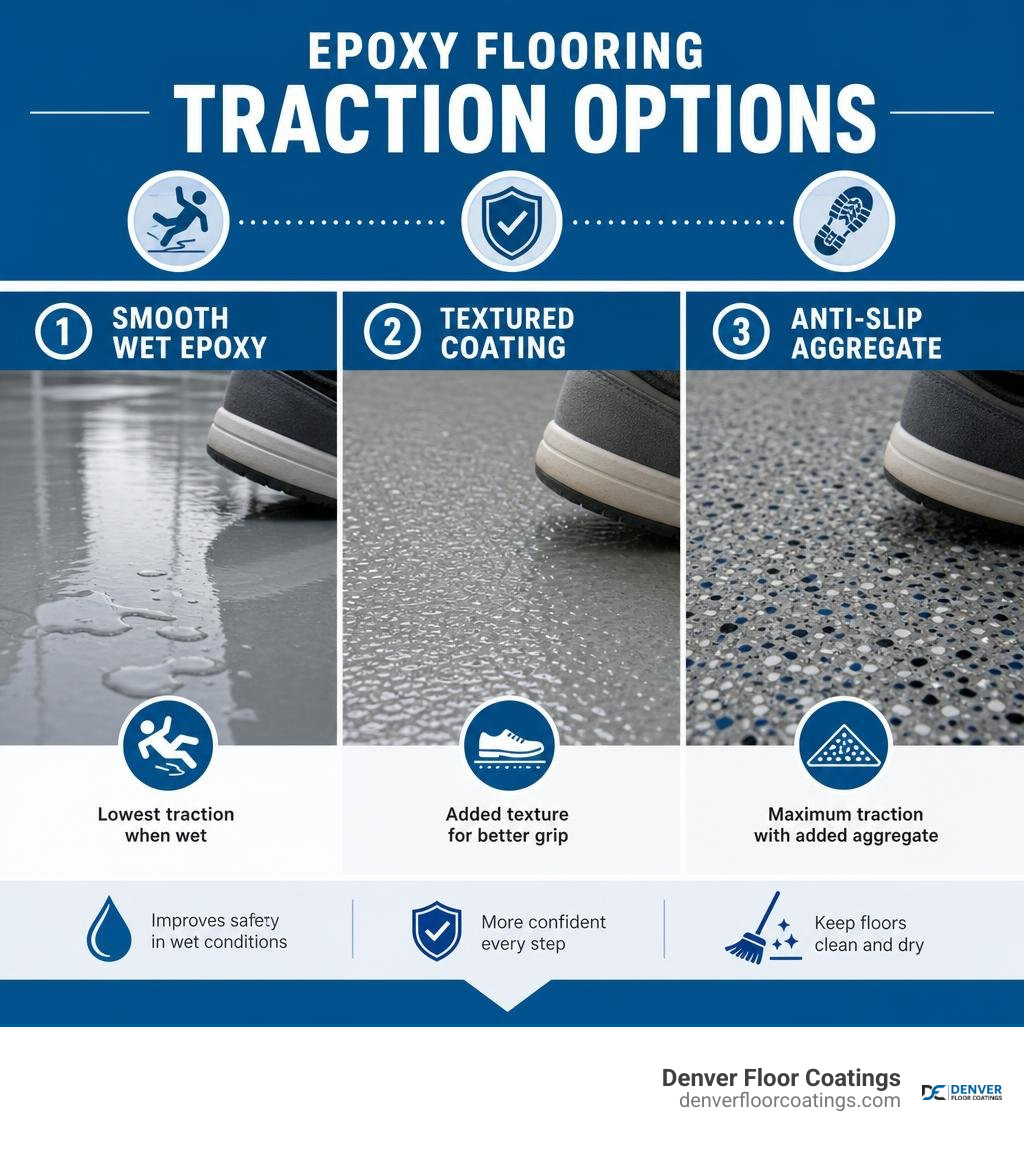
Why Is Epoxy Flooring Slippery When Wet?
Understanding why an untextured coating grows slick under wet conditions involves fundamental principles of fluid dynamics. When water, slush, motor oil, or chemical spills accumulate on a flat, non-porous surface, footwear treads often struggle to channel the fluid away rapidly enough. This dynamic can allow a thin layer of liquid to lift footwear off the structural surface, creating a hydroplaning effect that significantly reduces traction.
Because polymer coatings form a tight, impervious barrier, liquids remain on top of the coating rather than absorbing into the substrate. While this resistance to absorption makes resinous coatings exceptionally stain-resistant and easy to sweep, smooth surfaces often exhibit a wet Coefficient of Friction (COF) between 0.35 and 0.45. When weighing epoxy flooring pros and cons, managing wet traction is a vital safety consideration. Achieving an optimal balance usually involves embedding controlled mechanical texture into the liquid topcoat during application, helping to disrupt fluid tension while preserving surface cleanability.
Friction Ratings and Safety Standards (ASTM D2047 & DIN 51130)
Industry professionals rely on standardized mechanical testing to quantify traction and safety across commercial and residential floors:
- ASTM D2047: A standardized laboratory test protocol designed to measure dry slip resistance on floor finishes using a James Machine drag-sled apparatus.
- DIN 51130: A German industry ramp-testing method that measures the variable tilt angle at which test personnel lose traction on wet or oil-lubricated floor samples.
- OSHA & ADA Guidelines: Standard safety benchmarks commonly suggest aiming for a minimum wet COF of 0.50 for general flat walkways, with high-demand commercial workspaces often targeting 0.60 or higher.
When smooth resin coatings register below target thresholds in wet environments, introducing calibrated aggregates can help support compliance with industry safety recommendations. Reviewing specialized safety flooring options helps property owners protect occupants and employees from preventable slip-and-fall incidents.
What Makes Unmodified Epoxy Flooring Slippery in Garages and Workspaces
Across Colorado residential garages and commercial facilities, winter snow melt, road salt, rain, and vehicle drip can transform smooth floor finishes into localized slip hazards. Untextured high-gloss clear coats often amplify this issue under wet foot traffic. Over time, recurring friction from vehicle tires can also polish the primary walkway zones, further reducing raw surface friction. Selecting the best non-slip garage floor epoxy from Denver Floor Coatings helps establish reliable traction before slick conditions develop.
Budget-Friendly Anti-Slip Additives for Epoxy Floors
Incorporating specialized aggregate additives during installation remains one of the most effective and practical ways to introduce long-term traction into a resinous floor system. Broadcasting or mixing friction media directly into the liquid topcoat allows professional installers to build consistent slip resistance across high-traffic zones without requiring complete floor replacement.
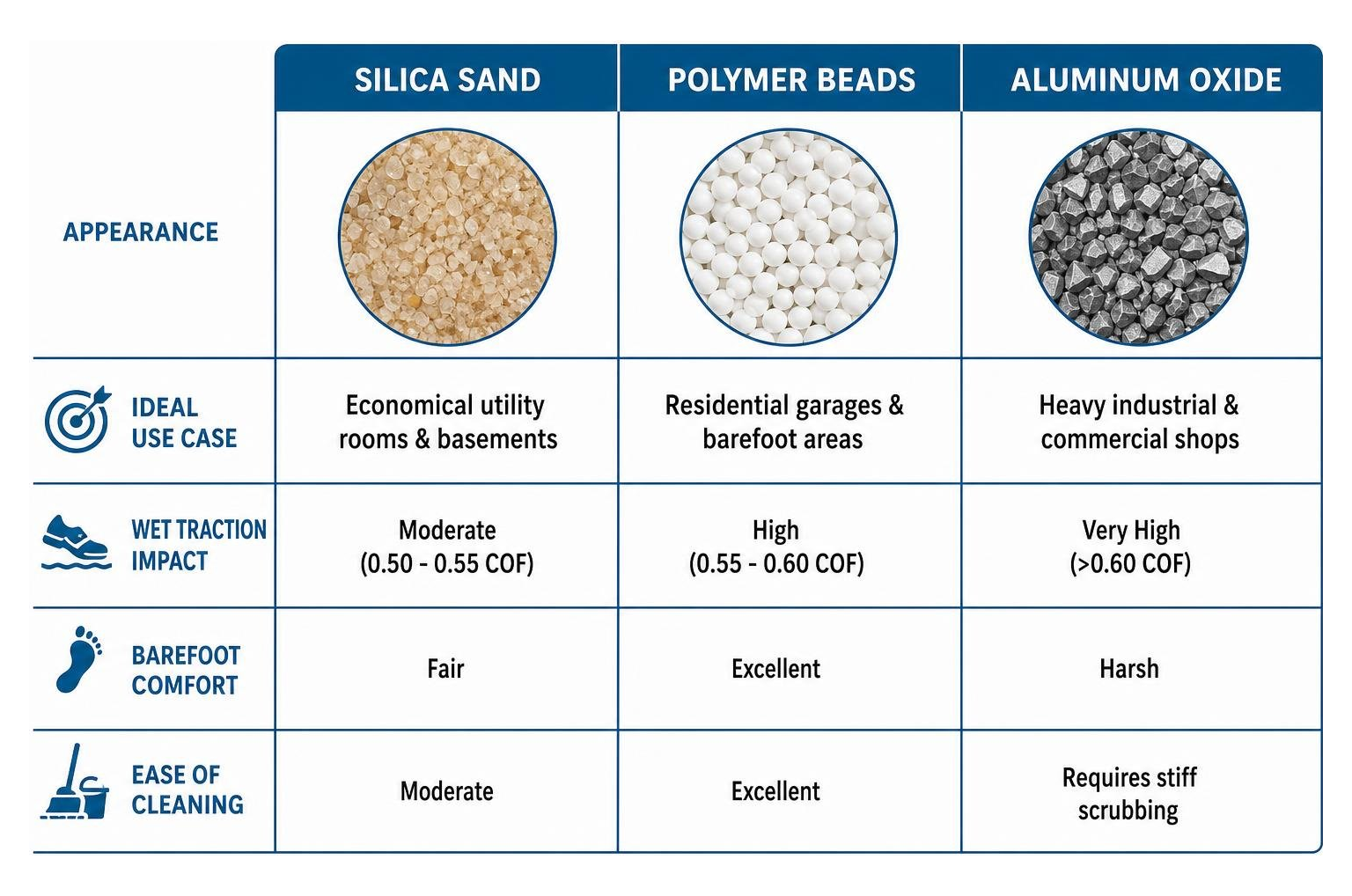
| Additive Type | Ideal Use Case | Wet Traction Impact | Barefoot Comfort | Ease of Cleaning |
|---|---|---|---|---|
| Silica Sand | Utility rooms & basements | Moderate (0.50 – 0.55 COF) | Fair | Moderate |
| Polymer Spheres | Residential garages & barefoot areas | High (0.55 – 0.60 COF) | Excellent | Excellent |
| Aluminum Oxide | Heavy industrial & commercial shops | Very High (>0.60 COF) | Harsh | Requires stiff scrubbing |
Silica Sand and Kiln-Dried Aggregates
Kiln-dried silica sand is a traditional option for adding functional surface texture to resinous floors. When broadcast into a wet base coat or suspended within topcoat sealers, silica sand creates raised mineral contact points that assist footwear in penetrating liquid films. Technical application protocols show that broadcasting aggregates can substantially elevate wet slip resistance. However, because sand particles possess irregular edges, unevenly applied sand can sometimes snag mop strings during standard cleaning routines.
Polymer Spheres and Polypropylene Beads
Microspheres and micronized polypropylene beads represent advanced, high-efficiency options engineered to remain suspended in clear polyurethane or polyaspartic topcoats. Because these synthetic particles feature smooth, rounded geometries, they provide notable wet traction while maintaining a surface that remains gentle under bare feet or thin socks. These non-abrasive beads help ensure smooth mopping while assisting the floor in maintaining wet COF ratings above 0.55 over extended periods of normal daily use.
Aluminum Oxide Heavy-Duty Aggregates
For severe commercial and industrial environments, synthetic aluminum oxide is a premier choice for maximum wear resistance and grip. Exhibiting extreme mineral hardness, aluminum oxide particles create sharp micro-textures that remain effective under heavy foot traffic, forklift wheels, and constant wet exposure. Incorporating aluminum oxide into high-solids polyaspartic coatings can raise a surface’s wet COF beyond 0.60. Field performance evaluations indicate that aluminum oxide broadcasts help reduce slip hazards significantly in commercial wash-down areas, automotive repair bays, and manufacturing zones.
How to Fix Existing Epoxy Flooring Slippery Surfaces on a Budget
If an existing resinous floor has become slick, replacing the entire coating or removing the concrete substrate is usually unnecessary. Having professional installers apply a specialized anti-slip clear topcoat is often an efficient and cost-effective method to restore underfoot traction. Exploring modern non-slip epoxy flooring systems highlights how clear polyaspartic topcoats lock in new aggregate without concealing the floor’s original colors or decorative design.
Professional Process to Recoat an Epoxy Flooring Slippery Surface
Restoring safe traction to a smooth, slippery coating requires a systematic, professional preparation and recoating methodology:
- Surface Cleaning and Degreasing: Technicians thoroughly clean the floor to remove embedded tire oils, road salts, and dirt, adhering to established practices on how to clean epoxy floors.
- Mechanical Abrasion: Installers use commercial floor sanders or diamond-grinding equipment to scuff the existing topcoat, creating an ideal mechanical profile for chemical bonding.
- Solvent Wipe Decontamination: The entire floor surface is wiped clean to remove residual micro-dust particles prior to topcoat application.
- Textured Topcoat Application: Specialists apply a clear topcoat mixed with polymer microspheres or fine aggregates at precise loading rates, ensuring even aggregate distribution and uniform surface texture.
Decorative Flake Broadcast and Polyaspartic System Upgrades
For residential garages and active commercial spaces, upgrading to a full decorative vinyl flake broadcast paired with a polyaspartic topcoat delivers an impressive balance of traction, visual depth, and physical durability. Dense multi-colored vinyl flakes create an inherently uneven multi-directional texture that naturally breaks liquid surface tension.

When encapsulated within a chemical-resistant polyaspartic clear coat, full vinyl flake systems retain excellent ease of cleaning while providing dependable underfoot grip for wet boots and tires. Facility managers seeking heavy-duty upgrades frequently examine professional non-slip industrial flooring guidelines to satisfy rigorous workplace safety regulations.
Long-Term Maintenance for Slip-Resistant Epoxy Floors
Even high-performance textured coatings require regular care to maintain optimal slip resistance over time. Over months of use, oily residue, soap scum, fine dust, and dirty mop water can settle into the tiny recesses between aggregate particles. If left uncleaned, this buildup can fill in the surface profile, gradually reducing traction and recreating a slick surface when wet.
To maintain optimal underfoot grip across the lifespan of the floor:
- Utilize pH-Neutral Cleaning Solutions: Avoid heavy soap detergents, oil-based cleaners, or harsh citrus degreasers that leave slippery residues on the surface.
- Agitate Surface Recesses: Use soft-to-medium nylon bristle brooms or auto-scrubbers to gently loosen dirt lodged within the textured profile.
- Rinse and Extract Standing Water: Thoroughly squeegee or damp-mop dirty wash water away rather than allowing dirty water to evaporate and leave residue behind.
- Perform Periodic Wear Audits: Periodically evaluate high-traffic turn radiuses, entryways, and work bays to monitor aggregate wear and determine when topcoat maintenance may be beneficial.
Following established care guidelines outlined in our detailed resource on how to clean epoxy coated garage floors helps ensure your non-slip floor maintains its performance. Field observations demonstrate that properly cared-for polymer coatings can preserve a significant majority of their slip resistance over many years of continuous daily service.
Frequently Asked Questions About Slippery Epoxy Floors
Why is my newly installed epoxy floor extremely slippery when wet?
Newly applied smooth resin finishes form a continuous, non-porous surface barrier. When water, melting snow, automotive fluids, or rain land on an untextured glossy topcoat, the liquid creates a lubricating layer between shoe treads and the floor, leading to reduced friction. Incorporating decorative vinyl flake broadcasts or micro-aggregates breaks up this fluid layer, helping footwear make solid contact with the surface.
What is the most cost-effective way to restore slip resistance to a slick floor?
The most practical and long-lasting solution for addressing an existing slick surface is having Denver Floor Coatings mechanically scuff the cured topcoat and apply a thin, durable polyaspartic clear topcoat infused with micronized polymer spheres or fine silica aggregate. This professional topcoat renewal enhances traction effectively without requiring a complete teardown of the base coating system.
Does adding anti-slip aggregate make epoxy floors significantly harder to clean?
Ease of cleaning depends directly on the specific aggregate material and grit size chosen for the installation. Coarse aluminum oxide or heavy silica sand creates prominent texture points that can catch mop fibers and require stiff scrubbing. However, rounded polymer microspheres and full decorative vinyl flake broadcasts provide excellent wet slip resistance while allowing string mops, micro-fiber pads, and squeegees to glide smoothly across the floor during routine maintenance.
Conclusion
A smooth, high-gloss surface does not have to compromise safety in your garage, shop, or commercial facility. By selecting carefully engineered anti-slip aggregates or upgrading to full decorative flake polyaspartic systems, you can achieve comfortable underfoot traction tailored to your specific functional demands and aesthetic preferences.
Denver Floor Coatings specializes in high-performance epoxy and polyaspartic coating systems, including decorative flake finishes, rather than stained concrete services. Whether you are looking to enhance a residential garage in Denver or secure a commercial facility across surrounding Front Range communities, our expert team delivers reliable, high-durability installations designed to withstand local climate challenges.
Ready to eliminate slick surfaces and transform your space into a safe, showroom-grade environment? Contact Denver Floor Coatings today to request a free, personalized estimate for your project.