

What Are Metallic Epoxy Coatings?
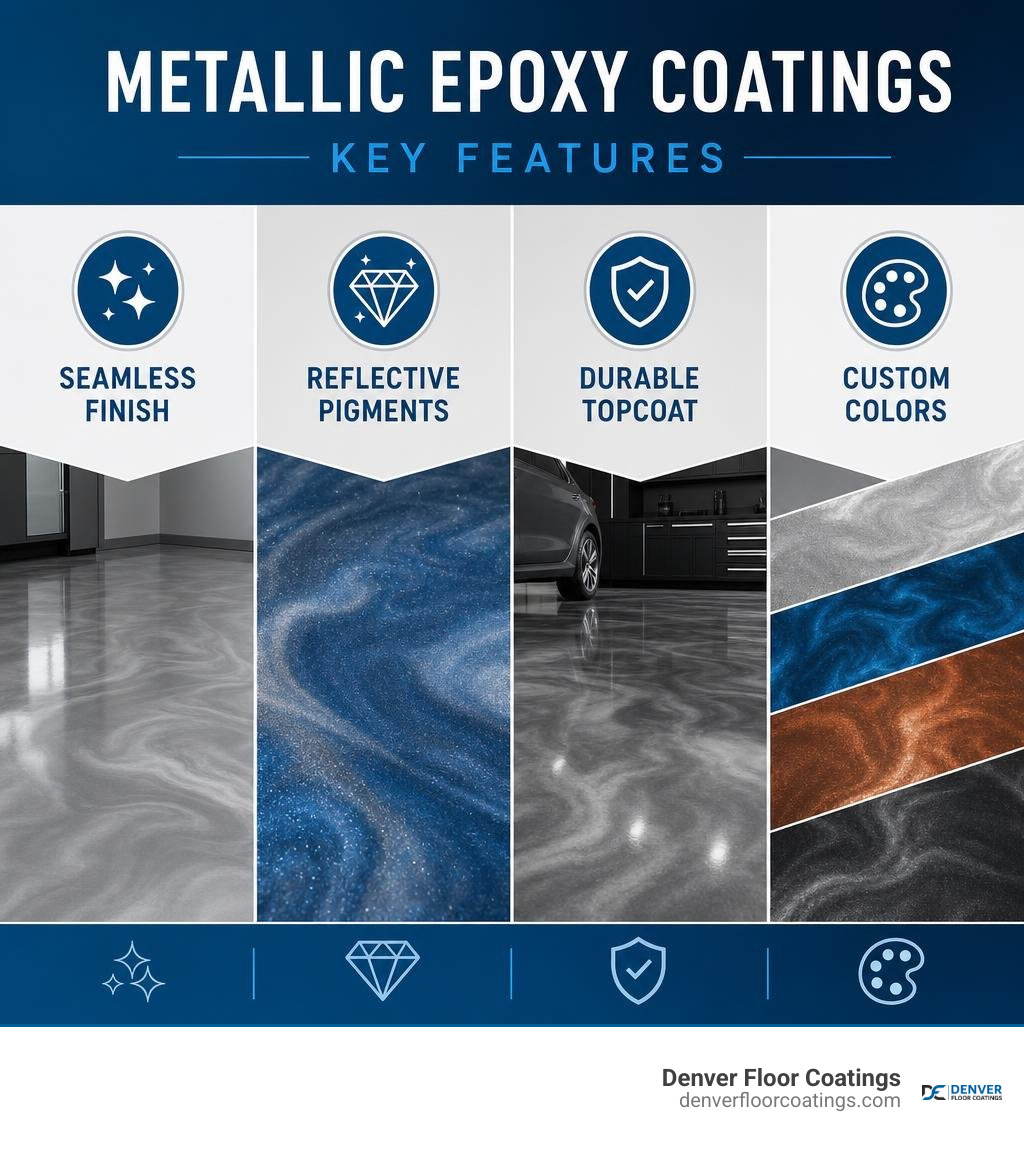
Metallic epoxy coatings represent a sophisticated fusion of decorative artistry and chemical engineering designed to elevate standard interior concrete surfaces. These specialized systems combine clear, highly resilient epoxy resin with ultra-fine metallic powders or mica-based pigments. When applied over properly prepared concrete, the metallic particles shift and flow organically within the liquid matrix, settling into dynamic patterns that refract light. The resulting surface exhibits vibrant color variations, impressive visual depth, and a lustrous sheen reminiscent of polished stone, flowing molten metal, or natural quarried marble.
Unlike traditional single-tone floor finishes or topical coatings, metallic epoxy systems are applied at a substantial thickness, allowing pigments to move three-dimensionally before the resin cross-links and hardens. This organic movement ensures that no two floors are ever visually identical, providing property owners with a distinctive architectural feature tailored specifically to their interior design requirements.
Key features and functional traits of metallic epoxy floor systems include:
- Unique Visual Movement: Synthetic mica pigments drift within the clear resin during the curing process, creating unique swirls, lava-like veining, and metallic depth across every square foot.
- Seamless, Non-Porous Surface: Eliminates grout lines and porous concrete textures, establishing a continuous barrier that resists dust accumulation and simplifies routine maintenance.
- Mechanical Durability: Protects interior slab substrates against typical foot traffic, rolling equipment, light vehicular loads, and localized impact when properly maintained.
- Extensive Color Palette: Offers versatile design choices ranging from understated charcoal, slate, and shimmering silver to striking copper, deep bronze, and oceanic blues.
- Architectural Flexibility: Enhances the aesthetic environment of residential basements, multi-car garages, modern living areas, commercial showrooms, boutique retail spaces, and executive offices.
While the visual results of metallic epoxy are undeniably striking, achieving optimal performance requires detailed attention to technical factors such as slab moisture content, ambient temperature control, substrate profile preparation, and specialized application techniques. Because the final finish reflects the structural integrity of the underlying slab, careful evaluation of the concrete substrate is an essential first step.
I am Mike Wislinsky, Founder and President of Denver Floor Coatings. Drawing on more than two decades of engineering and operational experience, I lead our team in delivering meticulous, process-driven floor coating solutions. We specialize in high-performance resinous applications, including custom metallic epoxy designs, multi-layer polyaspartic systems, and decorative flake systems engineered specifically for Colorado climate conditions.
What are Metallic Epoxy Coatings and How Do They Work?
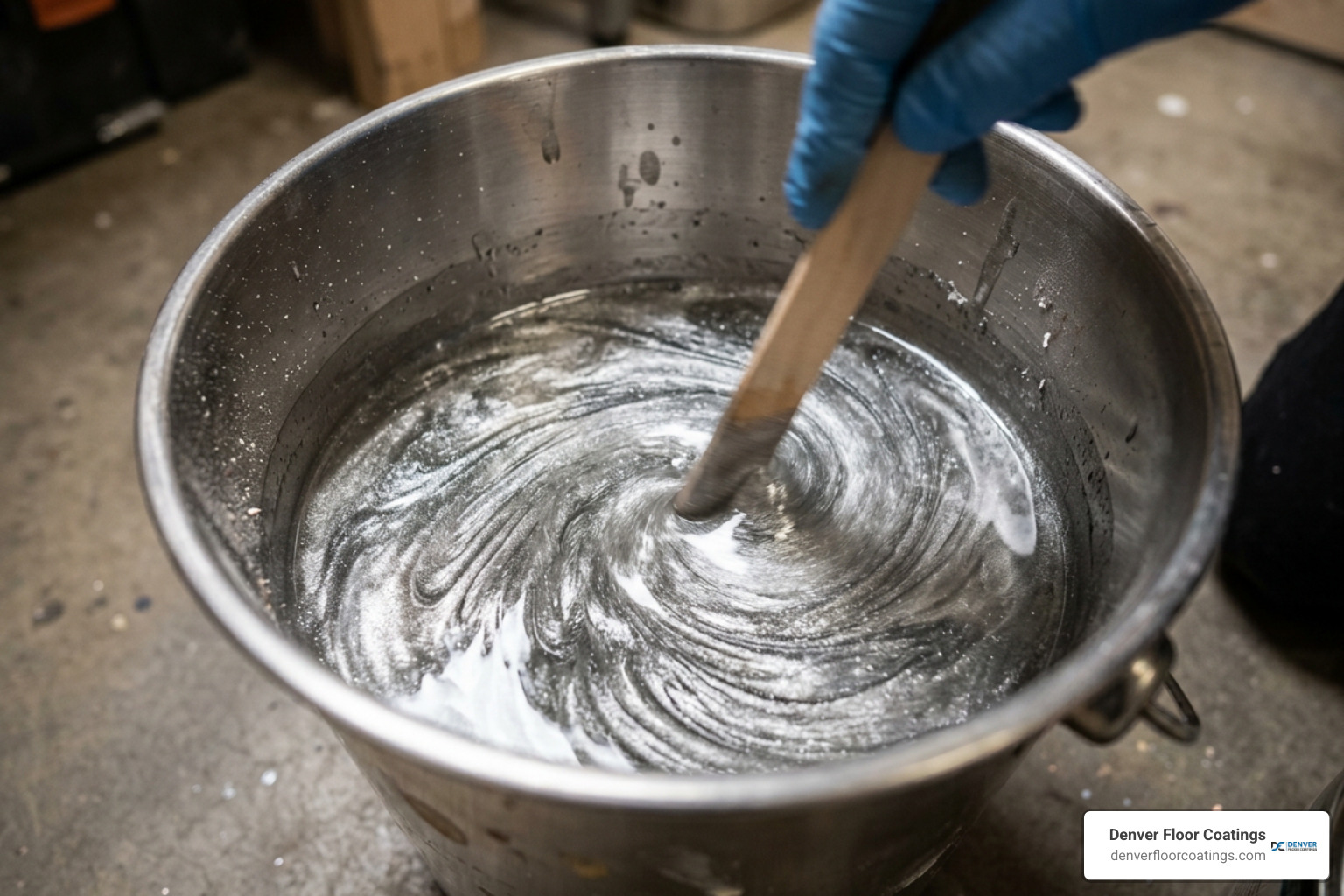
To understand the visual magic of metallic epoxy coatings, one must examine the underlying polymer chemistry and optical principles that make these systems unique. The process begins with advanced high-solids clear resin binders combined with microscopic synthetic mica platelets coated with titanium dioxide or iron oxides. Rather than dissolving or resting at the bottom of the mixture, these fine metallic particles remain suspended within the high-viscosity clear resin coat during the wet phase.
When light strikes the surface of a cured metallic floor, it travels through the clear resin coat and bounces off the angled metallic mica particles suspended at various depths within the polymer matrix. This multi-angled light reflection creates a dynamic sense of movement and 3D depth. To learn more about various clear binder formulations and floor system structures, explore our comprehensive guide on Types of Poured Epoxy Flooring Their Benefits A Comprehensive Guide.
Understanding the Metallic Epoxy Composition
Our metallic systems rely on a sophisticated two-part cycloaliphatic epoxy resin structure, consisting of a resin base (Part A) and a hardener (Part B). When mixed in exact proportions, a chemical cross-linking reaction initiates, converting the liquid resin into a solid thermoset polymer matrix. This reaction yields exceptionally high mechanical adhesion to properly prepared concrete, frequently producing bond strengths exceeding 350 psi—a threshold where the concrete substrate itself typically fails before the adhesive bond releases. Thorough dispersion of metallic pigments during the mixing stage is critical to prevent agglomeration and ensure consistent metallic suspension throughout the wet build coat.
How Metallic Epoxy Coatings Compare to Standard Epoxy
Conventional epoxy floor systems utilize opaque pigment pastes that completely block light, resulting in a flat, uniform single-color surface. In contrast, metallic floor systems take advantage of optical clarity in the binder layer. As explained in our detailed article Epoxy Floors Explained, metallic resins allow light to pass through the clear layer, creating layered depth and metallic luster that opaque paints or standard solid epoxies cannot match. The fluidity of the wet resin during installation allows installers to manipulate the material using specific dispersion techniques, crafting fluid patterns that mirror natural geological formations.
Benefits and Durability Performance
Beyond their sophisticated visual appeal, high-performance metallic floor systems installed by Denver Floor Coatings deliver robust structural protection for indoor concrete slabs.
Abrasion, Stain, and Chemical Resistance
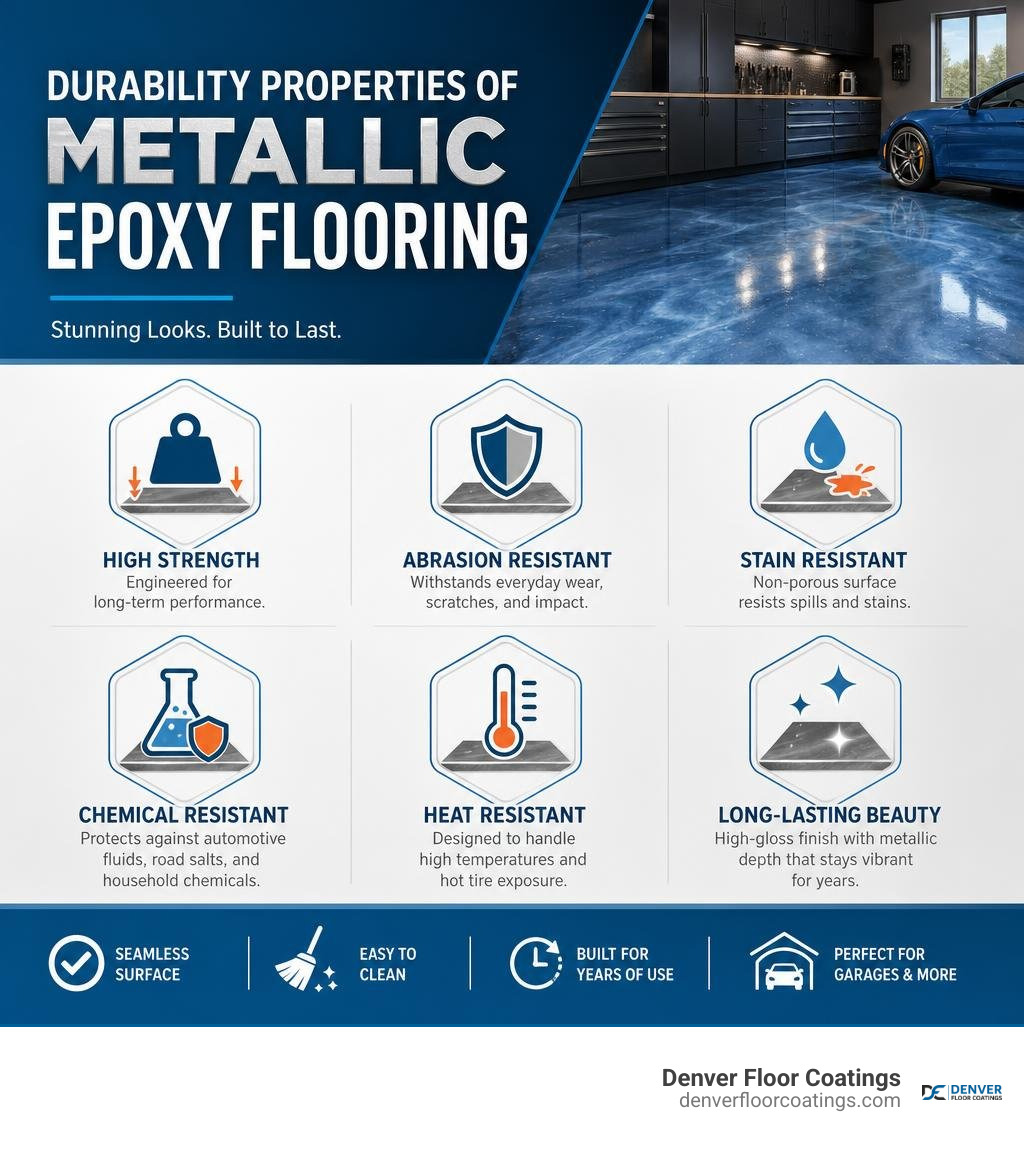
When fully cured, industrial-grade cycloaliphatic epoxy binders exhibit high compressive strength, often testing near 7,800 psi under laboratory conditions. Standardized testing via ASTM International D4060 Taber abrasion methods demonstrates minimal mass loss over 1,000 testing cycles when paired with modern high-performance clear topcoats. This non-porous structure serves as an effective barrier against common garage contaminants, including motor oil, brake fluid, de-icing salts, household solvents, and chemical spills. For an honest evaluation of realistic floor system performance, explore our detailed resource on Epoxy Flooring Pros and Cons What You Should Know.
Heat Resistance and Hot Tire Pickup Protection
Residential garage floors in Colorado experience demanding conditions, particularly during summer months when hot vehicle tires rest directly on floor finishes. Lower-tier floor coatings can soften under localized heat and pressure, leading to peeling—a phenomenon known as hot tire pickup. Formulations evaluated under ASTM D2485 heat resistance standards display strong thermal stability up to elevated temperatures, helping protect the bond layer against heat transfer from hot tires. To discover additional options for protecting busy vehicular spaces, read our guide on Epoxy Garage Floor Coatings Durable Stylish Solutions.
Design Options and Customization with Metallic Epoxy Coatings

Because metallic mica pigments continue to react to gravity and surface tension while the epoxy resin cures, every metallic epoxy floor becomes a customized visual installation. Denver Floor Coatings leverages specialized artistic techniques to tailor visual finishes to match the aesthetic preferences of homeowners and commercial facility managers alike. Explore creative design concepts in our feature on Transformative Epoxy Floors Elevate Your Living Space.
Recreating Marble and 3D Visual Effects
By pairing a dark or contrasting base primer coat with rich silver, pearl, or charcoal metallic build layers, our installation specialists can manipulate the curing resin to evoke the look of Italian marble or flowing liquid metal. As discussed in our step-by-step overview Metallic Marble Epoxy Flooring How To Instructions, these advanced techniques offer the luxurious appearance of natural stone while maintaining a seamless, easy-to-clean floor surface.
Color Combinations and Flow Techniques
Creating striking visual contrast requires careful color pairing and controlled application timing. Installers typically lay down a solid dark primer coat to serve as an opaque backdrop. Once cured, a heavy build coat infused with the primary metallic color is applied. Secondary accent shades are then introduced and dispersed using specialized tools, air streams, or solvent misting. This controlled dispersion encourages metallic particles to form organic veins and dimensional swirls without over-mixing the resin or muddying the subtle color transitions.
Installation Process: Professional Application Standards
Achieving a durable metallic epoxy floor requires meticulous surface preparation, environmental control, and precise application standards.
Key Surface Requirements for Metallic Epoxy Coatings
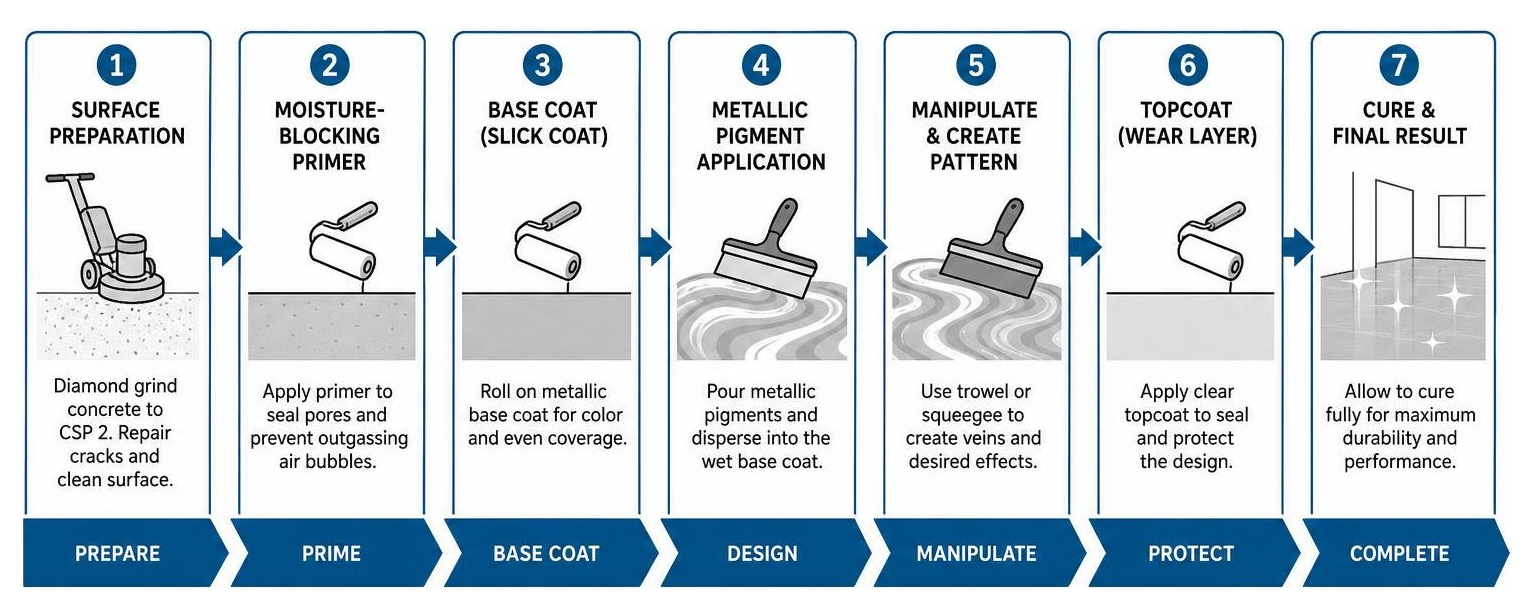
Metallic epoxy coatings are formulated strictly for interior concrete applications where ambient temperatures and moisture levels can be regulated. Preparation begins with heavy-duty mechanical diamond grinding to strip previous coatings, remove surface laitance, and establish a Concrete Surface Profile (CSP) rating of 2 (similar to medium-grit sandpaper). Existing floor cracks, spalls, and joint defects are repaired using rigid epoxy fillers. In addition, moisture testing is performed to confirm that vapor emission rates remain within acceptable parameters to help avoid potential delamination over time. Because standard epoxy resins can show UV-induced yellowing over extended periods when exposed to direct sunlight through windows or open garage doors, incorporating a UV-stable clear protective topcoat is an essential consideration.
Step-by-Step Layering and Application
- Moisture-Mitigating Primer Coat: An industrial epoxy primer deeply penetrates concrete pores to seal the substrate, suppress moisture vapor, and block air outgassing.
- Metallic Build Coat: A 100% solids clear epoxy resin blended with metallic mica pigments is poured and distributed across the floor at a heavy build thickness of 20 to 30 mils.
- Artistic Dispersion: Installers actively manipulate the wet metallic build coat using notched squeegees, spiked rollers, or specialized techniques to induce organic movement and visual depth.
- Clear Protective Topcoat: A clear, highly durable polyurethane or polyaspartic topcoat is applied over the cured metallic layer to enhance scratch resistance, chemical resistance, and long-term gloss retention.
Professional Installation Standards
Our team at Denver Floor Coatings follows strict installation protocols to ensure reliable cross-linking, superior mechanical bonding, and a high-end visual result. We utilize industrial diamond grinders, integrated HEPA dust extraction systems, spiked footwear, calibrated notched squeegees, and dual-bucket mixing methods. To read more about our technical methodology, visit our resource on Professional Epoxy Floor Installation.
Curing Timeline, Surface Limitations, and Maintenance
Understanding cure schedules and environmental parameters helps ensure that your metallic epoxy floor reaches its intended performance characteristics without interruption. Detailed guidance on curing physics can be reviewed in our Epoxy Flooring Dry Time Guide.
Curing and Dry Time Guide
During the installation process, ambient temperatures and concrete slab temperatures should ideally be maintained between 50°F and 90°F. The usable working time (pot life) of wet metallic resin once poured onto the floor ranges from 20 to 30 minutes depending on ambient conditions. The surface typically becomes tack-free within 7 to 10 hours. Light foot traffic can usually resume after 24 hours, whereas full vehicular parking or heavy mechanical loads require a cure window ranging from 72 hours up to 7 days, depending on the chemical composition of the clear protective topcoat. Proper cure management directly supports long-term service performance, as highlighted in How Long Does Epoxy Floor Last Premium Solutions for Lasting Floors.
Cleaning Routine and Long-Term Floor Care
Caring for a cured metallic epoxy floor requires straight-forward routine attention:
- Dust-mop or sweep regularly using a soft microfiber pad to eliminate loose dirt and abrasive grit.
- Damp-mop periodically with warm water and a mild, pH-neutral floor cleaner.
- Avoid strong acidic cleaners, harsh chemical strippers, or abrasive scrubbing pads that might dull the high-gloss protective topcoat.
- For environments where wet traction is a priority, fine anti-slip micro-aggregates like aluminum oxide or polypropylene beads can be integrated into the clear topcoat during application.
Frequently Asked Questions
Can metallic epoxy coatings be applied over damaged or cracked concrete?
Metallic coatings require a sound structural foundation. Minor surface cracks, surface pits, and small spalls can be successfully repaired using high-strength epoxy patching compounds during substrate preparation. Once the concrete slab is ground smooth and properly repaired, the primer and metallic build coats can be applied over the restored concrete surface.
Are high-gloss metallic epoxy floors slippery when wet?
Like any smooth, continuous floor surface, a high-gloss epoxy finish can become slick when exposed to moisture or liquids. To support pedestrian safety and maintain traction meeting standard commercial guidelines (such as an ADA static coefficient of friction of 0.6), Denver Floor Coatings can incorporate clear, micro-fine slip-resistant additives into the final protective topcoat layer.
What determines the overall performance and service life of a metallic epoxy floor?
Long-term performance depends on thorough mechanical concrete preparation, moisture testing, high-quality thermoset resin formulations, and precise application thickness. Floors installed on properly prepared slabs and maintained with regular cleaning can provide many years of functional beauty and surface protection. Learn more about our technical approach to durable coatings by reading about Professional Epoxy Floor Coating.
Conclusion
Metallic epoxy coatings deliver a unique harmony of striking design flexibility and functional surface protection. Whether you are looking to refine a residential basement, create a stunning showroom garage, or upgrade an indoor commercial property, metallic floor systems provide a seamless, elegant surface engineered to withstand daily use when properly installed and cared for over time.
At Denver Floor Coatings, we take pride in delivering precision-engineered epoxy and polyaspartic floor coating solutions across the Greater Denver metro area. Our expert team customizes every project to meet your aesthetic preferences, functional demands, and project requirements.
If you are ready to transform plain indoor concrete into a high-performance visual highlight, explore our complete line of services on our Denver Floor Coatings Services page or reach out directly today to Get a Quote with Denver Floor Coatings for a professional estimate tailored to your space!