

What Makes Concrete Floor Upgrades Essential in 2026?
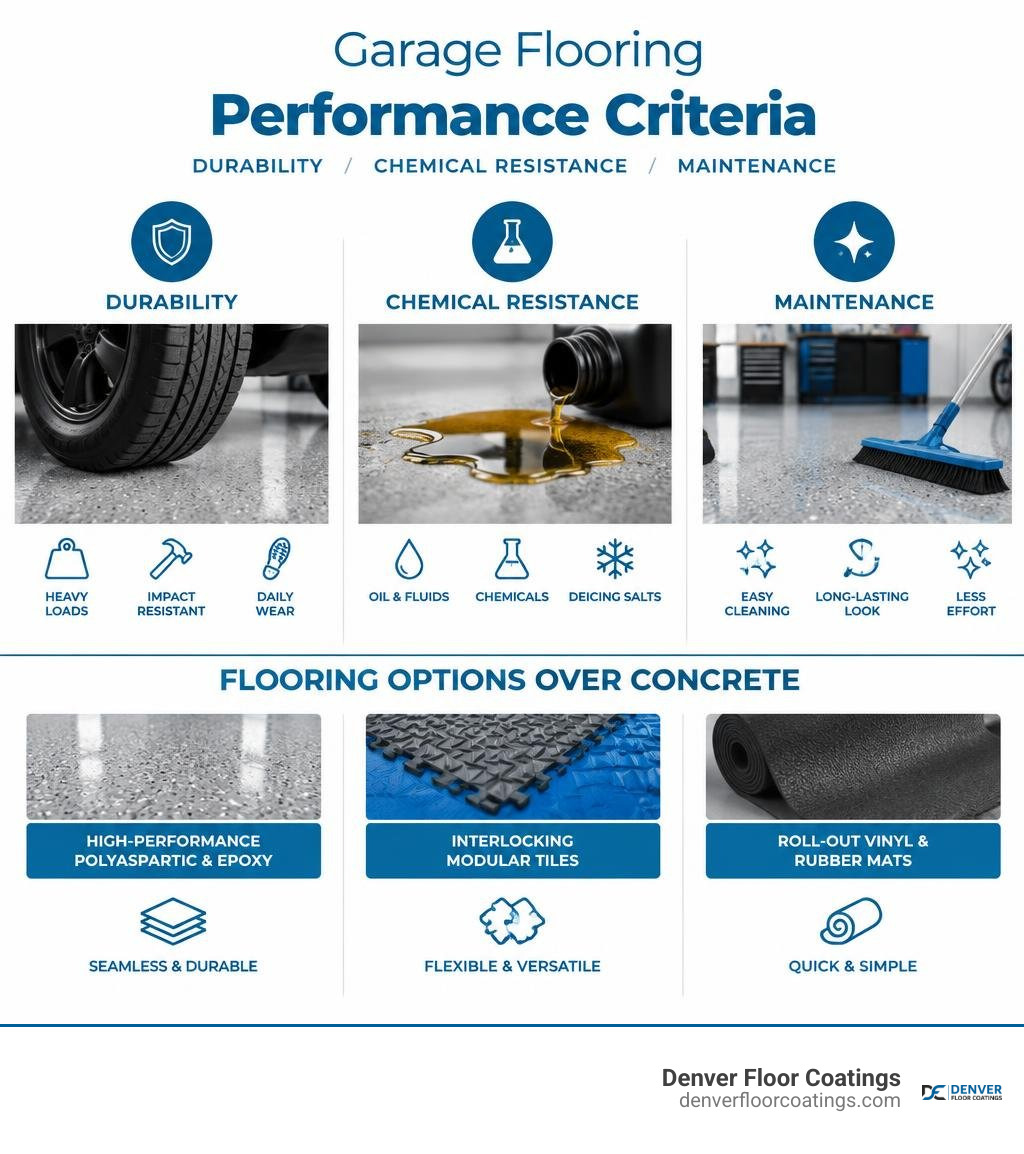
The best garage flooring options over concrete are high-performance polyaspartic and epoxy flake coating systems, which offer dependable durability, chemical resistance, and long-term protection when compared to modular tiles and roll-out mats. These seamless, industrial-grade coatings bond directly to the slab, creating a non-porous barrier that resists stains, chemicals, abrasion, and moisture far more effectively than floating floor alternatives.
Modern residential garages have evolved well beyond simple parking stalls. For many homeowners across the Colorado Front Range, the garage functions as a multi-purpose extension of the home, serving as a dedicated electric vehicle charging hub, a workshop, or a personal fitness studio. As the daily demands placed on these spaces expand, the inherent vulnerabilities of raw, untreated concrete become increasingly problematic.
Bare concrete is naturally porous, brittle at the surface, and prone to gradual degradation under routine mechanical and environmental stress. Without an impermeable protective barrier, a standard concrete slab continuously produces fine concrete dust through everyday tire abrasion and foot traffic. This alkaline dust easily circulates throughout the space, settling on parked vehicles, overhead storage racks, and interior living areas whenever the entryway door opens. In addition, unsealed concrete readily absorbs automotive fluids, including engine oil, brake fluid, transmission fluid, and coolant, resulting in permanent stains that are difficult to extract.
In Colorado, regional climate conditions introduce substantial physical stress to residential slabs. Severe freeze-thaw cycles paired with heavy winter applications of chemical deicing agents accelerate concrete spalling. Moisture carrying dissolved road salts penetrates deep into the microscopic pores of untreated concrete. When temperatures dip below freezing, the expansion of trapped water generates intense hydraulic pressure within the capillaries, causing the top layer of concrete to flake, crack, and pit.
Applying a high-grade polymer coating provides an impenetrable shield that safeguards the underlying concrete structure. Advanced industrial formulations significantly reinforce the surface, providing enhanced compressive resistance that helps protect the slab from dropped tools, heavy static vehicle loads, and repetitive everyday activity.
What Are the Top Garage Flooring Options Over Concrete Compared?
When evaluating how to protect and finish an unfinished concrete slab, homeowners typically evaluate three main options: seamless liquid-applied coatings (such as polyaspartic and 100% solids epoxy systems), interlocking modular tiles, and roll-out mats. Each approach features distinct material properties, installation methods, and performance characteristics under daily residential conditions.
| Feature / System | High-Performance Polyaspartic & Epoxy | Interlocking Modular Tiles | Roll-Out Vinyl & Rubber Mats |
|---|---|---|---|
| Durability & Longevity | Exceptional (often 10 to 20 years with proper care) | Moderate to Good (typically 5 to 10 years) | Fair (typically 3 to 7 years) |
| Hot Tire Pickup Resistance | Superior (chemically bonded to substrate) | Moderate (varies by plastic composition) | Low to Fair (prone to softening or marking) |
| Moisture & Chemical Barrier | Completely seamless and non-porous | Traps fluids and debris beneath tiles | Traps moisture along edges and underneath |
| Salt & Deicer Protection | Complete surface isolation | Brine and sand pool in sub-tile grid | Brine migrates under unbonded edges |
| Cleaning & Maintenance | Simple mop or squeegee cleaning | Requires periodic uninstallation to clean sub-floor | Requires rolling up to dry concrete beneath |
| Turnaround Time | Often completed in 1 to 2 days | Manual interlocking assembly | Rapid roll-out placement |
Our Denver Floor Coatings garage solutions provide homeowners with an impenetrable, seamless barrier that keeps dirt, moisture, and automotive chemicals resting safely on top of the surface where they can be effortlessly wiped away.
High-Performance Polyaspartic and Epoxy Systems
Seamless liquid-applied coating systems represent the premier standard for long-term concrete protection. A properly engineered multi-layer system pairs a penetrating 100% solids epoxy base coat with an abrasion-resistant clear polyaspartic topcoat. The epoxy base wets out the concrete capillaries to establish an aggressive mechanical bond, while the polyaspartic top layer provides rapid curing, high chemical resilience, and exceptional ultraviolet stability.
Because polyaspartic chemistry resists UV degradation, the topcoat does not yellow or become brittle when exposed to sunlight near open overhead garage doors. These multi-layer systems also provide outstanding resistance to hot tire pickup, a common failure mode where hot tires soften inferior floor materials and peel them away upon cooling. Homeowners looking for rapid installation and long-term durability benefit from our polyaspartic floor coating services, which deliver clean results with minimal downtime.
Interlocking Rigid and Flexible Modular Tiles
Interlocking tiles are manufactured from rigid polypropylene or flexible PVC plastic and snap together over the concrete slab using a tab-and-loop mechanism. They create a floating surface that does not bond directly to the underlying concrete.
Modular tiles are generally available in solid or open-ribbed drainage styles. Although open-ribbed styles allow melting snow and slush to drain away from walking surfaces, that moisture sits directly on top of the bare concrete below. Over time, road salts, sand, and dirt accumulate within the sub-tile grid, creating unpleasant odors and facilitating concrete surface breakdown unless the floor is periodically dismantled and cleaned. Rigid polypropylene tiles can also generate a noticeable hollow clicking sound under foot traffic and rolling vehicle loads.
Roll-Out Vinyl and Heavy-Duty Rubber Mats
Roll-out mats made from vinyl or recycled rubber provide temporary localized coverage for designated parking pads or fitness areas. Rubber mats offer good shock absorption and sound dampening under free weights and heavy fitness machinery.
However, roll-out products do not bond mechanically or chemically to the concrete slab. Moisture from melting snow, condensation, or vehicle runoff frequently seeps beneath the edges, where it remains trapped against the slab. This standing moisture can cultivate mildew and accelerate freeze-thaw spalling during cold winter months. Additionally, certain vehicle tires can leach plasticizers into vinyl mats, leading to permanent tire marks, localized bubbling, or edge curling over time.
Why Do Professional Polyaspartic and 100% Solids Epoxy Coatings Outperform Other Systems?

The measurable difference in longevity between industrial-grade multi-layer coatings and floating flooring systems stems from formulation chemistry, dry-film thickness, and molecular adhesion to the concrete substrate.
Standard floor paints contain high concentrations of water or solvent carriers that evaporate during the drying process. As these carriers evaporate, they leave behind a microscopic, porous film that is vulnerable to mechanical abrasion and chemical degradation. In contrast, 100% solids epoxy contains zero evaporating solvents. The entire volume of liquid resin and hardener reacts chemically to form a dense, cross-linked thermoset polymer network. When properly installed over a mechanically profiled concrete slab, an industrial epoxy and polyaspartic flake system can provide 10 to 20 years of dependable service in a typical residential garage.
This robust performance profile is particularly relevant for modern electric vehicles. Because EVs carry heavy battery packs and generate instant low-end torque, they exert substantial static pressure and rotational shear stress on the garage floor during low-speed steering maneuvers. High-performance multi-layer systems withstand these intense point loads and frictional forces without delaminating, blistering, or transferring tire marks.
Superior Resistance to Winter Salts and Corrosive Chemicals
During Colorado winters, vehicles continuously carry road slush containing magnesium chloride, calcium chloride, sodium chloride, and coarse sand into the garage. When this saline solution settles into bare concrete or slips under floating tiles, it triggers chemical breakdown and sub-surface expansion.
By applying specialized methods to protect concrete from salt, our multi-layer coating systems seal the slab completely from moisture intrusion. The non-porous polyaspartic topcoat prevents corrosive deicers, motor oils, acidic fluids, and cleaning agents from penetrating the slab, making seasonal cleanup as simple as pushing dirty water out of the garage with a standard foam squeegee.
Decorative Flake Blends and Safety Textures
Visual appeal and personal customization are further advantages of seamless flake systems. During the application process, decorative vinyl color chips are broadcast into the wet epoxy base coat until rejection, creating a dense, multi-colored mosaic across the floor. This uniform layer of flakes adds structural thickness, conceals minor substrate imperfections, and creates a tailored finish that complements the architecture of the home.
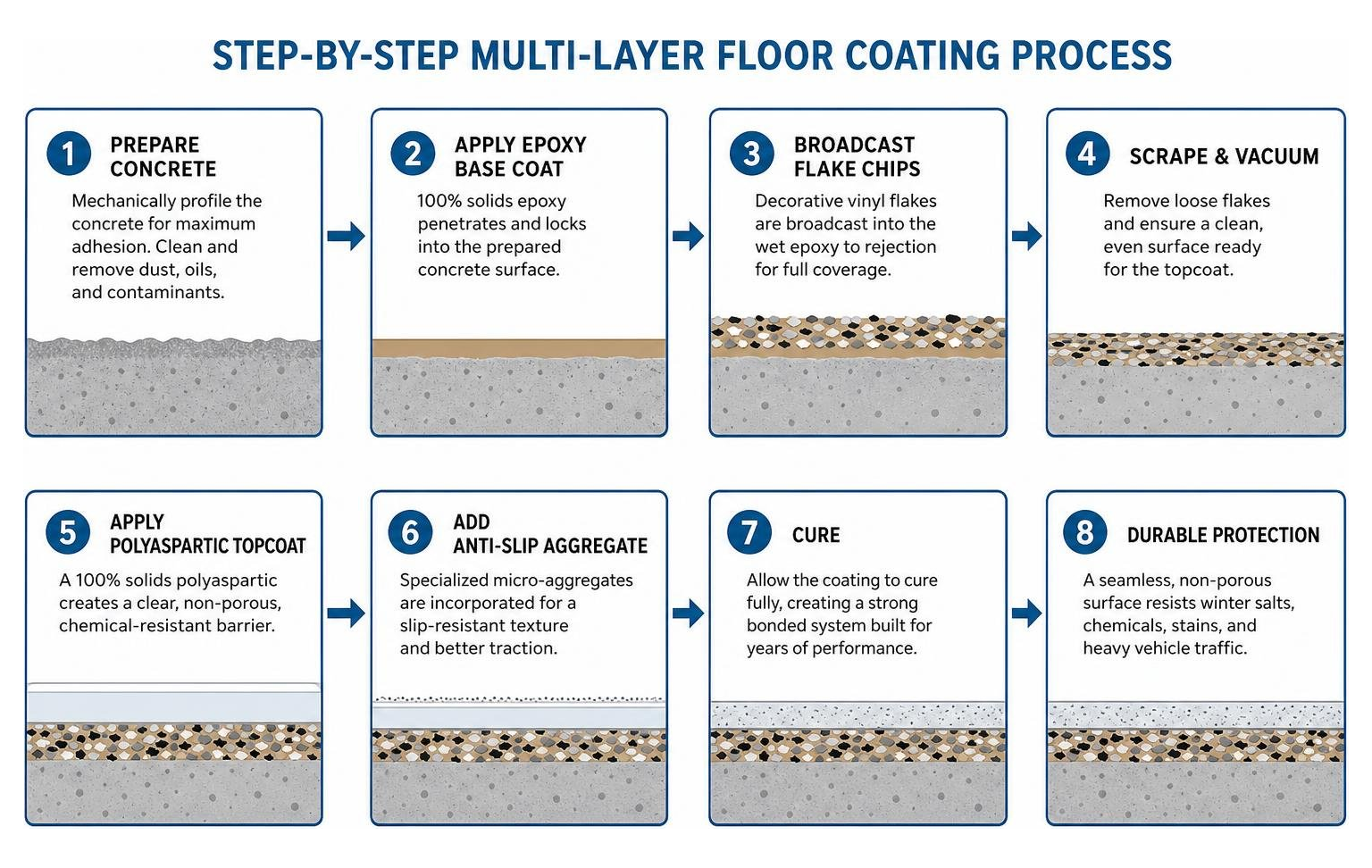
Safety is equally vital, particularly when wet footwear tracks winter moisture into the garage. Following the principles outlined in our anti-slip epoxy flooring guide, we can integrate specialized micro-aggregates into the clear polyaspartic topcoat. This creates a refined slip-resistant texture that maintains positive foot traction without compromising cleanability. Our high-performance flake floor coatings deliver an ideal balance of visual depth, traction, and long-term surface protection. For a broader technical understanding of thermosetting polymers, reviewing the fundamental chemistry of epoxy provides helpful insight into resin cross-linking and industrial adhesion properties.
How Does Proper Surface Preparation Guarantee Long-Term Adhesion?
The primary factor that determines whether a garage floor coating endures for decades or peels within months is mechanical surface preparation. Polymer coatings rely on deep mechanical anchoring; they cannot bond successfully to a smooth, factory-troweled, or oil-contaminated concrete surface.
Prior to applying any coating material, we conduct comprehensive testing on the slab to evaluate moisture vapor emission rates and internal relative humidity. Concrete slabs that sit directly on the ground continuously pull moisture from the earth. If moisture vapor pressure is elevated, we apply a specialized moisture-mitigating epoxy base coat to prevent hydrostatic pressure from debonding the coating over time.
Following moisture testing, the slab undergoes mechanical profiling using heavy planetary diamond grinders connected to industrial HEPA-filtered dust extraction units. Diamond grinding systematically removes the weak, powdery surface layer known as laitance, opens the concrete capillary network, and creates a specific Concrete Surface Profile (CSP) comparable to medium-grit sandpaper. This open texture allows the liquid epoxy base coat to penetrate deeply into the porous matrix, establishing an unbreakable mechanical interlock.

Thorough surface decontamination and substrate repair follow grinding. Concrete floor repair is only a small component of our overall preparation work; any minor surface spalls, pitting, or hairline cracks are filled with high-strength polyurea patching compounds that cure flush with the floor. Following established standards for proper surface preparation and crack repair ensures the base coat bonds seamlessly across the entire floor, preventing future delamination along structural joints or patched fractures.
How Do You Select the Right Garage Flooring for Your Specific Use Case?
Choosing the best flooring system requires evaluating your daily routines, long-term household goals, and the primary activities taking place inside your garage. Reviewing our durable garage floor coating costs can help you evaluate long-term value against other flooring options.
High-Torque Electric Vehicles and Daily Drivers
If your garage primarily accommodates heavy electric vehicles, full-size trucks, or daily commuter cars, your primary considerations should be resistance to hot tire pickup, tolerance to road salts, and high compressive load capacity.
For these applications, a full-broadcast vinyl flake system with a polyaspartic topcoat provides the highest degree of reliability. It easily tolerates high tire contact temperatures, resists chemical etching from deicing salts and windshield washer fluids, and handles the rotational friction generated when turning power-assisted steering wheels while stationary.
Home Gyms, Workshops, and Multi-Functional Spaces
Garages utilized as fitness studios, woodworking spaces, or hobby workshops benefit from specialized floor properties tailored to specific physical demands.
For home fitness areas, dropped free weights and heavy exercise equipment require high impact resistance. A multi-layer flake coating protects the underlying concrete slab from chipping and gouging, and dedicated heavy rubber mats can be placed directly over the coated floor in weightlifting zones to supply supplemental cushioning.
For woodworking and fabrication workshops, a seamless coating ensures that fine sawdust, metal shavings, grease droplets, and solvent spills can be rapidly swept or wet-mopped away without falling into interlocking tile seams or absorbing into porous concrete.
Frequently Asked Questions About Garage Flooring Over Concrete
How Long Does a Professional Epoxy or Polyaspartic Garage Floor Last?
When installed over a properly prepared, diamond-ground concrete surface, an industrial 100% solids epoxy and polyaspartic flake system can often deliver 10 to 20 years of reliable service in a residential setting. Actual longevity depends on routine cleaning practices, the severity of vehicular traffic, exposure to abrasive road grit, and avoiding direct gouging from heavy sharp metal objects.
Can Garage Floor Coatings Be Installed Over Damaged or Cracked Concrete?
Yes, provided the concrete is structurally sound. Surface spalling, hairline cracking, and minor surface pitting are repaired during the preparation stage. Concrete floor repair is only a small component of the comprehensive floor-coating preparation work we perform before applying base coats. We fill non-moving cracks and surface defects with high-strength polyurea patching materials to create a smooth, continuous surface prior to applying the epoxy primer.
Why Is Polyaspartic Preferred Over Standard Epoxy for Garage Topcoats?
While 100% solids epoxy serves as an exceptional bonding primer due to its deep penetration and adhesion characteristics, polyaspartic material is superior for the topcoat layer. Polyaspartic coatings offer high UV resistance, meaning they will not yellow, chalk, or become brittle when exposed to sunlight through open garage doors. They also cure rapidly, allowing for quicker return to service, and provide significantly higher abrasion and chemical resistance compared to traditional epoxy clear coats.
What Is the Next Step in Upgrading Your Garage Floor?
Your garage floor represents one of the hardest-working surfaces in your home. Upgrading your bare, dusty concrete with a professional polyaspartic and flake coating system creates a clean, durable, and visually appealing space that protects your slab for years to come.
If you are ready to transform your garage into a functional, showroom-grade extension of your home, our team at Denver Floor Coatings is here to help. Contact us today to schedule your consultation and receive a detailed estimate for our residential concrete coating services. We proudly serve homeowners across the greater Denver Metro area and Front Range communities, including Boulder, Lakewood, Aurora, Littleton, Highlands Ranch, Castle Rock, and Fort Collins.