

Why the Right Concrete Shed Floor Paint Makes All the Difference
Choosing an appropriate protective coating for a concrete shed floor is one of the most impactful decisions a property owner can make to preserve the structural integrity of their outbuilding while enhancing its overall utility. A bare concrete slab, while seemingly durable, is inherently porous and susceptible to a variety of environmental stressors. Without a high-quality protective barrier, concrete acts much like a dense sponge, gradually absorbing ambient moisture, automotive fluids, and household chemicals. Over time, this absorption can lead to unsightly staining, surface spalling, and gradual degradation of the concrete matrix.
By applying a professional-grade floor coating, you can effectively seal the surface, creating an easy-to-clean, highly resilient barrier that withstands daily wear. Whether your shed serves as a simple storage space for seasonal equipment or functions as an active backyard workshop, the type of coating selected will significantly influence how the floor performs over the years.
At Denver Floor Coatings, we understand that different spaces demand different solutions. For instance, lighter-use storage areas might only require a straightforward protective layer, whereas active workshops subject to heavy tools and chemical exposure benefit from advanced multi-layer systems. Understanding the nuances of these materials—ranging from basic acrylics to advanced polyaspartics—is key to achieving a successful, long-lasting finish. For those interested in maintaining these surfaces over time, our smooth operators guide to buffing epoxy floors offers valuable insights into preserving that pristine, professional look.
I’m Mike Wislinsky, Founder and President of Denver Floor Coatings. With over two decades of engineering and operations experience, alongside nearly ten years specializing in high-performance concrete floor coatings, I have seen firsthand how the right application can transform a utilitarian space. In this comprehensive guide, we will explore the technical aspects of concrete epoxy and other advanced coating systems, helping you make an informed decision for your property.
Understanding Concrete Shed Floor Paint and Coating Options
When evaluating options for protecting a concrete slab, navigating the wide array of available products can be challenging. Property owners frequently ask about the differences between standard retail floor paints and the high-performance industrial coatings utilized by professional installers. Understanding these distinctions is essential to avoiding premature peeling and flaking, particularly under the demanding weather conditions experienced in Colorado.
Standard retail floor paints are typically thin, single-component formulations designed for light-duty applications. For a broader overview of the options available for concrete slabs, see our Beginner’s Guide to Best Floor Coating for Concrete.
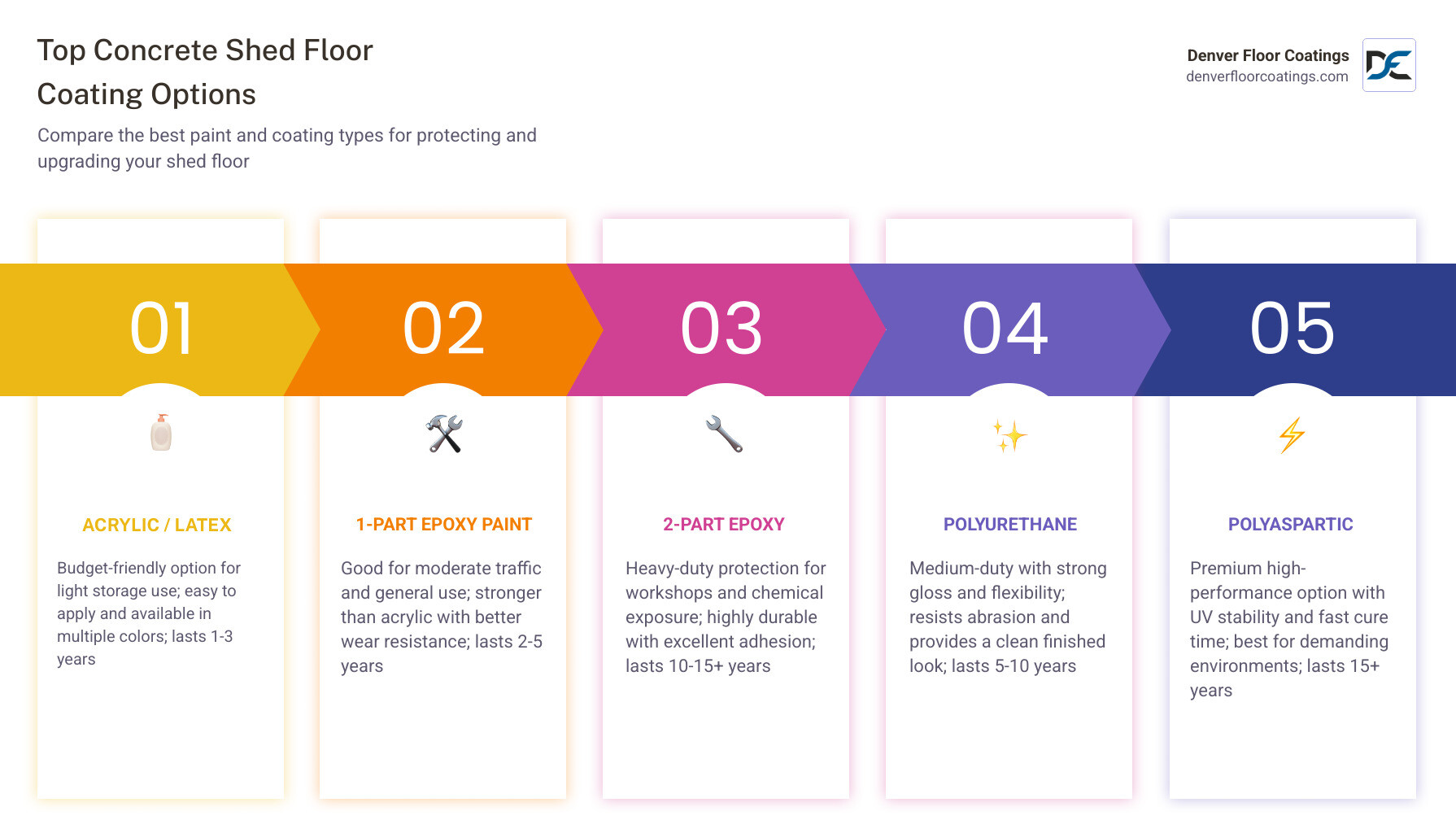
To understand why professional systems offer superior performance, it is helpful to examine the primary categories of concrete coatings:
- Acrylic and Latex Formulations: These water-based, single-pack products dry quickly, offering basic cosmetic improvement. While some basic retail options, such as DRYLOK® Concrete Floor Paint: Latex, Various Colors & Tints, are available for simple touch-ups, they generally lack the chemical cross-linking required for heavy-duty protection.
- One-Part Epoxy Paints: These are typically acrylic formulas modified with a small amount of epoxy resin. While they may offer slightly better adhesion than standard latex, they still rely on evaporation to dry rather than a chemical cure, limiting their long-term durability under consistent traffic.
- Two-Part Epoxy Coatings: A true two-part epoxy consists of a resin and a hardener that chemically react to form a rigid, highly durable cross-linked polymer. This chemical bond allows the coating to adhere tenaciously to the concrete capillaries, creating a thick, protective barrier.
- Polyurethane Coatings: Known for their excellent flexibility and impact resistance, polyurethanes are highly resistant to chemical spills and moderate traffic. They are frequently utilized as specialized topcoats to protect underlying layers.
- Polyaspartic Coatings: Representing a highly advanced option, polyaspartics offer rapid curing times and exceptional UV stability. They penetrate deeply into the concrete substrate to form an incredibly strong bond. Because they are highly flexible and completely UV-stable, they will not yellow or degrade when exposed to sunlight through open doors.
Selecting the ideal coating system requires evaluating how the shed is utilized. A space dedicated solely to storing seasonal lawnmowers has different requirements than a backyard workshop housing heavy machinery or woodworking tools. Physical traffic is a primary consideration; heavy rolling toolboxes and consistent foot traffic can quickly wear through thin, evaporation-cured paints. Chemical resistance is equally important if you store fuel, oil, or fertilizers, as standard consumer paints often soften and peel when exposed to gasoline.
Additionally, moisture vapor is a critical, often-overlooked factor in Colorado. Concrete slabs poured without an effective vapor barrier beneath them constantly transmit moisture vapor upward from the soil. If a non-breathable, low-adhesion paint is applied, this vapor pressure can push the coating off the surface, resulting in bubbling and peeling. Utilizing a high-performance system with a dedicated primer designed to withstand moisture vapor emission is essential to long-term success. For more details on how to protect your slab from moisture and other environmental hazards, see our guide on Concrete Sealer 101: What It Does and Key Benefits.
The fundamental difference in performance lies in the chemistry of the formulations. While one-part paints dry as their liquid carrier evaporates, leaving a thin film, professional-grade two-part systems cure through a chemical reaction that creates a dense, resilient polymer shield. Furthermore, professional coatings feature a much higher solids content—often up to 100%—meaning the thickness applied wet is the thickness that remains once cured, resulting in a far more durable barrier.
Professional Surface Preparation: The Key to Longevity
Ask any professional coating specialist, and they will tell you that a beautiful, long-lasting floor is 90% preparation and only 10% application. Applying even the most advanced polyaspartic or epoxy coating over poorly prepared concrete is a primary cause of premature coating failure.

At Denver Floor Coatings, we do not rely on weak acid etching or simple pressure washing. Acid etching often fails to open up the pores of dense concrete sufficiently and can leave behind acidic residues that compromise the adhesion of the new coating. Instead, our teams utilize heavy-duty industrial diamond grinding machines equipped with advanced dust-collection vacuum systems to mechanically profile the concrete surface.
This mechanical grinding process achieves several critical objectives:
- Removal of Contaminants: It effectively grinds away old paint, oil stains, curing compounds, sealers, and weak surface concrete (laitance) that would otherwise prevent a strong bond.
- Creation of an Optimal Profile: It roughens the concrete surface, creating a texture similar to medium-grit sandpaper. This open pore structure allows our specialized primers to penetrate deep into the concrete capillaries, establishing a permanent mechanical lock.
- Leveling of Imperfections: It helps flatten minor ridges, rough spots, and surface irregularities, preparing the slab for a smooth, professional finish.
Before any coating is applied, we also perform thorough moisture testing to ensure the slab’s moisture emission levels are within safe operating limits. If we identify cracks, spalls, or divots in the concrete, we repair them using advanced polyurea dual-component fillers that cure rapidly and can be ground perfectly flush with the surrounding floor. To learn more about how we bring damaged concrete back to life, read our articles on How to Restore Your Concrete Floor and The Concrete Comeback: A Step-by-Step Guide to Fixing Dull, Worn Floors.
Step-by-Step Application Process for Concrete Floor Coatings
To achieve a showroom-quality finish that stands up to Colorado’s harsh seasonal shifts, our professional installation teams follow a meticulous, multi-step application process.

While basic consumer guidelines, such as those found in RUST-OLEUM Technical Specifications, outline standard application procedures for retail products, professional-grade installations require specialized equipment, precise timing, and deep technical expertise.
Here is how our team executes a high-performance coating installation:
- Substrate Profiling: We thoroughly grind the entire floor using planetary diamond grinders, reaching tight corners with hand-held vertical grinders.
- Dust Extraction: We utilize industrial HEPA vacuums to remove every trace of concrete dust, leaving a pristine surface.
- Crack Repair: We clean out cracks and joints, filling them with specialized rapid-curing polymers, then grind them perfectly flat.
- Primer Application: We apply a high-solids epoxy primer designed to penetrate deep into the concrete pores and block vapor transmission.
- Mixing Precision: We measure and mix our multi-component resins using precise ratios. Because professional-grade materials have a limited working time, our crew works quickly and efficiently to apply the product before the curing process begins.
Applying Concrete Shed Floor Paint and High-Performance Topcoats
Once the primer layer is securely bonded to the concrete, we move on to building the durable, decorative layers of the floor system. For those interested in the long-term value of professional application, you can read about why to Resurface Concrete by a Professional.
Our standard high-performance system includes:
- The Base Coat: A thick, self-leveling color coat of epoxy or polyaspartic that provides the solid foundation of the system.
- Decorative Flakes: While the base coat is still wet, we broadcast decorative vinyl flakes to rejection, completely covering the floor. This not only adds a beautiful, multi-dimensional color pattern but also increases the thickness and impact resistance of the floor while providing a built-in slip-resistant texture.
- The Recovery & Clean-Up: Once the base coat cures, we scrape away the excess, unbonded flakes and vacuum the floor clean.
- The Polyaspartic Topcoat: We apply a clear, high-solids polyaspartic topcoat. This layer encapsulates the flakes, sealing the floor into a seamless, non-porous surface. It provides the ultimate protection against UV rays, abrasions, hot tires, and chemical spills.
Because we utilize advanced polyaspartic technology, these layers cure incredibly fast. While traditional retail products can keep you out of your shed for a week, our professional systems are typically ready for foot traffic in just 24 hours and heavy use shortly thereafter.
Maintenance and Common Mistakes to Avoid
Once your concrete shed floor is professionally coated by Denver Floor Coatings, keeping it clean is remarkably simple. Unlike bare concrete, which constantly sheds fine dust, a coated floor is entirely dust-free and non-porous, preventing dirt from becoming embedded in the surface.
For routine maintenance, a simple sweep or dust mop is usually all it takes to remove dirt and debris. For deeper cleans, you can mop the floor using warm water and a mild, non-filming detergent. However, there are a few common mistakes you should avoid to preserve the beauty and integrity of your floor:
- Using Harsh Acids or Cleaners: Avoid using strong acids, citrus-based cleaners, or highly concentrated solvents, as these can dull the clear topcoat over time.
- Using Abrasive Scrubbing Pads: Never use stiff wire brushes or highly abrasive pads, which can scratch the protective finish.
- Leaving Road Salt to Sit: During Colorado winters, vehicles or snowblowers may track in road salt and de-icing chemicals. While our coatings are highly resistant to these compounds, it is best practice to rinse them off periodically to prevent dulling. To understand the impact of salt on concrete, see our guide on how to Protect Concrete from Salt.
- Ignoring Standing Water: While the floor is waterproof, leaving puddles of chemical-laden water to evaporate over weeks can leave mineral deposits that are difficult to remove.
Frequently Asked Questions About Concrete Shed Floor Paint
Can you apply concrete shed floor paint over previously sealed surfaces?
Applying a high-performance coating over an existing sealer or paint is generally not recommended without proper preparation. New coatings must bond directly to the bare concrete capillaries. If you apply a strong epoxy or polyaspartic over a weak, previously applied retail paint or acrylic sealer, the new coating will pull the old paint off the floor as it cures, leading to widespread peeling.
To ensure a successful bond, our team completely removes any old coatings, paints, or sealers using our heavy-duty diamond grinding equipment, returning the slab to clean, bare concrete before we begin our application.
How long do different concrete floor coatings typically last?
The lifespan of a concrete coating depends heavily on the quality of the material used, environmental conditions, and the thoroughness of the surface preparation.
- Standard Latex/Acrylic Paints: Typically last 1 to 3 years before showing significant wear, peeling, or chipping in high-traffic areas.
- One-Part Epoxies: Often last 2 to 5 years under moderate residential use.
- Professional Two-Part Epoxy & Polyaspartic Systems: When installed by experienced professionals over mechanically profiled concrete, these high-performance systems can potentially provide service for fifteen years or longer under optimal conditions and proper maintenance, making them an exceptionally cost-effective long-term investment.
What is the difference between 1-part epoxy paint and professional 2-part coatings?
The primary difference lies in how they cure. A 1-part epoxy paint is essentially a traditional water-based paint with a small amount of epoxy additive that dries strictly through evaporation, leaving behind a thin, relatively soft film.
In contrast, a professional 2-part coating consists of a separate resin and catalyst mixed immediately before application. This initiates a chemical reaction that cross-links the molecules into a dense, solid polymer. These professional systems have a much higher solids content, resulting in a significantly thicker dry film that resists impact, abrasion, and chemical spills far better than any single-pack paint.
Conclusion
Upgrading your concrete shed floor with a high-performance coating is a smart, lasting investment that protects your slab, eliminates concrete dust, and turns a dark utility space into a bright, easy-to-clean workshop or storage area. While cheap retail paints may seem tempting, they frequently crack, peel, and wear away under Colorado’s demanding seasonal temperature swings.
By choosing a professional installation from Denver Floor Coatings, you receive a heavy-duty, industrial-grade floor system designed to stand up to heavy use, chemical spills, and the test of time. Our experienced crews handle the entire process — from dust-free diamond grinding and crack repairs to the final UV-stable topcoat — often in as little as a single day.
Ready to transform your concrete shed floor into a durable, beautiful space? Contact Denver Floor Coatings for a Professional Estimate today, and let our local experts help you select the perfect high-performance coating system for your home.