

How Garage Epoxy Coating Upgrades Your Workspace
A professional garage epoxy coating transforms porous, dusty bare concrete into a clean, resilient, and highly functional surface designed to handle daily use. Standard concrete slabs are naturally vulnerable to fluid absorption, surface dusting, road salt erosion, and tire staining. Applying an advanced multi-layer coating system creates a protective barrier that seals the substrate against moisture intrusion and everyday chemical exposure while enhancing light reflectivity across your entire workshop or parking bay.
Achieving long-term performance requires a systematic installation process. Concrete must be thoroughly inspected, mechanically profiled to create an open capillary network, and carefully coated with compatible resin formulations. Homeowners investing in epoxy garage flooring benefit from an attractive surface that simplifies routine cleaning and resists abrasions from vehicle traffic and workspace equipment. Our team customizes every installation according to how the space is used, the level of direct ultraviolet exposure near overhead doors, and expected cure timelines.
Denver Floor Coatings installs high-performance systems incorporating industrial-grade basecoats and polyaspartic topcoats designed for the demanding climate of the Rocky Mountain region. For residential garages, choosing modern epoxy floors built with premium materials ensures strong adhesion and dependable daily utility. Understanding the advantages of a high solids epoxy helps property owners evaluate how resin thickness and polymer density affect overall performance.
I am Mike Wislinsky, founder of Denver Floor Coatings. I have led garage floor coating installations across Colorado since 2017. My background in engineering and operational management at 3M directly shapes our technical, process-driven approach to concrete evaluation, mechanical grinding, and multi-stage resin application. For a broader technical overview of the synthetic thermosetting polymers utilized in modern floor coatings, you can explore the epoxy entry on Wikipedia.
Understanding Garage Epoxy Coating Chemistry and Performance
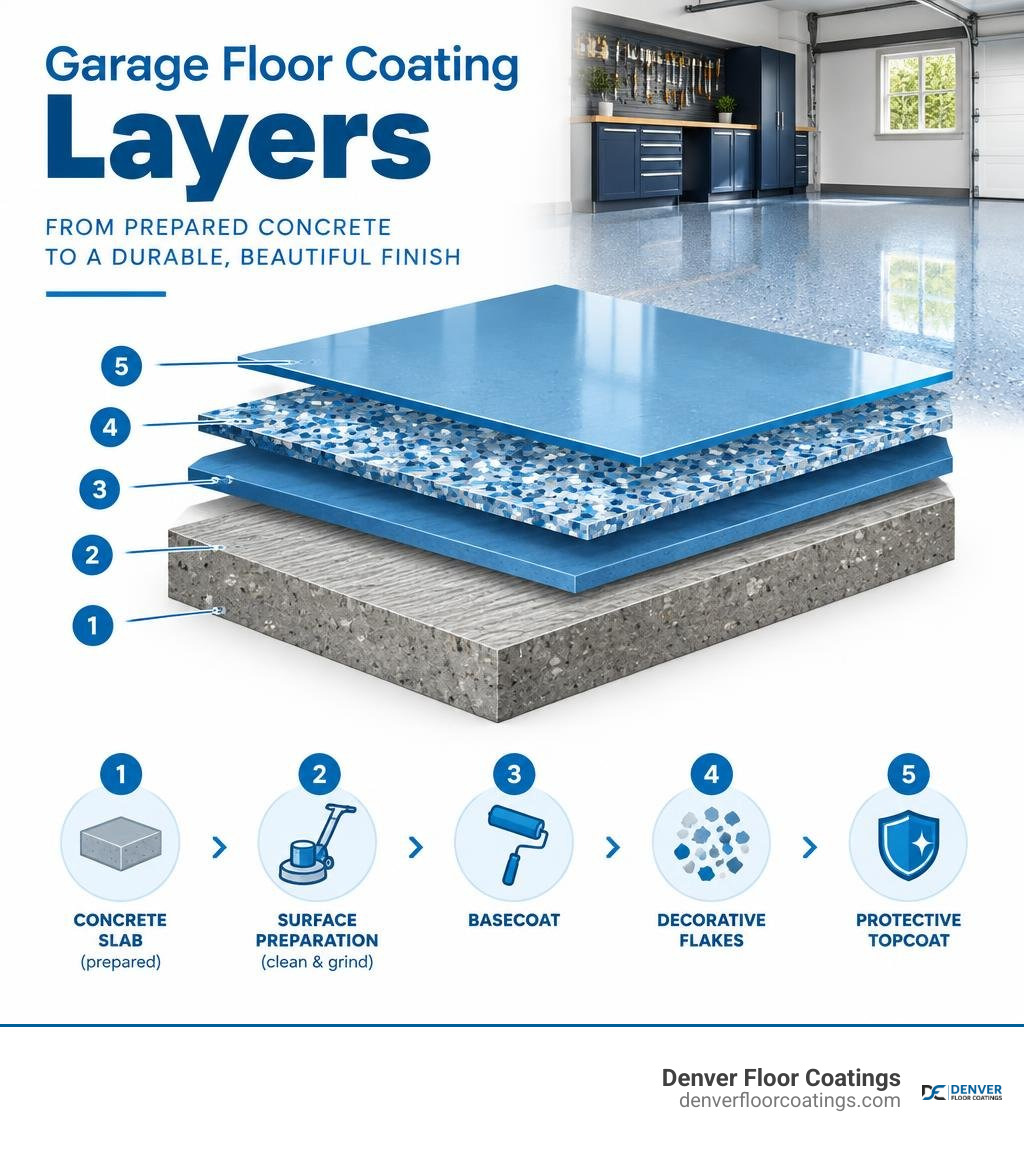
Achieving an industrial-strength garage finish requires an understanding of polymer chemistry and resin behavior. High-performance floor coatings rely on thermosetting resins that cure through an exothermic cross-linking reaction rather than simple solvent evaporation. When reviewing epoxy chemistry and concrete bonding fundamentals, the proportion of solids by volume within the formulation dictates the final build quality, film thickness, and overall resistance to mechanical wear.
Solids percentage measures the exact volume of resin and hardener remaining on the concrete slab after the carrier agents evaporate. Formulations with 100% solids contain zero volatile organic compounds (VOCs) and cure to the precise wet film thickness at which they are rolled out. This density creates a thick, non-porous protective barrier that anchors securely into the prepared concrete matrix. Lower-solids products, by contrast, shrink substantially as water or solvent carriers evaporate, leaving behind a much thinner dry film that provides less impact protection.
| Coating Attribute | 100% Solids Epoxy Basecoat | Polyaspartic Clear Topcoat |
|---|---|---|
| Solids Content by Volume | 100% | 85% to 92% |
| Typical Dry Film Thickness | 8 to 16 mils | 4 to 8 mils |
| VOC Level | 0 g/L (Odorless) | Very Low (<95 g/L) |
| UV Resistance | Prone to ambering in direct sunlight | Excellent UV stability (Aliphatic) |
| Primary Role | Structural adhesion and base color | Chemical, wear, and scratch shield |
High-Build Epoxy vs. 100% Solids Formulations
High-build basecoats ranging from 85% to 100% solids deliver self-leveling capabilities and exceptional cross-linking density. These heavy-bodied resins flow into the open pores of mechanically prepared concrete, establishing an anchoring bond that resists mechanical separation and delamination.
A dense high-build layer provides substantial compressive strength and impact resistance. This structural layer acts as a resilient cushion, helping protect brittle concrete underneath from dropped hand tools, floor jacks, and heavy workshop equipment. In addition, dense cross-linking ensures strong epoxy resin heat resistance, preventing the basecoat from softening or lifting under hot automotive tires during warm summer weather.
Protective Topcoats: Epoxy vs. Polyaspartic
While epoxy serves as an exceptional anchoring basecoat due to its adhesion to concrete, it tends to discolor and amber when exposed to direct sunlight over prolonged periods. Pairing an epoxy base with a polyaspartic clear topcoat provides balanced, multi-tiered protection. Polyaspartic chemistry is aliphatic, meaning its molecular structure provides inherent topcoat UV stability without yellowing, fading, or chalking near garage door openings.
Polyaspartic topcoats also deliver rapid curing characteristics, stain resistance, and high abrasion defense. This protective shield seals the decorative vinyl flakes beneath, creating a durable surface that resists winter road salts, magnesium chloride, motor fluids, and tire plasticizer migration.
Critical Surface Preparation for Maximum Adhesion
A protective coating system can only bond as effectively as the concrete profile beneath it. Proper mechanical preparation removes the weak surface layer known as laitance, opens up the concrete capillary network, and creates a physical anchor pattern for mechanical adhesion. Skipping or rushing through the essential steps for floor preparation is the leading reason concrete coatings experience premature failure or peeling.

Mechanical Diamond Grinding vs. Shot Blasting
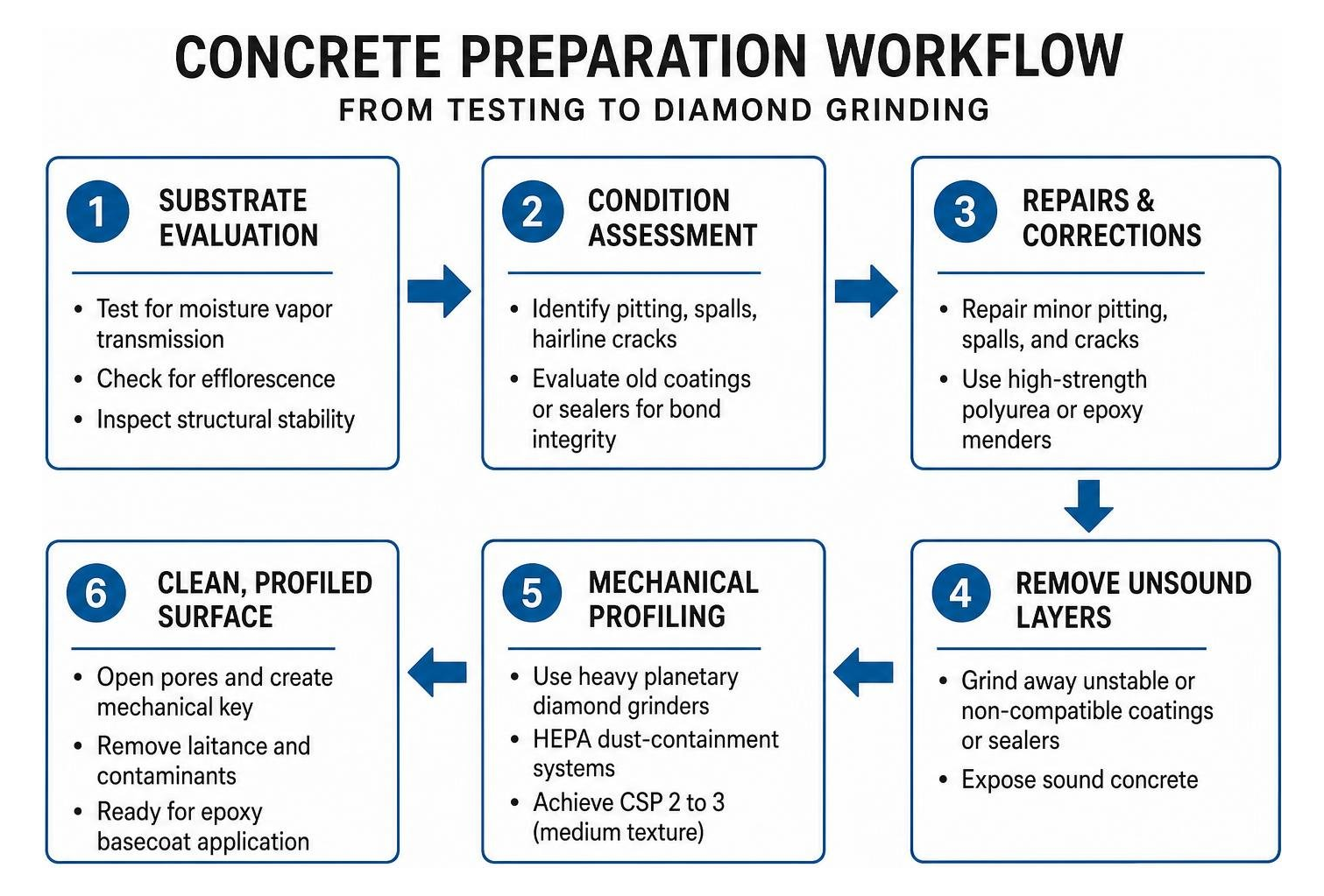
To ensure dependable mechanical keying, our technicians profile bare concrete slabs using heavy planetary diamond grinders connected to integrated HEPA dust-containment systems. Planetary grinders utilize counter-rotating diamond-impregnated segments to shave away the smooth top cement paste, open clogged pores, and eliminate surface contaminants such as oil residue and curing compounds.
This diamond grinding process establishes a Concrete Surface Profile (CSP) rating of 2 to 3, which feels similar to medium-grit sandpaper. While shot blasting is sometimes utilized in high-volume industrial facilities, diamond grinding provides a uniform, controlled profile across residential garage floors without leaving visible tracking ridges. This meticulous surface texturing prevents delamination and allows the epoxy basecoat to penetrate deeply into the slab.
Substrate Evaluation and Minor Concrete Repairs
Before running diamond tooling across the floor, our team conducts a thorough evaluation of the concrete substrate. This diagnostic process includes testing for excessive moisture vapor transmission, checking for efflorescence salts, and inspecting the slab for surface soundness.
Addressing minor surface pitting, small spalls, and stable hairline cracks is only a small component of the company’s floor-coating preparation work, ensuring an even profile for the subsequent resin coats. High-strength polyurea and epoxy patching menders are used to bridge minor voids before the basecoat is applied. If an older coating or curing sealer is present, we inspect its adhesion; any compromised or incompatible material is ground away completely to expose clean, sound concrete.
Professional Application and Customization Techniques
Once the concrete slab has been mechanically profiled, vacuumed free of dust, and patched where necessary, the multi-layer application process begins under strictly controlled conditions.

We utilize a full broadcast of decorative vinyl color chips to introduce appealing aesthetic textures, hide minor substrate variations, and add dimensional strength to the floor. Homeowners can select from an extensive range of multi-color blends highlighted in our modern residential floor coating options, allowing the completed floor to complement custom garage cabinetry, painted walls, and specialized storage setups.
Precision Steps for Garage Epoxy Coating Installation
- Basecoat Spreading and Back-Rolling: The measured two-component high-solids basecoat is blended thoroughly and poured onto the slab in controlled ribbons. Installers distribute the resin evenly across the floor using calibrated notched squeegees, followed by cross-rolling with heavy lint-free rollers to ensure an exact, uniform wet film thickness.
- Full Flake Broadcast: Decorative vinyl flakes are cast upward by hand into the wet basecoat until total rejection. Saturating the floor completely ensures full coverage with zero thin areas or visible basecoat patches.
- Flake Reclamation and Surface Scraping: After the basecoat has cured sufficiently, excess loose flakes are vacuumed and recovered. Technicians then scrape the floor using spring-steel floor scrapers along multiple angles to knock down upright edges and produce a flat, comfortable surface texture.
- Polyaspartic Topcoat Application: An aliphatic polyaspartic clear coat is mixed and squeegee-applied over the flake matrix, then back-rolled to encapsulate the entire system in a chemical-resistant wear layer.
Slip Resistance and Safety Additives
Glossy floor finishes can become slick when exposed to rain runoff, melted winter snow, or automotive fluids. The natural textured surface created by a full flake broadcast provides reliable baseline traction for daily residential use. For homeowners who require additional slip resistance, our team can incorporate specialized traction additives directly into the polyaspartic clear coat.
Micro-spherical silica or aluminum oxide particles can be blended into the clear topcoat to increase surface friction. Applying proven non-slip garage floor coating solutions improves wet-weather grip while maintaining a finish that remains easy to clean with a standard microfiber mop and neutral floor cleaner.
Cure Timelines, Warranties, and Investment Value
Planning a garage floor upgrade requires understanding cure schedules, maintenance expectations, and overall value. Modern multi-layer coating systems cure through rapid chemical cross-linking, allowing homeowners to resume normal garage use quickly without sacrificing coating strength.
| Stage of Return-to-Service | Standard High-Build Epoxy System | Epoxy Base with Polyaspartic Topcoat |
|---|---|---|
| Recoat Window | 12 to 24 hours | 2 to 4 hours |
| Light Foot Traffic | 24 to 48 hours | 6 to 12 hours |
| Heavy Storage / Toolboxes | 72 hours | 24 to 48 hours |
| Full Vehicle Parking | 5 to 7 days | 48 to 72 hours |
Following the recommended parking vehicle timelines after installation prevents tire-mark impressions and allows the polyaspartic topcoat to achieve complete chemical hardness before vehicle tires exert weight and friction.
Managing Coverage Sizes and Square Footage
Every residential garage layout features unique spatial dimensions and structural details. A standard two-car garage typically encompasses between 400 and 600 square feet, whereas larger three-car and four-car configurations often range from 750 to 1,200 square feet. Accurately calculating resin volume and flake yields is critical to proper installation. Applying basecoat resins too thinly diminishes capillary penetration into the concrete, while applying them too heavily can lead to trapped air bubbles and improper through-cure.
Factors Determining Garage Epoxy Coating Project Costs
The total investment required for a professional coating system depends on multiple project variables. Total square footage directly influences raw material requirements, while heavily pitted or moisture-prone concrete slabs require additional surface preparation and moisture-blocking primers. For a clear breakdown of pricing factors, review our comprehensive garage coating cost breakdown.
Investing in a high-solids epoxy basecoat combined with a polyaspartic topcoat produces a protective finish designed to withstand years of vehicle traffic, road chemicals, and seasonal temperature swings.
Frequently Asked Questions About Garage Floor Coatings
Can epoxy coatings be applied over aged coatings?
Applying a new coating system over an existing finish depends entirely on the condition of the substrate. The aged coating must be structurally sound, firmly adhered to the concrete across all sections, and free of oils, grease, or silicone sealers. The surface must be mechanically abraded to create an anchor profile for the new resin. However, if the old finish shows any evidence of peeling, bubbling, micro-cracking, or moisture delamination, our team will grind the slab down to bare concrete before applying the new system.
What causes garage floors to peel or delaminate?
Coating delamination occurs when the mechanical or chemical bond between the resin and the concrete slab fails. The most frequent causes of coating failure include improper surface preparation, lack of diamond grinding, moisture vapor pressure pushing upward through the slab, and oil contaminants that prevent penetration. Our technical guide on fixing peeling epoxy floors explains the common causes behind bond failure and how mechanical profiling resolves them.
How do I maintain and clean a coated garage floor?
Maintaining a professionally coated garage floor is straightforward. Regularly sweep loose dirt, gravel, and road debris using a soft-bristle broom or commercial microfiber dust mop. For regular wet cleaning, mop the floor using warm water and a neutral pH floor cleaner. Avoid using harsh acid-based cleaners, bleach, citrus degreasers, or abrasive scouring pads, as these products can degrade the glossy topcoat over time.
Conclusion
Upgrading your garage with a high-performance coating system protects your concrete substrate while creating a bright, functional workspace that handles heavy residential use with ease. Our team at Denver Floor Coatings brings years of technical experience, commercial diamond-grinding equipment, and premium materials to deliver durable, seamless finishes across the Denver metro area and Front Range communities.
If you are planning to upgrade your garage floor, explore our specialized residential floor coating options to discover the right design for your space. Contact Denver Floor Coatings today to request an installation quote and estimate for your project.