

Why Understanding Concrete Dye Stain Matters for Your Floors
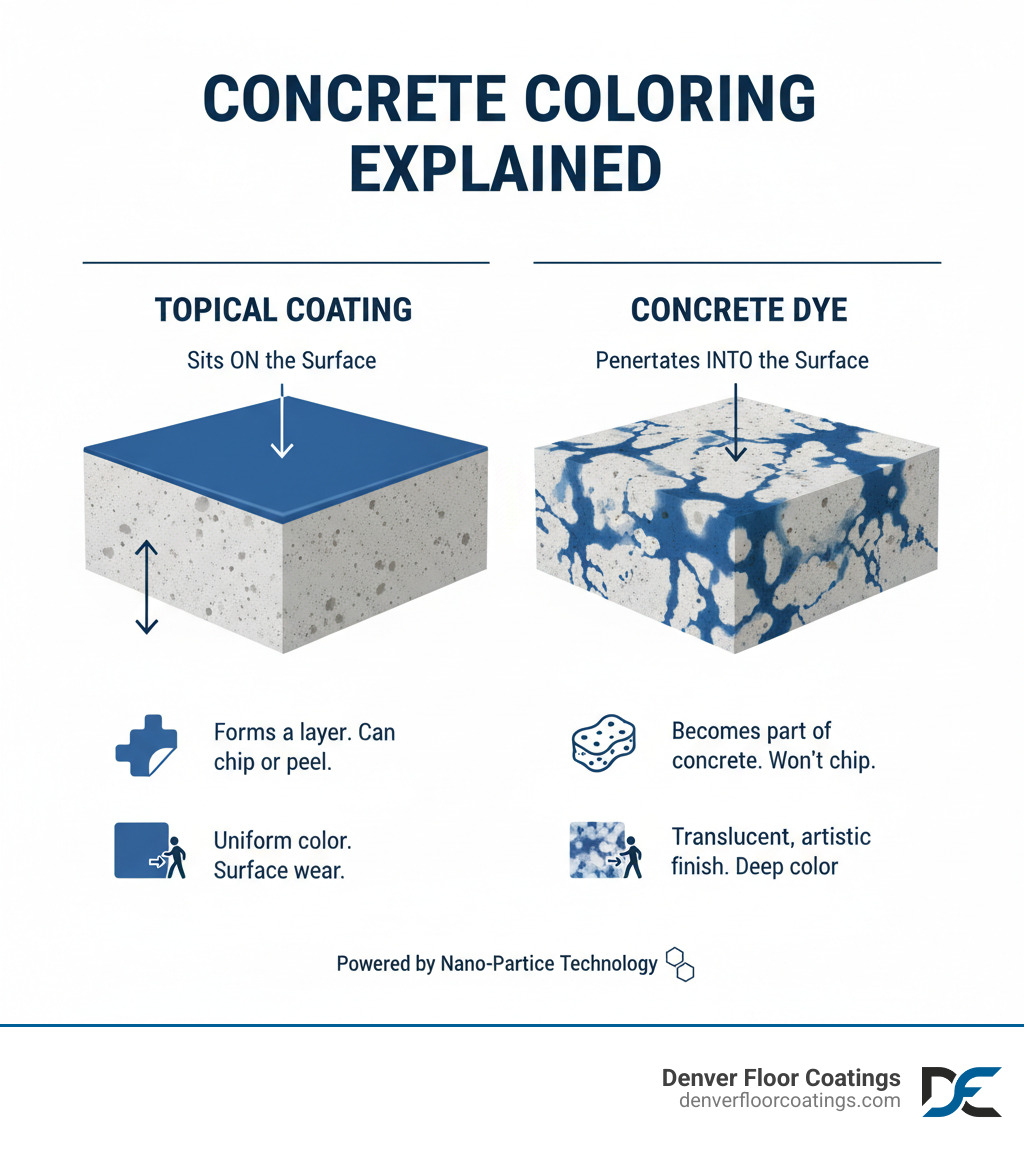
Concrete dye stain is a penetrating liquid color solution that soaks deep into concrete pores to permanently change its appearance. Unlike paint that sits on the surface, these dyes become part of the concrete itself, creating long-lasting color that won’t peel, chip, or flake away.
Quick Facts About Concrete Dye Stain:
- What it is: A translucent colorant that penetrates concrete pores using nano-particle technology
- Main types: Water-based (low VOC, predictable color) and acetone-based (fast-drying, vibrant)
- Coverage: 200-600 square feet per gallon depending on concrete porosity
- Drying time: 30 minutes to 8 hours depending on type
- Requires sealing: Yes, a clear sealer is mandatory to protect the color
- Best for: Creating decorative, mottled, or custom-colored concrete surfaces where natural variations improve the look
If you’re frustrated by a dull gray garage or basement floor, you’re not alone. The good news is that modern coloring solutions can transform those boring slabs into stunning surfaces—but it’s important to understand your options.
Concrete dye stain offers a translucent, artistic finish that improves the natural character of your concrete. By penetrating deep into the pores, it creates unique color variations and mottled effects. You can layer colors, create custom designs, or achieve a single uniform tone. Since the color is absorbed, it won’t wear off from foot traffic like paint.
However, dyes only provide color—not protection. They require a clear sealer on top to guard against stains, moisture, and wear, which means ongoing maintenance. For high-traffic areas like garages, many homeowners find that high-performance polyaspartic coatings offer superior durability and long-term value.
I’m Mike Wislinsky, founder of Denver Floor Coatings, and I’ve spent over two decades helping homeowners and businesses transform their concrete. This guide will help you compare concrete dye stain options with more durable coating systems to make an informed decision.
Key terms for concrete dye stain:
Understanding Concrete Dyes
Concrete dye stain works completely differently than paint. Paint creates a thin, fragile film on the surface that can easily chip or scratch. Dyes, however, penetrate deep into the concrete’s pores, becoming part of the slab itself. This means the color won’t peel, flake, or wear off from foot traffic.
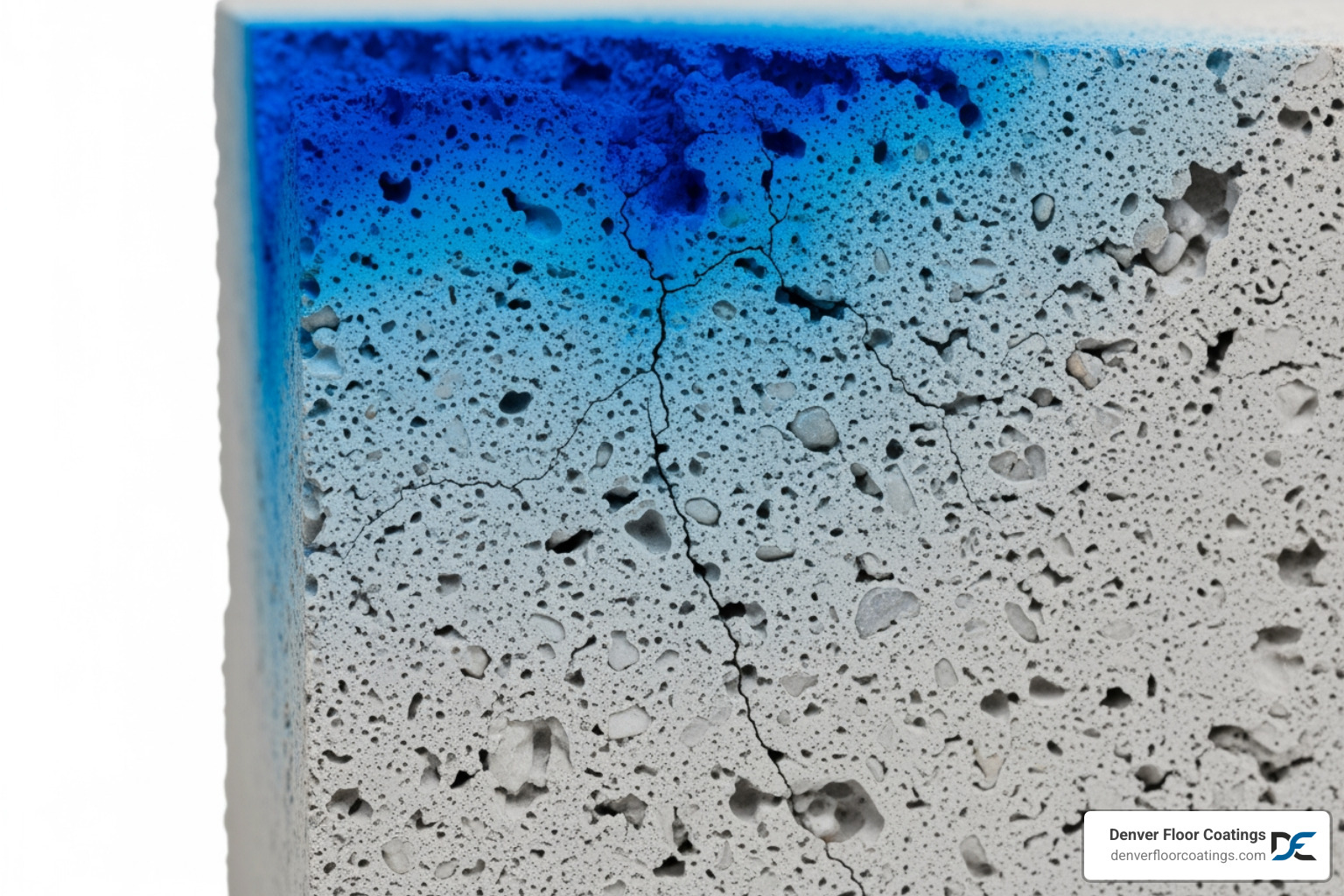
Many modern dyes use nano-particle technology—tiny pigments that soak deep into the concrete to create a semi-translucent effect. This allows the natural character of your concrete to show through, much like a wood stain improves grain.
This translucency is a key appeal of concrete dye stain. It doesn’t hide the concrete’s natural variations, resulting in unique, organic-looking floors where no two are exactly alike. Existing imperfections and color shifts contribute to the final appearance, which adds character for some but may be a drawback for those seeking a uniform look.
The creative possibilities are impressive. Dyes can achieve subtle tones, dramatic mottled patterns that mimic natural stone, or complex layered designs.
If you’re interested in other ways to transform plain concrete into something special, we have more info about Polished Concrete that might interest you.
Types of Concrete Dyes
Not all concrete dyes are created equal. Understanding the differences between the main types will help you choose the right product for your project.
Water-based dyes are popular for interior applications due to their low VOC content, making them a good choice for basements or enclosed spaces. They offer a wide, predictable color range and can be diluted with water to adjust intensity. Their main trade-off is a longer drying time of 6-8 hours, which can extend project timelines.
Acetone-based dye stains are preferred by professionals for their speed and vibrancy. They dry in as little as 30 minutes, allowing a floor to be prepped, stained, and sealed in a single day. This rapid turnaround is ideal for commercial projects or homeowners needing minimal downtime. The acetone carrier produces vibrant colors but is highly flammable and requires excellent ventilation.
The Complete Guide to Concrete Dye Stain Application
Applying concrete dye stain is a carefully orchestrated process where the finish is only as good as the preparation. This guide outlines the steps involved and helps explain why many homeowners choose to hire professionals.
Step 1: Critical Surface Preparation
Surface preparation is the most critical step and makes or breaks the project. The concrete must be completely clean, porous, and sound before any dye is applied.
All contaminants like dirt, grease, oil, or old sealers must be removed. Professionals typically diamond grind the surface to clean the concrete and open its pores, ensuring the dye can penetrate properly. A simple water test can check for porosity: if water beads up instead of absorbing, the surface isn’t ready.
After grinding or etching, the floor must be rinsed and allowed to dry completely, which can take 24 hours. While minor cracks can add to the character of a dyed floor, wider or structural cracks should be repaired first.
For more insights on preparing concrete surfaces for finishing, check out our guide on Finished Cement Floors.
Step 2: Applying the Concrete Dye Stain
Applying the dye is where technique and artistry come into play. The process requires specialized tools, like acetone-resistant sprayers for acetone dyes or non-drip sprayers for water-based products.
Safety gear is mandatory, including eye protection, chemical-resistant gloves, and proper respiratory protection, especially when using flammable acetone-based dyes in enclosed spaces.
The application requires a steady hand, applying the dye in smooth, circular motions to achieve uniform coverage without puddling. Creating layered or mottled effects involves applying lighter colors first and using tools like brushes or sponges. Each layer must dry completely before the next is added.
Drying times vary significantly. Acetone-based concrete dye stain can dry in 30 minutes, while water-based dyes take 6-8 hours, impacting the project schedule.
Step 3: The Essential Role of Sealers
Sealing the floor after the dye has dried is not optional; it’s essential for the longevity and beauty of your floor.
Without a sealer, the color is vulnerable. It will fade from UV exposure, wear from foot traffic, and absorb stains. A quality sealer locks in the color, creates a protective barrier against abrasion, adds your desired sheen (from matte to high-gloss), and repels moisture.
Both water-based and solvent-based sealers can be used, though solvent-based sealers require careful application over fresh dye to avoid smearing the color. The first coat should be sprayed, not rolled.
Maintenance is straightforward but necessary. It involves regular cleaning and applying a protective polish. Critically, the surface must be resealed every couple of years to maintain protection, as the sealer will wear down over time.
For a deeper understanding of how different sealers perform and protect concrete surfaces, our article on Pros and Cons of Stamped Concrete and Epoxy Sealers offers valuable insights.
The bottom line? Concrete dye stain creates beautiful floors, but it requires proper execution and ongoing maintenance. That’s why many homeowners explore more durable alternatives that combine color and protection in one robust system.
Dyes vs. High-Performance Coatings: A Comparison
When deciding how to transform your concrete floor, you’re choosing between two very different approaches. Concrete dye stain offers an artistic finish, but how does it compare to high-performance coatings in real-world conditions?
| Feature | Concrete Dyes (with Sealer) | Polyaspartic/High-Performance Coatings (like ours) |
|---|---|---|
| Durability | Relies heavily on sealer for protection; susceptible to wear | Thick, robust, industrial-grade; extremely high impact, chemical, abrasion resistance |
| Appearance | Translucent, mottled, natural variations show through | Opaque, uniform finish; hides imperfections; wide range of flake/color options |
| Maintenance | Requires periodic resealing (every 1-2 years); regular cleaning | Easy to clean; no resealing needed; seamless, hygienic |
| Lifespan | Dependent on sealer longevity and traffic; can fade over time | Very long-lasting (up to 20+ years); maintains integrity and appearance |
| Protection | Primarily color; sealer provides basic protection | Superior protection against stains, chemicals, hot tires, heavy traffic |
| Installation | Multi-step process, often quick drying (acetone) | Advanced application, specialized products; often 1-day installation |
Durability and Protection
The fundamental truth about concrete dye stain is that the dye only provides color; it offers no protection. All protection against stains, moisture, and wear comes from the thin, clear sealer applied over it.
In a garage, this sealer takes a beating from hot tires, dropped tools, and foot traffic. Scratches and wear patterns will develop, diminishing the protection over time.
Our high-performance coatings are different. We create a thick, industrial-grade barrier that bonds with the concrete. These polyaspartic and epoxy-based systems are engineered for serious punishment, resisting hot tires, dropped tools, chemicals, and road salt. These are the same systems used in warehouses with daily forklift traffic, proving their resilience. Explore High Performance Concrete Coatings to learn more.
Appearance and Finish
The appearance of concrete dye stain is distinctly different from a high-performance coating. Dyes are translucent, meaning they color the concrete without hiding anything. Existing cracks, stains, and natural variations in the slab will show through, becoming part of the final, organic look. While this creates a unique, stone-like appearance, it’s not ideal for those wanting a flawless surface.
Our high-performance coatings offer an opaque finish that completely transforms your floor, covering old cracks and stains. We create a uniform, pristine, showroom-quality surface from the start. With our decorative flake finishes, the possibilities for color, texture, and pattern are extensive—far beyond what translucent dyes can offer. See what’s possible on our Coated Concrete page.
Maintenance and Longevity
In the long term, the differences are significant. A floor with concrete dye stain requires ongoing maintenance. The protective sealer must be reapplied every one to two years, which involves thorough cleaning and labor. Even with proper care, dyes can fade over time, especially with sun exposure.
Our high-performance coatings are designed to be a one-time solution. They last 20 years or more without needing to be resealed or refinished. Maintenance is simple: just sweep or mop as needed. The seamless surface is hygienic and doesn’t trap dirt. Over a decade, a dyed floor may need five or six resealing sessions, while our coatings continue to perform without ongoing costs or disruption. Learn more about the benefits at Industrial Floor Coatings Concrete.
The bottom line? Concrete dye stain has its place, but for garages and commercial spaces needing serious durability with minimal fuss, high-performance coatings deliver protection and longevity that dyes can’t match.
Key Safety and Environmental Considerations
Working with concrete dye stain involves serious chemical products that require careful handling, especially solvent-based options like acetone dyes. Understanding the safety and environmental risks is crucial.
Working with Solvents and Flammability:
A critical fact about acetone-based dyes is that acetone is highly flammable. Vapors can be ignited by a pilot light, water heater, or even a static spark. Proper ventilation is mandatory—open doors and use fans to create airflow. All potential ignition sources must be removed from the work area.
VOC Content and Regional Regulations:
Concrete dye stains vary in their environmental impact, specifically regarding Volatile Organic Compounds (VOCs). Water-based dyes are the most eco-friendly, with low VOC content ideal for interiors. Some acetone-based dyes are zero-VOC, but the acetone solvent itself poses safety risks. Always check local air quality regulations, as some regions have strict VOC limits on products.
Chemical Exposure and Personal Protection:
Dyes and solvents can irritate the eyes, skin, and respiratory system. The warning labels are not to be ignored.
Proper personal protective equipment (PPE) is not optional. This includes safety goggles, chemical-resistant gloves, and a proper respirator—especially for acetone-based products. Some products also carry California Proposition 65 warnings about chemicals known to cause cancer or reproductive harm. Always read the Safety Data Sheet (SDS) for each product before starting.
The complexity of application, safety protocols, and environmental concerns lead many homeowners to choose professional-grade coating systems. At Denver Floor Coatings, we manage all safety and chemical handling, delivering a durable, maintenance-free floor, often in just one day.
Conclusion: Choosing the Right Finish for Your Concrete Floor
Choosing the right finish for your concrete floor starts with understanding your needs. Concrete dye stain is a translucent, decorative option that creates unique, mottled appearances by enhancing the concrete’s natural character. It can be a beautiful choice for low-traffic residential interiors where an artistic, organic look is desired.
However, the reality is that concrete dye stain only provides color. All protection comes from a sealer that requires reapplication every one to two years. The surface remains vulnerable to scratches, stains, and wear, making it less than ideal for high-traffic environments.
For garages, commercial showrooms, and industrial facilities—spaces that demand durability—high-performance coatings are the superior choice.
At Denver Floor Coatings, we specialize in durable, one-day garage floor coatings and robust commercial solutions for Colorado’s demanding conditions. Our polyaspartic systems create a thick, protective armor over your concrete, delivering exceptional durability, chemical resistance, and a seamless, easy-to-clean surface that never needs resealing.
Our coatings hide imperfections to create a clean, showroom-quality finish. With countless decorative flake options, you get both beauty and brawn. For a floor that is as tough as it is beautiful and will serve you reliably for decades, explore our Coated Concrete solutions and get your free estimate today.